Related content
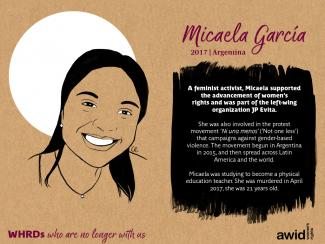
TeleSUR: Outrage Shakes Argentina After Murder of Anti-Femicide Activist
Defensoras de derechos humanos de todo el planeta defienden sus tierras, medios de subsistencia y sus comunidades ante las industrias extractivas y el poder corporativo. Ellas hacen frente a fuertes intereses económicos y políticos que promueven el robo de tierras, el desplazamiento de comunidades, la pérdida de los medios de subsistencia y la degradación del medioambiente.
El extractivismo es un modelo económico y político de desarrollo que mercantiliza la naturaleza y prioriza la ganancia por sobre los derechos humanos y el medioambiente. Arraigado en la historia colonial, refuerza las desigualdades sociales y económicas tanto a nivel local como global. Muchas veces, las mujeres negras, rurales e indígenas son las más afectadas por el extractivismo, y además son notablemente excluidas de la toma de decisiones. Desafiando estas fuerzas patriarcales y neocoloniales, las mujeres se alzan en defensa de los derechos, las tierras, las personas y la naturaleza.
Las defensoras que enfrentan a las industrias extractivas, experimentan una diversidad de riesgos, amenazas y violaciones, incluidas la criminalización, la estigmatización, la violencia y laintimidación. Sus historias dan cuenta de marcados aspectos de violencia sexual y de género. Entre los perpetradores se incluyen autoridades estatales y locales, las corporaciones, la policía, el ejército, las fuerzas paramilitares y de seguridad privada, y en algunos casos, sus propias comunidades.
AWID y la Coalición Internacional de Mujeres Defensoras de Derechos Humanos (WHRDIC por su sigla en inglés) tienen el placer de anunciar «Defensoras de derechos humanos confrontado al extractivismo y al poder corporativo»; un proyecto interregional de investigación que documenta las experiencias vividas por las defensoras de Asia, África y América Latina.
Alentamos a activistas, integrantes de movimientos sociales, la sociedad civil organizada, donantes y responsables de políticas públicas, a leer y utilizar estas producciones para el trabajo de incidencia, con fines educativos y como fuente de inspiración:
«Defensoras de derechos humanos confrontando a las industrias extractivas: un panorama de los riesgos críticos y las obligaciones en materia de derechos humanos» es un informe sobre políticas desde la perspectiva de género (en inglés, pronto disponible en español). Analiza las formas de violaciones y los tipos de perpetradores, hace referencia a las obligaciones relevantes en derechos humanos e incluye recomendaciones de políticas para los estados, corporaciones, la sociedad civil y donantes.
«Tejiendo la Resistencia a través de la Acción: Las Estrategias de las Defensoras de Derechos Humanos contra a las Industrias Extractivas» es una guía práctica que expone formas creativas y deliberadas de acción, tácticas exitosas e inspiradoras historias de resistencias.
El video «Defendiendo a las Personas y al Planeta: Mujeres Confrontando a las Industrias Extractivas» está protagonizado por defensoras de derechos humanos de África, Asia y América Latina, que comparten sus luchas por la tierra y la vida, y hablan de los riesgos y desafíos que enfrentan en su activismo.
«Desafiar al poder corporativo: Las luchas por los derechos de las mujeres, la justicia económica y de género» es un informe de investigación que explica los impactos del poder corporativo y ofrece ideas sobre estrategias de resistencia.
AWID reconoce con gratitud las invaluables contribuciones de cada Defensora de Derechos Humanos que ha sido parte de este proyecto. Esta guía ha sido posible gracias su generosidad y apertura al compartir sobre sus experiencias y lecciones. Su coraje, creatividad y resiliencia son una inspiración para todxs nosotrxs. ¡Muchas gracias!
Nous avons le plaisir de vous présenter Sopo Japaridze, féministe féroce, dirigeante syndicale et présidente du syndicat de service indépendant Réseau de Solidarité.
Elle a quitté le pays très jeune pour les États-Unis, où elle est devenue politiquement active en tant qu'organisatrice syndicale. Elle a toujours gardé la Géorgie à l'esprit pendant tout ce temps, jusqu'au jour où, 20 ans plus tard, elle a décidé de revenir.
La confédération syndicale géorgienne existante à cette époque était loin d'être idéale. C’est pourquoi, armée de ses compétences, de ses connaissances et de son expérience en matière de syndicalisation, Sopo est retournée en Géorgie et a formé son propre syndicat.
Elle est aussi une chercheuse passionnée et une écrivaine. Elle étudie les relations de travail et les relations sociales, écrit pour diverses publications et est co-éditrice de Left East, une plate-forme analytique d'Europe de l'Est. Elle a également cofondé l'initiative et le podcast d'histoire politique, Réimaginer la Géorgie Soviétique, où elle explore les complexités et les nuances des expériences du pays sous l'Union soviétique, pour mieux comprendre son passé et construire un avenir meilleur.
เราจับตาดูเรื่องนี้และความเสี่ยงอื่นๆอย่างระมัดระวัง และจะนำเสนอข้อมูลด้านสุขภาพและความปลอดภัยที่คลอบคลุมเมื่อมีการเปิดให้ลงทะเบียน เพื่อให้คุณสามารถตัดสินใจได้อย่างมีข้อมูล มากกว่านั้นการจัดประชุมแบบสองรูปแบบ(ออนไลน์และกายภาพ)ถูกออกแบบให้ให้เกิดการมีส่วนร่วมอย่างมีความหมายสำหรับผู้เข้าร่วมที่เลือกจะไม่เดินทาง หรือผู้เข้าร่วมที่ไม่สามารถเดินทางได้
Voyez grand ! Notre rayonnement international nous permet de combiner notre travail analytique avec des outils politiques et pratiques de plaidoyer et de transformation afin de faire avancer la cause des mouvements féministes à tous les niveaux.
Related content
TeleSUR: Outrage Shakes Argentina After Murder of Anti-Femicide Activist
Welcome to Crear | Résister | Transform: a festival for feminist movements!
AWID is committed to creating an online space that invites and challenges us all to operate from a place of courage, curiosity, generosity and shared responsibility.
We invite you to co-create spaces with us that are free of harassment and violence, where everyone is respected in their gender identity and expression, race, ability, class, religion, language, ethnicity, age, occupation, type of education, sexuality, body size, and physical appearance. Spaces where we recognize inequalities in our world and strive to transform them in our own interactions with each other.
This means that we are able to listen, understand and relate to each other. To feel close, in spite of it all being virtual. For this, we will make interpretation available and open channels (like chat and other tools) for you to react and share. To hear each other better, we invite you to wear headphones during the conversation. If it is possible for you , we suggest that you close your email and any other likely source of distraction while you are in the conversation.
Let us celebrate the multiple ways in which knowledge shows up in our lives. We invite you to approach the conversation with curiosity and openness to learn from others, allowing ourselves to unlearn and relearn through the exchange, as a way to start collectively building knowledge.
We are committed to holistically approaching accessibility by being mindful of different physical, language, mental and safety needs. We want a space that is welcoming of folks from various backgrounds, beliefs, abilities and experiences. We will be proactive but we also ask that you communicate your needs with us, and we will do our best within our capacity to address these needs.
We all commit individually and collectively to respect each other’s privacy and to seek people’s consent before sharing any images or content generated during the conversation that involves them.
Creating a safer, respectful and enjoyable environment for the conversations, is everybody's responsibility.
If you notice that someone is behaving in a discriminatory or offensive manner, please contact the reference person who will be indicated at the beginning of the session.
Any participants that express oppressive language or images, will be removed from the call and will not be readmitted. We will not engage with them in any way.
The Sex Workers' Trade Union Organisation (Organización de Trabajo Sexual, OTRAS) is the first union of sex workers in the history of Spain. It was born out of the need to ensure social, legal and political rights for sex workers in a country where far-right movements are on the rise.
After years of struggles against the Spanish legal system and anti-sex workers groups who petitioned to shut it down, OTRAS finally obtained its legal status as a union in 2021.
Its goal? To decriminalize sex work and to ensure decent working conditions and environments for all sex workers.
The union represents over 600 professional sex workers, many of whom are migrant, trans, queer and gender-diverse.
Co-create the The 15th AWID International Forum in Bangkok, Thailand.

We ramped up preparations for the 13th AWID international Forum, focused a lot of energy on the Post 2015 Development Agenda and Financing for Development processes, and continued the core work of our priority areas:
In response, we are moving out of our silos.
Increasingly, women’s rights and other movements worldwide are articulating the systemic and intersectional nature of these and other problems. We are making better connections with the agendas of other social and environmental movements for solidarity, alliance building and collective responses. We are also seeing greater visibility of these movements fighting for justice on the ground.

We celebrate everyone's right to choose their identities, relationships, goals, work, dreams and pleasures, and what they do with their mind, body and spirit. We believe in working towards access to resources, information and safe and enabling environments that allow this to happen.
Jour 2
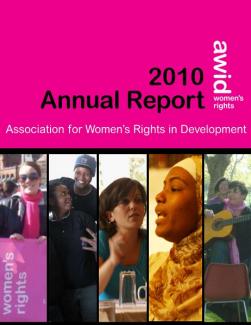
Our 2010 Annual Report highlights the major accomplishments of each of our strategic initiatives during the year.
Along with activity highlights, we include a brief analysis of the impact of our initiatives as well as reflections from our members and partners that further illustrate the relevance of AWID’s work and its connection to broader women’s rights movements.
This interactive document is complete with links to our websites and recent publications with in-depth information on the issues we address in the report.
Al unirme a AWID, espero poder ayudar a la movilización del movimiento feminista. No solo para las mujeres privilegiadas, sino para TODAS las mujeres y activistas feministas.- Angelina Mootoo, feminista interseccional y caribeña, Guyana/EEUU
Bien plus de la moitié de la population mondiale est aujourd’hui dirigée par l’extrême droite. C’est sur cette toile de fond que défenseur·e·s des droits humains et féministes luttent pour « tenir bon », protéger le multilatéralisme et le système international des droits humains, alors que leurs engagements les exposent à de violentes répressions. Ces institutions sont cependant de plus en plus soumises aux intérêts du secteur privé. Les grandes entreprises, surtout les sociétés transnationales, siègent à la table des négociations et occupent des fonctions de leadership dans plusieurs institutions multilatérales, l’ONU notamment. Le lien entre ultranationalisme, restriction de l’espace civique et emprise des entreprises a un impact considérable sur la réalisation ou non des droits humains pour tout le monde.