Análisis Especiales

AWID es un organización feminista internacional de membresía, que brinda apoyo a los movimientos que trabajan para lograr la justicia de género y los derechos de las mujeres en todo el mundo.

Confrontando al extractivismo y al poder corporativo

Defensoras de derechos humanos de todo el planeta defienden sus tierras, medios de subsistencia y sus comunidades ante las industrias extractivas y el poder corporativo. Ellas hacen frente a fuertes intereses económicos y políticos que promueven el robo de tierras, el desplazamiento de comunidades, la pérdida de los medios de subsistencia y la degradación del medioambiente.


¿Por qué resistir a las industrias extractivas?

El extractivismo es un modelo económico y político de desarrollo que mercantiliza la naturaleza y prioriza la ganancia por sobre los derechos humanos y el medioambiente. Arraigado en la historia colonial, refuerza las desigualdades sociales y económicas tanto a nivel local como global. Muchas veces, las mujeres negras, rurales e indígenas son las más afectadas por el extractivismo, y además son notablemente excluidas de la toma de decisiones. Desafiando estas fuerzas patriarcales y neocoloniales, las mujeres se alzan en defensa de los derechos, las tierras, las personas y la naturaleza.

Riegos críticos y violencia específica de género

Las defensoras que enfrentan a las industrias extractivas, experimentan una diversidad de riesgos, amenazas y violaciones, incluidas la criminalización, la estigmatización, la violencia y laintimidación. Sus historias dan cuenta de marcados aspectos de violencia sexual y de género. Entre los perpetradores se incluyen autoridades estatales y locales, las corporaciones, la policía, el ejército, las fuerzas paramilitares y de seguridad privada, y en algunos casos, sus propias comunidades.

Actuar juntxs

AWID y la Coalición Internacional de Mujeres Defensoras de Derechos Humanos (WHRDIC por su sigla en inglés) tienen el placer de anunciar «Defensoras de derechos humanos confrontado al extractivismo y al poder corporativo»; un proyecto interregional de investigación que documenta las experiencias vividas por las defensoras de Asia, África y América Latina.

Alentamos a activistas, integrantes de movimientos sociales, la sociedad civil organizada, donantes y responsables de políticas públicas, a leer y utilizar estas producciones para el trabajo de incidencia, con fines educativos y como fuente de inspiración:

¡Comparte tu experiencia y tus preguntas!

Cuéntanos cómo estás utilizando la herramienta sobre las defensoras que confrontan a las industrias extractivas y al poder corporativo.

◾️ ¿De qué manera estos recursos pueden ayudarte en tu activismo y tu trabajo de defensa?

◾️ ¿Qué informaciones o conocimientos adicionales necesitas para la mejor utilización de estos recursos?

Comparte tus comentarios


¡Gracias!

AWID reconoce con gratitud las invaluables contribuciones de cada Defensora de Derechos Humanos que ha sido parte de este proyecto. Esta guía ha sido posible gracias su generosidad y apertura al compartir sobre sus experiencias y lecciones. Su coraje, creatividad y resiliencia son una inspiración para todxs nosotrxs. ¡Muchas gracias!

Contenido relacionado

هل ستكون لي الفرصة بمشاركة افكاري بأمور لا تغطيها أسئلة الاستطلاع؟

نعم. ندعوكم/ن لمشاركتنا بالأمور التي تجدونها مهمة بالنسبة لكم/ن عن طريق الإجابة على الأسئلة المفتوحة في نهاية الاستطلاع.

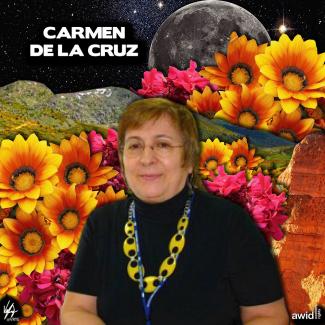
Carmen de la Cruz

Carmen tuvo una larga carrera en la defensa de los derechos de las mujeres tanto en organizaciones no gubernamentales como en el sistema de las Naciones Unidas.

Dio clases en varias universidades españolas y latinoamericanas y publicó numerosos artículos e informes sobre mujeres, género y paz en países en desarrollo. Sus escritos y reflexiones críticas repercutieron en toda una generación de mujeres jóvenes.

En sus últimos años, fue responsable del Área Práctica de Género en el Centro Regional para América Latina del Programa de las Naciones Unidas para el Desarrollo (PNUD), desde donde apoyó iniciativas muy valiosas en favor de la igualdad de género y los derechos humanos de las mujeres.


Carmen de la Cruz, Argentina/ Spain

Snippet FEA Housing is a right (ES)

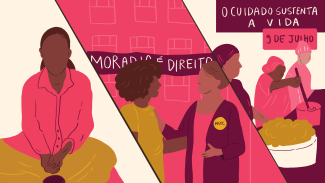
Three-fold horizontal graphic: 1st of a brown-skinned woman on the right side, she is sitting on a pink carpet and is wearing a pink shirt and yellow dress; 2nd two women of color looking at each other and touching their shoulders, they are on a pink background; 3rd - graphic version of three women cooking.

La vivienda es un derecho | El cuidado sostiene la vida

What is at stake for women’s rights?

Development financing has specific threats and opportunities for women's and all people’s human rights. Transformative development financing and policies can make an important contribution to the systemic changes that are needed to ensure the respect, protection and fulfillment of women’s human rights.

2015 is an important year for the FfD process. The Third International Conference on FfD took place from 13-16 July 2015 in Addis Ababa, Ethiopia and governments are finalising the post-2015 development agenda including agreements on how the new Sustainable Development Goals will be financed

The current stage of the FfD process is an important opportunity to establish a financing framework that will ensure effective financing for the implementation of the post 2015 agenda and the Sustainable Development Goals (SDGs). It is also an opportunity to address the structural conditions, and systemic changes needed, for the full implementation of other agendas and commitments such as Human Rights Conventions, and the Beijing Platform for Action.

Over the last 13 years, women’s rights and feminist organizations have actively engaged in the FfD process.

Является ли мое участие конфиденциальным?

Да. Ваши ответы будут удалены по окончании обработки и анализа данных и будут использованы исключительно в исследовательских целях. Данные НИКОГДА не будут переданы за пределы AWID и будут обрабатываться только сотрудниками AWID и консультантками(-тами), работающими с нами над проектом «Где деньги?». Для нас ваша конфиденциальность и безопасность– приоритет. С нашей политикой конфиденциальности можно подробно ознакомиться здесь.

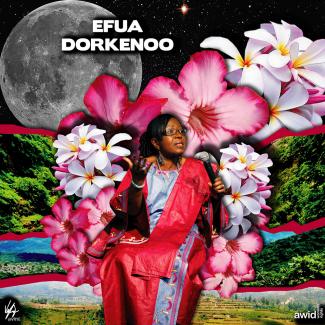
Efua Dorkenoo

Affectueusement connue sous le nom de « Mama Efua », Efua a lutté contre les mutilations génitales féminines (MGF) pendant trois décennies et a contribué à attirer l'attention et l'action de la communauté internationale pour mettre fin à cette pratique néfaste.

En 1983, Efua a cofondé FORWARD (fondation pour la santé, la recherche et le développement des femmes), qui est devenue une organisation de premier plan dans la lutte contre les MGF. Son livre intitulé « Cutting the Rose: Female Genital Mutilation »  (couper la rose), publié en 1994, est considéré comme le premier ouvrage sur les mutilations génitales féminines. Il figure parmi « Les 100 meilleurs livres africains du XXe siècle » de l’Université de Columbia.

Originaire du Ghana et infirmière de formation, Efua a rejoint l'OMS en 1995 et a réussi à faire en sorte que les mutilations génitales féminines fassent partie des agendas politiques des États membres de l'OMS. Elle a également travaillé en étroite collaboration avec le gouvernement nigérian pour élaborer une politique nationale globale qui servirait de base légale aux lois nigérianes contre les mutilations et qui est toujours en vigueur à ce jour.

Son travail de pionnière a abouti à une campagne menée par l'Afrique intitulée « The Girl Generation », qui s'est engagée à mettre fin aux MGF en une génération. Efua a montré comment une seule personne peut devenir la voix unificatrice d'un mouvement : « Une identité partagée peut aider à rassembler des activistes d'horizons différents dans un but commun ». Ces mots, emplis de sagesse, sont plus pertinents que jamais.


Efua Dorkenoo, Ghana

Snippet FEA Clemencia (FR)

Nous sommes ravis de vous présenter Clemencia Carabalí Rodallega, une extraordinaire féministe afro-colombienne.

Elle a travaillé sans relâche pendant trois décennies pour sauvegarder les droits humains, les droits des femmes et la consolidation de la paix dans les zones de conflit sur la côte pacifique de la Colombie.

Clemencia a apporté une contribution significative à la lutte pour la vérité, la réparation et la justice pour les victimes de la guerre civile en Colombie.

Elle a reçu le Prix national pour la défense des droits humains en 2019 et a également participé à la campagne de la nouvelle élue afro-colombienne et amie de longue date, la vice-présidente Francia Márquez.

Bien que Clemencia ait rencontré et continue de rencontrer de nombreuses difficultés, notamment des menaces et des tentatives d'assassinat, elle continue de se battre pour les droits des femmes et communautés afro-colombiennes à travers le pays.

什麼時候/如何提交會議場次提案?

論壇活動提案現已截止。

我們於2019年11月19日開放論壇活動提案,提案的截止日期是2020年2月14日。

認識其他參與論壇的方法 (In English)

Desejam recolher quantas respostas ao questionário?

O nosso objetivo é alcançar um total de 2000 respostas, quase o dobro do último questionário WITM em 2011.

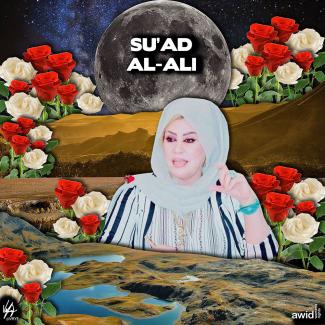
Su’ad Al-Ali

Su’ad was a strong advocate of women’s and children’s rights, and was the head of Al-Weed Al-Alaiami - an Iraqi human rights organisation.

She participated in the July 2018 demonstrations that took place in Basra and several other Iraqi cities protesting unemployment and demanding jobs and proper public services for citizens, as well as calling for the elimination of rampant corruption.

On 25 September 2018, Su’ad was assassinated in the Al-Abbasiyah district in downtown Basra. A video of the incident showed a person approaching her as she was getting into her car, firing a bullet at the back of her head and pointing another bullet at her driver Hussain Hassan, who was injured in the shoulder. Al-Ali was 46 and the mother of four children.


Su'ad Al Ali, Iraq

Snippet FEA Aura Roig (EN)

Meet Aura Roig, the visionary feminist activist, anthropologist, director and founder of the Metzineres cooperative.

She spent the last two decades researching, designing and implementing drug policies from the perspective of harm reduction, human rights and intersectional feminism.

Having experienced and learned from communities who use drugs around the world, she returned to Barcelona and created Xarxa de Dones que Usen Drogues (the Network of Women Who Use Drugs, XADUD). XADUD was a space of mutual support and solidarity with the struggle to secure rights for marginalized groups, which later became the Metzineres cooperative.

Aura is currently working on expanding the Metzineres model to provide support to bigger constituencies, while also extensively documenting their prolific journey and learnings.

我什麼時候可以註冊論壇?

我們會盡快宣布。敬請關注!

Snippet - WITM Languages - EN

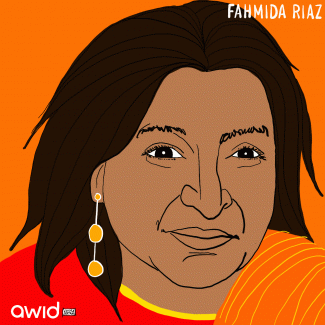
Fahmida Riaz

“Afterwards
After love the first time,
Our naked bodies and minds
A hall of mirrors,
Wholly unarmed, utterly fragile,
We lie in one another's arms
Breathing with care,
Afraid to break
These crystal figurines.” - Fahmida Riaz

Fahmida Riaz broke social taboos by writing about female desire in her poetry, creating alternative narratives about women’s bodies and sexuality, and setting new standards in Urdu literature.

Her work faced harsh criticism from conservatives, who accused her of using erotic and “pornographic” expressions in her poetic language. 

Fahimida was eventually blacklisted and charged with sedition under Section 124A of the Pakistan Penal Code) during the dictatorship of Zia Ul Haq. Forced into exile in 1981, she spent almost seven years in India before returning to Pakistan. 

As part of the preface to “Badan Dareeda” ('The Torn-Bodied'), a collection of poetry published in 1974, she wrote: 

If, indeed, I am forced to stand before this maqtal today and face the gallows, I should face them with my head held high. My poems are the trace of a mangled head: emanating sounds even as it is suspended from ropes... A Body Torn has taken the form of a razmia, or the sound of rupture. And if such rupture indeed shocks a people, then consider the poet as having achieved her purpose: she has managed to disturb them. (translation from Urdu by Asad Alvi)

The brilliance of Fahmida was in defying any singular logic or categories of gender, nation, religion or culture. She refused to be put in the role of a ‘woman poet’, breaking with traditional definitions of feminine poetry and concepts and themes (ranging from political consciousness, body, culture, desire, religion, home) and knocking down inhibitions put on her gender. 

“You have to understand that culture can have no essence. Cultures move, flowing into one another, forming new cultures. Culture is born this way. There is no clash of cultures.” 

Fahmida authored more than 15 books on poetry and fiction including her poem ‘Taaziyati Qaraardaaden’ (‘Condolence Resolutions’) that might serve as an appropriate tribute to her life and legacy and a collection of poems (Apna Jurm To Saabit He ‘My Crime Stands Proven’) published in 1988 during her time in exile. 

Fahmida Riaz was born in Meerut, India on 28 July 1946 and passed away on 21 November 2018 in Lahore, Pakistan.
Snippet FEA Get Involved 2 (ES)

Mientras estés en São Paulo, Brasil, puedes visitar la Ocupação 9 de Julho y pedir una comida colaborativa. También puedes comprar sus productos en su tienda online desde el extranjero.

Visita la tienda en línea de la Asociación de Mujeres Afrodescendientes del Norte del Cauca (ASOM) donde puedes encontrar hermosos productos hechos a mano.

Hay varias formas de apoyar a Metzineres: puedes hacer una donación económica, donar materiales y servicios, o proponer una formación, un taller o una actividad (para más información, ¡ver aquí!)

我必須成為AWID會員才能參加論壇嗎?

您不必成為AWID會員即可參加,但是AWID會員可以獲得折扣的註冊費以及許多其他好處。

詳細瞭解如何成為AWID成員 (in English)