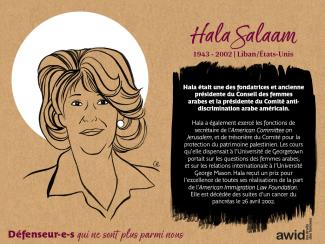
Hala Salaam
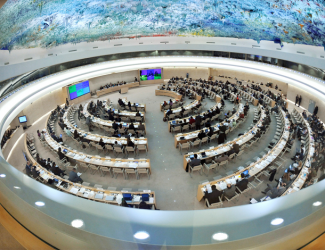
El Consejo de Derechos Humanos (CDH) es el cuerpo intergubernamental del sistema de las Naciones Unidas responsable de la promoción y protección de todos los derechos humanos en todo el mundo. El HRC se reúne en sesión ordinaria tres veces al año, en marzo, junio y septiembre. La La Oficina del Alto Comisionado para los Derechos Humanos (ACNUDH) es la secretaría del Consejo de Derechos Humanos.
Debate y aprueba resoluciones sobre cuestiones mundiales de derechos humanos y el estado de los derechos humanos en determinados países
Examina las denuncias de víctimas de violaciones a los derechos humanos o las de organizaciones activistas, quienes interponen estas denuncias representando a lxs víctimas.
Nombra a expertos independientes que ejecutarán los «Procedimientos Especiales» revisando y presentado informes sobre las violaciones a los derechos humanos desde una perspectiva temática o en relación a un país específico
Participa en discusiones con expertos y gobiernos respecto a cuestiones de derechos humanos.
A través del Examen Periódico Universal, cada cuatro años y medio, se evalúan los expedientes de derechos humanos de todos los Estados Miembro de las Naciones Unidas
Se está llevarando a cabo en Ginebra, Suiza del 30 de junio al 17 de julio de 2020.
AWID trabaja con socios feministas, progresistas y de derechos humanos para compartir conocimientos clave, convocar diálogos y eventos de la sociedad civil, e influir en las negociaciones y los resultados de la sesión.
Por el momento, la encuesta en KOBO está disponible en árabe, español, francés, inglés, portugués y ruso. Tendrás oportunidad de seleccionar el idioma de preferencia al inicio de la encuesta.
“Nous Sommes la Solution has a vision of an Africa where, in solidarity, rural women involved in decision-making can grow, process, sell and consume family farming products while preserving the environment, for a harmonious and sustainable development.”
Este informe recuerda y celebra el primer año del nuevo plan estratégico de AWID, cuando dimos nuestros primeros pasos hacia los resultados deseados: el apoyo a los movimientos feministas para que prosperen, la impugnación de las agendas antiderechos, y la creación conjunta de realidades feministas.

Trabajamos con feministas para desestabilizar las agendas antiderechos, y logramos importantes victorias, peleadas y ganadas dentro del sistema de Naciones Unidas, cuando se logró la inclusión de lenguaje innovador sobre discriminación estructural, derechos sexuales y obligaciones de los Estados en una cantidad de resoluciones. Sí, el sistema multilateral está en crisis y necesita un sólido fortalecimiento, pero estas victorias son importantes, ya que contribuyen a la legitimidad de las demandas feministas, brindando a los movimientos feministas más puntos de presión y más impulso para promover nuestras agendas.
Ensayamos y pusimos a prueba distintas formas de construir conocimientos con los movimientos feministas a través de seminarios en línea, podcasts y conversaciones «en vivo». Desarrollamos guías de facilitación con educadorxs populares para recuperar saberes en pos de la justicia social y de género, incluso sobre un tópico tan aparentemente opaco como los flujos financieros ilícitos. Auspiciamos blogs y opiniones sobre cómo los grupos feministas obtienen fondos y recursos, y señalamos las amenazas que enfrentan nuestros sistemas de derechos humanos.
Dentro de AWID, pusimos en práctica y aprendimos de nuestro enfoque de liderazgo compartido, y relatamos la historia de las dificultades y tribulaciones de dirigir conjuntamente una organización global virtual. No tenemos una respuesta definitiva sobre cómo es un liderazgo feminista, pero un año más tarde sabemos que el compromiso continuo con la experimentación y el aprendizaje colectivos nos ha permitido seguir construyendo una organización con la cual nos entusiasma contribuir.
Al recordar este año, queremos agradecer a todxs nuestrxs amigxs y promotorxs, colegas y compañerxs, que han aportado su tiempo y han compartido su bagaje de conocimiento y sabiduría con nosotrxs. Queremos agradecer a nuestrxs afiliadxs, que han ayudado a construir nuestro plan estratégico y se han unido a nosotrxs para formular demandas feministas. No podríamos hacer este trabajo sin ustedes.
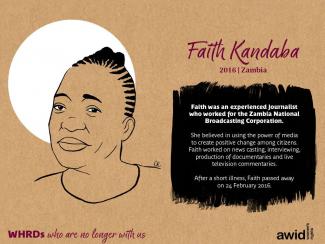
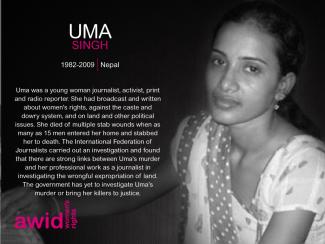
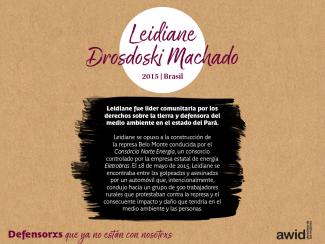
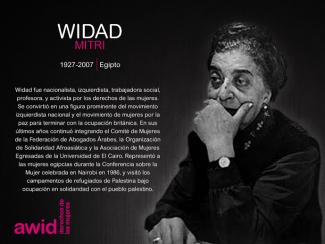
6 Women Human Rights Defenders (WHRDs) across Western and Southeastern Europe have in their lifetime researched, campaigned, participated in and advanced peace and women’s rights movements be it through political and social activism or through dance. We are grateful for the legacy they have left. Please join AWID in honoring these women, their activism and legacy by sharing the memes below with your colleagues, networks and friends and by using the hashtags #WHRDTribute and #16Days.
Please click on each image below to see a larger version and download as a file


L’enquête WITM portant sur les réalités du financement des organisations féministes, la plupart des questions traitent du financement de votre groupe entre 2021 et 2023. Vous aurez besoin de disposer de ces informations pendant que vous répondez aux questions de l’enquête (vos budgets annuels et principales sources de financement, par exemple)
Nuestro plan estratégico “Realidades Feministas” completó su último año a finales de 2022. Durante los últimos cinco años, este intrépido marco nos empujó a ir más allá de los futuros feministas y a reconocer las soluciones y formas de vida feministas que ya existen aquí y ahora. Realidades que deben ser enaltecidas, celebradas y popularizadas. El proyecto de historias multimedia Las Economías Feministas que Amamos y el centro de conocimiento Our Resource sobre modos autónomos de dotar de recursos al activismo feminista son sólo dos ejemplos de este trabajo visionario, siempre profundamente colectivo y en colaboración con diversos movimientos feministas.
Descargar el informe anual 2022
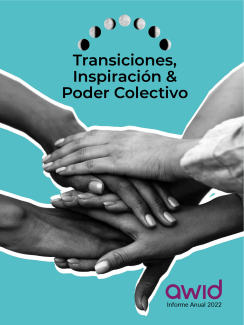
Con la presente reflexión sobre este año, te invitamos a celebrar con nosotrxs hermosos finales y auspiciosos comienzos. El cambio y las transiciones son una parte inseparable de la vida y de los movimientos, que procuramos abrazar con un sentido de responsabilidad y cuidado.
A framework for your research will guide throughout your research process, and the framing document you develop can also serve as a concept note to advisors and partners, and a funding proposal to potential donors.
Before conducting any research:
- Set the goals of your research
- List the key questions you want your research to answer
- Write out the type of data you will need to obtain and review to answer your key questions
- Define the final products you will produce with your research
Your research framing may evolve over time as you refine your questions and gather new information. However, building an initial research framing will allow you to work from a solid foundation.
To create a strong foundation for your WITM research, it is important to clarify what you hope to accomplish.
For example, one goal of AWID’s WITM global research was to provide rigorous data to prove what we already knew anecdotally: that women’s rights organizations are discrepantly underfunded. With this data, we felt we would be better positioned to influence funders in their decision-making.
Your goals could be to:
Frame your research process with key questions that only your research can answer and limit those questions to a specific time frame (e.g. past five years, past year, etc.).
Consider the following points:
Choosing a specific timeframe for your research can result in more precise findings than working with an open-ended timeframe. Also, deciding whether you will repeat this research at regular intervals will allow you to set up data collection benchmarks for easy replication and comparison over time.
These were the key questions that guided AWID’s WITM research process:
Now that you determined your key questions, you can determine what kind of data will help you answer your key questions. This will allow you to plan the rest of your schedule for your WITM research.
For example, will you conduct a survey that covers an extensive portion of your priority population? Will you analyze the applications that funders are receiving from a certain region? Will you also conduct interviews (recommended)? By determining the types of data you need, you can reach out to external parties who will provide this data early on, and plot out your full schedule accordingly. Some suggested sources of data could be:
Diverse data sets are a great way to create robust and rich analysis.
The data from AWID’s 2011 Global Survey formed the backbone of our analysis in Watering the Leaves, Starving the Roots report. However, we also collected data from interviews and interactions with several actors in the field, ranging from donors to activists and women’s rights organizations.
In addition to allowing you to set your schedule, creating an initial plan of what products you will develop will also allow you to work out what resources you need.
For example, will you only produce a long research report or will you also create infographics, brochures and presentations? Depending on your products, you may need to hire a design firm, plan events and so on.
These products will also be the tools you use to achieve your goals, so it is important to keep those goals in mind. For example, is your WITM research exclusively intended as an advocacy tool to influence funders? In that case, your products should allow you to engage with funders at a deep level.
Some sample products:
Framing your research to cover goals, key questions, types of data, and final products will allow you to create a well-planned schedule, prepare your resources in advance, and plan a realistic budget.
This will make interactions with external partners easier and allow you to be nimble when unexpected setbacks occur.

• 1 month
• 1 or more Research person(s)
• AWID Research Framing: sample 1
• AWID Research Framing: sample 2
We are asking for this data to facilitate the review of responses, avoid duplication and be able to contact your group in case you have been unable to complete the questionnaire and/or you have doubts or further questions. You can learn more about how we use the personal information we collect through our work here.
« Les savoirs et pratiques indigènes ont toujours soutenu la souveraineté alimentaire, et ce savoir-faire est entre les mains des femmes [...] L'écoféminisme pour moi, c'est le respect de tout ce que nous avons autour de nous » -
Isabel is a feminist from the United Kingdom with over a decade of experience in feminist responses to fascisms, fundamentalisms, and anti-rights trends. At AWID, her work centers on knowledge-building and has included leading the production of the Rights at Risk series in collaboration with the Observatory on the Universality of Rights (OURs). She holds a Master’s degree in Gender Studies from the School of Oriental and African Studies (SOAS) and previously worked with Women Living Under Muslim Laws (WLUML). She is passionate about cross-movement work, movement-centered knowledge-building, and the use of creative expression to disrupt systems of oppression. Outside of work, Isabel is active in various disability justice spaces for collective care, learning, and advocacy.
Desk research can be done throughout your research. It can assist you with framing, help you to choose survey questions and provide insights to your results.
In this section
- Giving context
- Building on existing knowledge
- Potential sources for desk research
1. Donors’ websites and annual reports
2. Online sources of information
Conducting desk research throughout your research process can assist you with framing, help you to choose survey questions and provide contextual clarity or interesting insights to your survey results, such as comparing similarities and differences between your survey results and information produced by civil society and donors.
Perhaps you notice trends in your survey data and want to understand them.
For example, your survey data may reveal that organization budgets are shrinking, but it cannot tell you why this is happening. Reviewing publications can give you context on potential reasons behind such trends.
Desk research also ensures you are building your research on the existing knowledge regarding your topic, confirming the validity and relevance of your findings.
They may be complimentary or contradictory to existing knowledge, but they must speak to existing data on the topic.
To ensure comprehensive research of the entire funding landscape related to your topic, look at a diverse set of funding sectors.
You can consider:
- Women’s Funds
- Private and Public Foundations
- International Non-Governmental Organizations (INGOs)
- Bilateral and Multilateral Agencies
- Private Sector Actors
- Individual Philanthropists
- Crowdfunders
Include any other relevant sectors to this research.
For example, you may decide that it is also important to research local non-governmental organizations (NGOs).
These are direct sources of information about what funders are actually doing and generally contain information on policies and budgets. Researching this before interviewing donors can result in more focused questions and a stronger interview.

• 1-2 months
• 1 or more research person(s)
7. Synthesize your research findings
La encuesta permanecerá abierta hasta fines de agosto de 2024. Te pedimos que la respondas dentro de dicho lapso para asegurarte de que tus respuestas se incluyan en el análisis.
Argentina has a long history of worker-run cooperatives and workplaces.
In 2001, the country experienced one of the worst economic crises in its history.
As a response to the recession and a form of resistance and resilience, workers across the country started occupying their workplaces.
The Nadia Echazú Textile Cooperative was the first cooperative created by and for trans and travesti people in search of economic autonomy and decent living conditions.
It provides work opportunities, access to social security, sustainable income and economic rights for the communities it serves.