Análisis Especiales

AWID es un organización feminista internacional de membresía, que brinda apoyo a los movimientos que trabajan para lograr la justicia de género y los derechos de las mujeres en todo el mundo.

Foro de AWID: Co-creando futuros feministas

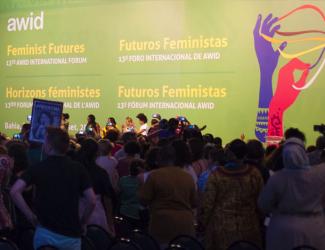
En septiembre de 2016, 1800 feministas y activistas por los derechos de las mujeres de todos los rincones de nuestros movimientos se congregaron en las costas de Bahia, en el 13º Foro Internacional de AWID.

En esta sección se destacan los logros, los aprendizajes y los recursos que surgieron de las ricas conversaciones mantenidas. Te invitamos a analizar, compartir y comentar.


¿Qué ha pasado desde 2016?

Uno de los aportes más importantes del Foro fue la necesidad de ampliar y profundizar nuestro trabajo entre movimientos, frente a la confluencia de los fascismos en auge, fundamentalismos, codicia corporativa y cambio climático.

Con esto en mente, AWID, en asociación con múltiples aliadxs, ha estado trabajando para que estas semillas de resistencia:

AWID se ha comprometido, mediante su próximo plan estratégico y su proceso del Foro, a continuar y profundizar las relaciones, las lecciones y los procesos iniciados en el Foro 2016 y basándonos en el momento actual.

¿Que pasa ahora?

El mundo es un lugar muy diferente de lo que era un año atrás, y seguirá cambiando en los próximos años.

El próximo Foro de AWID se realizará en la región del Pacífico Asiático (el lugar y la fecha exactos serán anunciados en 2018). Esperamos que te unas a nosotrxs.

Sobre el Foro de AWID

Los Foros de AWID comenzaron en 1983 en Washington DC. Desde entonces, el evento ha crecido hasta convertirse en muchas cosas para muchas personas: un proceso iterativo para darle forma a nuestros análisis, objetivos y acciones; un hito crucial que fortalece los feminismos de lxs participantes e infunde energías a sus procesos de organización; un hogar político donde lxs defensoras de derechos humanos encuentran un santuario y solidaridad.

Más información sobre los Foros anteriores

Contenido relacionado

Forum anchors (Forum page)

El Foro de AWID estará organizado alrededor de 6 tópicos interconectados. Estos «ejes» se centran en las realidades feministas.

Explora

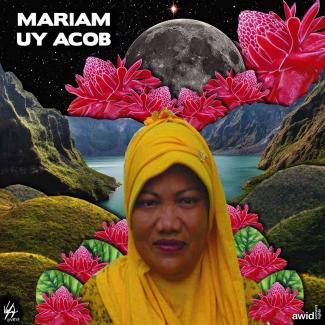
Mariam Uy Acob

Mariam era asistente jurídica en la Alianza Kawagib Moro por los Derechos Humanos.

Fue una acérrima crítica de la militarización de las comunidades moro, y denunció sistemáticamente los bombardeos aéreos y la concentración de campamentos militares. Tuvo que buscar refugio luego de exponer y denunciar las injusticias cometidas contra las comunidades musulmanas en Filipinas.

Se cree que fue asesinada por agentes militares sospechosos debido a su trabajo como defensora de derechos humanos. Los atacantes que mataron a Mariam la esperaron, se pusieron a la par del vehículo en el que se desplazaba y le dispararon siete veces.


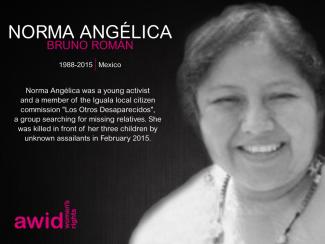
Mariam Uy Acob, Philippines

Upasana Agarwal

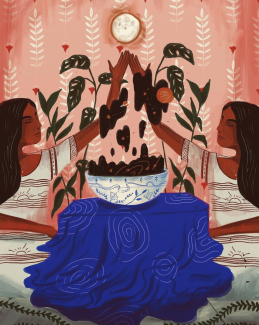
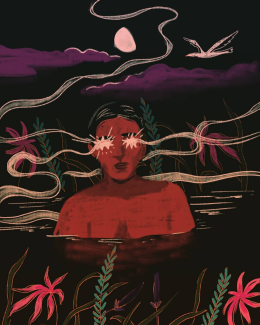
Forgotten Song
“Forgotten Song” [«Canción Olvidada»]
Ode to the Moon
“Ode to the Moon” [Oda a la Luna»]
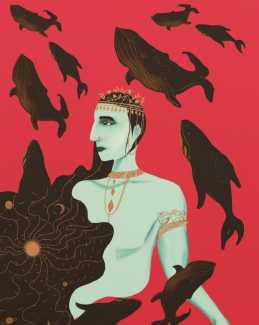
Vapour and Fire
“Vapour and Fire” [«Vapor y Fuego»]

Sobre Upasana Agarwal

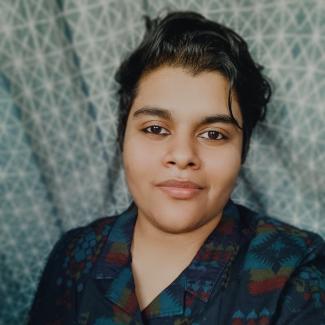
Upasana Agarwal
Upasana es unx ilustradorx y artista no binarie de Calcuta, India. Su obra explora narrativas identitarias y personales, que empean restos o evidencias visuales de los contextos con los que trabaja. Le atraen especialmente los diseños en patrones que, para ellx, comunican verdades complejas sobre el pasado, el presente y el futuro. Cuando Upasana no está ilustrando, organiza y dirige un centro de arte comunitario queer y trans de la ciudad.

Membership why page - Paz Romero

Esta comunidad es un lugar para las conexiones, para entender nuestras luchas individuales como parte de las luchas globales y, a veces, ¡también para bailar! En línea, no existen otros lugares como este, en el que puedes encontrarte con auténtiques activistas de base de todo el mundo y forjar lazos de solidaridad y sororidad..- Paz Romero, Argentina

Snippet FEA Principles of work Human Rights (FR)

Une personne parlant dans un haut-parleur.

DROITS HUMAINS

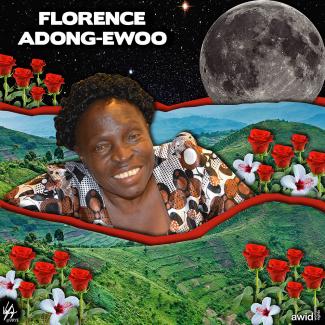
Florence Adong-Ewoo

Florence était une militante des droits des personnes handicapées qui travaillait avec plusieurs organisations de femmes handicapées en Ouganda.

Elle a également occupé le poste de présidente de l’Association des femmes handicapées du district de Lira, ainsi que du caucus des conseillères du district de Lira. Formée en tant que conseillère pour personnes handicapées et parents d'enfants handicapés, elle a soutenu de nombreux projets appelant à une plus grande représentation des personnes handicapées.

Elle est morte dans un accident de moto.


Florence Adong-Ewoo, Uganda

Comprendre le contexte des menaces antidroits

Chapitre 2

Bien plus de la moitié de la population mondiale est aujourd’hui dirigée par l’extrême droite. C’est sur cette toile de fond que défenseur·e·s des droits humains et féministes luttent pour « tenir bon », protéger le multilatéralisme et le système international des droits humains, alors que leurs engagements les exposent à de violentes répressions. Ces institutions sont cependant de plus en plus soumises aux intérêts du secteur privé. Les grandes entreprises, surtout les sociétés transnationales, siègent à la table des négociations et occupent des fonctions de leadership dans plusieurs institutions multilatérales, l’ONU notamment. Le lien entre ultranationalisme, restriction de l’espace civique et emprise des entreprises a un impact considérable sur la réalisation ou non des droits humains pour tout le monde.

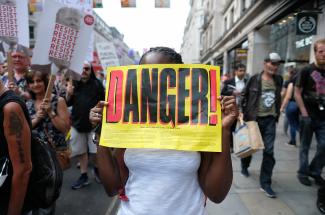
Protester holding a flyer that reads "Danger - Trump and the Far Right."
© Alisdare Hickson / Flickr
Danger - Trump and the Far Right.

Sommaire

  • Nationalisme et ultranationalisme
  • Emprise des entreprises : le pouvoir débridé des entreprises met nos droits en danger
  • Répression et restriction des espaces civiques pour les activistes féministes et les défenseur·e·s des droits humains des femmes et des personnes LGBTIQ+
  • Histoire du mouvement de la résistance. L’Article 16 de la CEDAW : vers une réforme des codes de la famille discriminatoires dans les contextes musulmans
     

Lire le chapitre complet >

Snippet - Intro CSW69_EN

#FreezeFascisms

In the 30 years since the adoption of the Beijing Declaration & Platform for Action, a rising tide of fascisms is exerting significant power and influence within multilateral spaces, backpedalling gender justice gains and human rights protections globally.

Around CSW69, we're co-organizing horizontal, brave spaces on-ground and online, to share strategies and build feminist power beyond Beijing+30. Our collective presence disrupts institutional practices of exclusion in such spaces while supporting movements to organize around feminist alternatives to systems of oppression.

Join the conversations from March 10-21, 2025, as we collectively transform CSW69 into spaces for and about resistance and solidarity.

Snippet FEA Story 1 Maps Economies of Care (EN)

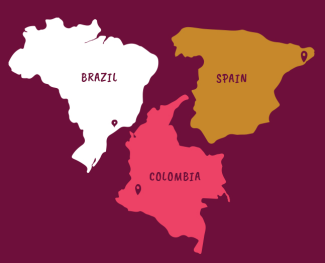
Burgundy background with maps of Brazil in white, Spain in mustard yellow, and Colombia in pink

FRMag - My queer Ramadan

My Queer Ramadan 

by Amal Amer

I pray with my family for the first time in six years while wrapped in a keffiyah I scavenged from a dumpster. (...)

Read

artwork: “Angels go out at night too” by Chloé Luu >

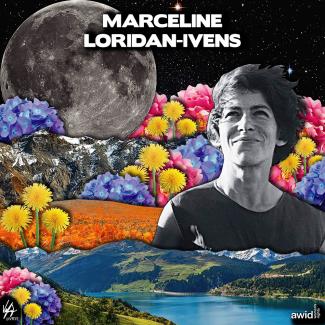
Marceline Loridan-Ivens

Born in 1928, Marceline worked as an actress, a screenwriter, and a director.

She directed The Birch-Tree Meadow in 2003, starring Anouk Aimee, as well as several other documentaries. She was also a holocaust survivor. She was just fifteen when she and her father were both arrested and sent to Nazi concentration camps. The three kilometres between her father in Auschwitz and herself in Birkenau were an insurmountable distance, which she writes about in one of her seminal novels “But You Did Not Come Back.”

In talking about her work, she once said: "All I can say is that everything I can write, everything I can unveil — it's my task to do it.”


Marceline Loridan-Ivens, France

The Crear, Résister, Transform Story by Coumba Toure

A magical experience of feminist story telling led by pan-African feminist Coumba Toure, performing in the age old tradition of West African griots.

And we gathered again 
We gathered our stories our strength 
our songs
our tears 
our rage 
our dreams 
our success
our failures
And we pull them all together 
In one big bowl to share 
for a moon of thoughts 
And we stay in touch 
We shake each others minds 
we caress each other souls
While our hands still are tied 
And our kisses and hugs are banned 
Yet we grow stronger by the hour 
Weaving together our voices
Crossing the sound barriers 
as we speak in tongues 

We are getting louder and louder 
We know about differences from others 
and from each other so we are stitching our beauties into patchwork or thoughts
From our deepest learnings from our powers 
Sometimes we are surrounded by terror 
by confusions by dishonesty
But we wash out in the Ocean of love 
We are weavers of dreams 
To clothes or new world 
Thread after thread
As small as we are
Like little ants building our movement
Llike little drops building our rivers
 We take steps forward and steps backward 
Dancing our way back to sanity 
Sustain to the rhythm of our hearts keep 
Beating please don't not stop
And we are here transmitter of forgotten generosity 
drop after drop growing like the ocean 
growing like the river flowing from our souls .
showing our strength  to be  the  water 
that will clean this world
and we are gathering again can you feel us 
I would lie if I say I said I am 
Ok not to see you I do miss my people 
I miss your touch and
You unfiltered and unrecorded voices 
I miss our whispers and our screams 
Our cries of the aborted revolution 
We only want to give birth to new worlds 
 So fight to erase the borders between us 


And we gathered again 
We gathered our stories our strength 
our songs
our tears 
our rage 
our dreams 
our success
our failures
And we pull them all together In one big bowl to share 
For a moon of thoughts 
And we stay in touch 
We shake each others minds 
we caress each other souls
While our hands still are tied 
And our kisses and hugs are banned 
Yet we grow stronger by the hour 
Weaving together our voices
Crossing the sound barriers 
as we speak in tongues 
We are getting louder and louder 
We know about differences from others 
and from each other so we are stitching our beauties into patchwork or thoughts
From our deepest learnings from our powers Sometimes we are surrounded by terror by Confusions by dishonesty
But we watch out in the Ocean of love 
We are weavers of dreams 
To clothes or new world 
Thread after thread 
As small as we are like little ants building our movements
 like little drops building our rivers We take steps forward and steps backward 
dancing our way back to sanity 
Sustain to the rhythm of our hearts
keep beating please don't not stop
And we are here transmitter of forgotten generosity 
Drop after drop growing like the ocean 
growing like the river flowing from our souls 
showing our strength to be  the  water 
that will clean this world  
and we are gathering again can you feel us 
I would lie if I I said I am Ok
not to see you
I do miss my people
I miss your touch and
You unfiltered and unrecorded voices  
I miss  our  whispers  and  our screams 
Our cries over the aborted revolutions 
We only want to give birth to new worlds 
So fight to erase the borders between us 
Please don’’t stop

Snippet - CSW69 - Feminist Solidarity Space - ES

Espacio de solidaridad feminista

✉️ Requiere inscripción previa para grandes grupos. Entrada libre para grupos reducidos. Reserven aquí

📅Martes 11 de marzo de 2025
🕒 de 12:00 a 02:00 p.m. y de 04:00 a 06:00 p.m., EST
🏢 
Chef's Kitchen Loft with Terrace, 216 East 45th St 13th Floor New York

Organiza: AWID

Snippet - That Feminist Fire Logo (ES)

Texto en blanco que dice el título de nuestro podcast en español: Ese fuego feminista

FRMag - Ashawo Work na Work

"Ashawo Work na Work": Cómo lxs jóvenes feministas de Ghana están haciendo realidad los futuros feministas

por Fatima B. Derby

En 2017, la campaña de AWID #PracticaSolidaridad destacó cómo lxs jóvenes feministas podían construir un futuro feminista apoyándose mutuamente, participando en conversaciones interregionales entre ellxs, marchando en solidaridad con otrxs activistas y abriendo canales de colaboración entre los movimientos. (...)

Leer

< arte: «Let it Grow» [Déjalo crecer], Gucora Andu 

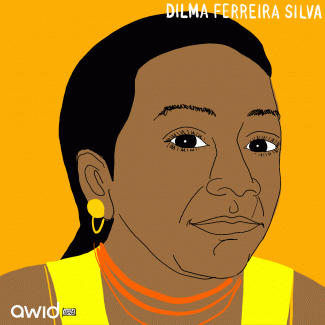
Dilma Ferreira Silva

Dilma Ferreira Silva was a leading Amazonian rights activist who fought for decades for the rights of people affected by dams.

She herself was among the 32,000 people displaced by the Tucuruí, a mega-hydroelectric power plant, built in Brazil during the 1964-1985 military dictatorship.

In 2005 Dilma was invited to join the Movement of Dam-Affected Peoples in Brazil (MAB), and in 2006 she formed the women’s collective, eventually becoming regional coordinator of the movement.

In speaking about her activism, her colleagues commented:

“She stood out very fast because she was always very fearless in the struggle.” 

Dilma lived in the rural settlement of Salvador Allende,50 kilometers from Tucuruí, and dedicated her life to better protect communities and the land affected by the construction of mega projects. She was especially concerned with the gendered impacts of such projects and advocated for women’s rights.

At a national MAB meeting in 2011, Dilma spoke to women affected by the dams, saying:

“We are the real Marias, warriors, fighters who are there, facing the challenge of daily struggle”.

In the following years, Dilma organized grassroots MAD groups and worked with the community to form farming cooperatives that created a better distribution of food for the community. They improved the commercialization of fishing, and developed a cistern project for safe drinking water. She was also an advocate for farmers whose lands were being coveted by ‘grileiros’ (land grabbers). 

On 22nd March 2019, at the age of 48, Dilma, her husband and their friend were all brutally murdered. The three killings came as part of a wave of violence in the Amazon against the Movimento dos Trabalhadores Sem Terra (translates as ‘landless workers’ movement’), environmental and indigenous activists.