Análisis Especiales

AWID es un organización feminista internacional de membresía, que brinda apoyo a los movimientos que trabajan para lograr la justicia de género y los derechos de las mujeres en todo el mundo.

Foro de AWID: Co-creando futuros feministas

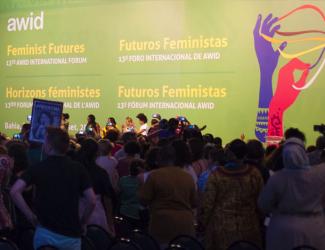
En septiembre de 2016, 1800 feministas y activistas por los derechos de las mujeres de todos los rincones de nuestros movimientos se congregaron en las costas de Bahia, en el 13º Foro Internacional de AWID.

En esta sección se destacan los logros, los aprendizajes y los recursos que surgieron de las ricas conversaciones mantenidas. Te invitamos a analizar, compartir y comentar.


¿Qué ha pasado desde 2016?

Uno de los aportes más importantes del Foro fue la necesidad de ampliar y profundizar nuestro trabajo entre movimientos, frente a la confluencia de los fascismos en auge, fundamentalismos, codicia corporativa y cambio climático.

Con esto en mente, AWID, en asociación con múltiples aliadxs, ha estado trabajando para que estas semillas de resistencia:

AWID se ha comprometido, mediante su próximo plan estratégico y su proceso del Foro, a continuar y profundizar las relaciones, las lecciones y los procesos iniciados en el Foro 2016 y basándonos en el momento actual.

¿Que pasa ahora?

El mundo es un lugar muy diferente de lo que era un año atrás, y seguirá cambiando en los próximos años.

El próximo Foro de AWID se realizará en la región del Pacífico Asiático (el lugar y la fecha exactos serán anunciados en 2018). Esperamos que te unas a nosotrxs.

Sobre el Foro de AWID

Los Foros de AWID comenzaron en 1983 en Washington DC. Desde entonces, el evento ha crecido hasta convertirse en muchas cosas para muchas personas: un proceso iterativo para darle forma a nuestros análisis, objetivos y acciones; un hito crucial que fortalece los feminismos de lxs participantes e infunde energías a sus procesos de organización; un hogar político donde lxs defensoras de derechos humanos encuentran un santuario y solidaridad.

Más información sobre los Foros anteriores

Contenido relacionado

Priscilla Hon

Biography

Priscilla posee prácticamente dos décadas de experiencia de trabajo en el sector sin fines de lucro con organizaciones por la justicia social abocadas a los derechos de las mujeres y las juventudes, la conservación, la consolidación de la paz y el desarrollo. Sus intereses se centran en establecer procesos y sistemas progresistas que ayuden a una organización a operar de acuerdo a sus valores y principios y a prosperar, así como en encontrar formas de ayudar a las organizaciones y los donantes a identificar y garantizar los recursos que necesitan para una buena labor. Priscilla se unió a AWID en 2018, como Gerente de Movilización de Recursos y, en julio de 2023, asumió el cargo de Directora de Operaciones y Alianzas para el Financiamiento.

Posee una Maestría en Política Internacional de la Escuela de Estudios Orientales y Africanos (SOAS), una pila cada vez más alta de libros para los que todavía intenta encontrar tiempo para leer e integra la Junta de Hodan Somali Community, una entidad benéfica radicada en Londres.

Position
Directora de Operaciones y Alianzas para el Financiamiento
Add to stories
Off

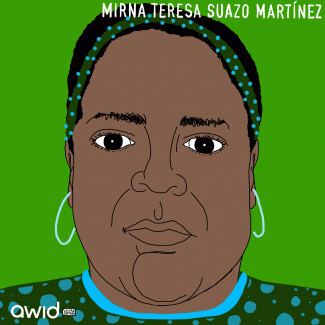
Mirna Teresa Suazo Martínez

Mirna Teresa Suazo Martínez faisait partie de la communauté garifuna (afro-descendante et autochtone) Masca et vivait sur la côte nord des Caraïbes du Honduras. Elle était leader de sa communauté et fervente défenseure du territoire autochtone, une terre qui a été violée le jour où l'Institut national agraire du Honduras a accordé des licences territoriales à des personnes extérieures à la communauté. 

Ce fait déplorable a été à l'origine de harcèlements, d'abus et de violences répétés contre Masca, où les intérêts économiques de différents groupes se sont heurtés à ceux des forces armées et des autorités honduriennes. Selon l'Organisation fraternelle noire du Honduras (OFRANEH), la stratégie de ces groupes consiste à expulser et exterminer la population autochtone. 

« Masca, la communauté garifuna située près de la vallée du Cuyamel, se trouve dans la zone d’influence de l’une des villes présumées modèles, une situation qui a déclenché des pressions territoriales le long de la côte garifuna. » - OFRANEH, 8 septembre 2019

Mirna Teresa, présidente du conseil d'administration de la communauté de Masca à Omoa, avait elle aussi fermement rejeté la construction de deux centrales hydroélectriques sur la rivière Masca, qui porte le même nom que sa communauté.

« La communauté garífuna attribue l'aggravation de la situation dans leur région à son opposition à l'exploitation touristique, à la monoculture de palmiers africains et au trafic de drogue, tandis qu'elle cherche parallèlement à construire une vie alternative au travers de la culture de la noix de coco et d'autres produits d'autoconsommation ». - Voces Feministas, 10 septembre 2019 

Mirna Teresa a été assassinée le 8 septembre 2019 dans son restaurant « Champa los Gemelos ». 

Elle est l'une des six femmes défenseures garifunas à avoir été assassinées rien qu'entre septembre et octobre 2019. Selon l'OFRANEH, les autorités n'ont pas mené d'enquête sur ces crimes.

« En ce qui concerne les communautés garífuna, une grande partie des homicides sont liés au régime foncier et à la gestion des terres. Cependant, les querelles entre les organisations criminelles ont abouti à des meurtres, à l’instar de ceux ayant eu lieu récemment à Santa Rosa de Aguán ». - OFRANEH, 8 septembre 2019
Introducing AWID’s next Co-Executive Directors

Dear Feminist Movements,

On behalf of the AWID Board of Directors, I am proud to introduce AWID’s next Co-Executive Directors: Faye Macheke and Inna Michaeli!  

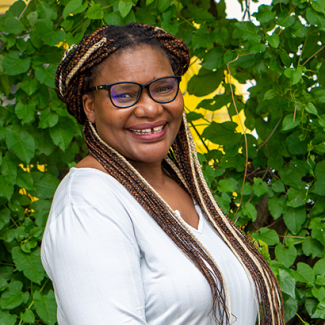
Portrait of CoED Faye Macheke smiling and standing in front of greenery
Faye Macheke is a passionate Pan-African feminist, active in movements for women's rights, racial justice, migrant and labor rights, and environmental justice.  Her activism builds on the legacy of the struggle against apartheid in South Africa and the aftermath of the apartheid era in Zimbabwe. In 2019, Faye joined AWID as the Director of Finance, Operations and Development. She brings extensive experience in feminist leadership, strategy, and all aspects of organisational development. Faye is a committed Board Member of UAF-Africa and other women's rights organizations. She is based in Cape Town, South Africa.
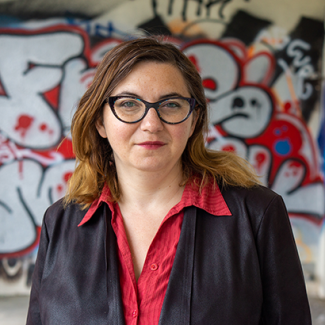
Portrait of CoED Inna Michaeli smiling. Behind them is a wall with grafiti.
Inna Michaeli is a feminist lesbian queer activist and sociologist with many years of deep engagement in feminist and LGBTQI+ struggles, political education and organizing by and for migrant women, and Palestine liberation and solidarity. Inna joined AWID in 2016 and served in different roles, most recently as the Director of Programs. She brings extensive experience in research and knowledge building, policy advocacy and organizational development. Inna serves on the Board of the Jewish Voice for Peace - Germany. She is based in Berlin, Germany.

This decision is the result of a rigorous process with full participation of the Board and the staff of AWID. The Board recognised and honoured the skills and talents of AWID staff by opening an internal hiring search.  As a result, we had two brilliant candidates, who embody the integrity, ethic of care, and feminist intersectional values that drive AWID’s work, apply together as a team. Faye and Inna brought forward a brave and exciting vision to meet the challenges of this moment: building a global feminist community, resisting and disrupting systems of oppression, and supporting feminist movements to thrive.
 
As AWID celebrates 40 years we are excited for Inna and Faye to co-lead AWID into our next strategy and a new phase of evolving, pushing boundaries, and supporting feminist movements worldwide. 
 
Appointing and supporting AWID’s Co-Executive Directors to lead the organisation is a fiduciary responsibility we take seriously as a Board. How we engage those processes is also a reflection of AWID’s brilliant and diverse membership, which elects AWID’s Board.
 
As we say good-bye to Cindy and Hakima, we, the Board, unanimously and enthusiastically welcome Faye and Inna as our next Co-EDs as of September 5, 2022. Stay tuned for more updates about our leadership transition in the months ahead.

Most of all, thank you for your ongoing support!

In feminist solidarity and love,
Margo Okazawa-Rey
President, AWID Board

Comment puis-je financer ma participation au Forum de l'AWID ?

Si votre groupe ou votre organisation est récipiendaire de fonds, vous feriez bien de vous entretenir dès maintenant avec votre organisme de financement pour savoir si ce dernier est en mesure de prendre en charge votre voyage et votre participation au Forum. De nombreuses institutions planifient leur budget pour l'année prochaine dès le début de l'année 2023, aussi vaudrait-il mieux ne pas reporter cette discussion à l'année prochaine.

Clone of Snippet - WITM About the survey - FR

In 2023, feminist and 
women's rights organizations 
had a median annual budget of $22,000

In contrast, over $1 billion went to three anti-rights groups 2021-2022, with funding for anti-gender networks still rising.1

1 Global Philanthropy Project, 2024

Primer: Spot key groups and debunk their narratives

Cartilla:

Cómo identificar a los principales grupos y refutar sus narrativas

¿Es usted una persona que diseña políticas en la ONU y quiere saber quiénes son los principales grupos anti-derechos y frente a qué discursos mantenerse alerta? ¿O unx feminista que busca argumentos para refutar esos discursos rápidamente? Esta cartilla de 8 páginas le ofrece información importante de un vistazo.

Acceder a la cartilla

Marta Musić

Biography

Marta est chercheur·se et activiste queer, transféministe et non binaire, originaire de l'ex-Yougoslavie, actuellement basé·e à Barcelone. Iel facilite des mouvements transnationaux, tisse des alternatives systémiques et est économiste féministe. Iel a cofondé et coordonné avec d’autres la Tapisserie mondiale des alternatives, un processus mondial qui cherche à identifier, documenter et relier les alternatives aux niveaux local, régional et mondial. À l’échelle locale, Marta est engagé·e au sein d’organisations antiracistes, transféministes, queer et migrantes. Iel détient également un doctorat en sciences et technologies environnementales de l'Université autonome de Barcelone, consacré aux perspectives féministes décoloniales d'une pluralité d'alternatives systémiques et à la création de systèmes alternatifs féministes basés sur les soins et la pérennité de la vie. Pendant son temps libre, iel aime boxer, jouer de la guitare et de la batterie dans un groupe de samba, faire de la photographie, de la randonnée, cuisiner pour ses proches et gâter ses deux chats.

Position
Responsable de la Construction d’Économies Féministes
Add to stories
Off

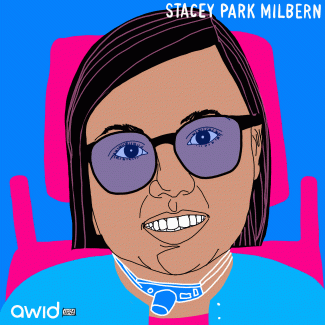
Stacey Park Milbern

“I do not know a lot about spirituality or what happens when we die, but my crip queer Korean life makes me believe that our earthly bodyminds is but a fraction, and not considering our ancestors is electing only to see a glimpse of who we are.” - Stacey Park Milbern

Stacey Park Milbern was a self-identifying queer disabled woman of colour and a trailblazer. A long-standing and respected organizer and leader in the disability rights and justice movement, she also advocated for the rights of many different communities, not just her own. Stacey’s activism had mighty roots in her experience at the intersections of gender, disability, sexuality and race.

Stacey, along with some friends, co-created the Disability Justice Culture Club, a group working to support various and especially vulnerable communities, including helping homeless people gain access to resources during the COVID-19 pandemic. 

She was also a co-producer of an impact campaign for Netflix’s documentary “Crip Camp”, a board member of the WITH Foundation, and led organizations at local, state and national levels. Stacey wrote beautifully and powerfully:

“My ancestors are people torn apart from loves by war and displacement. It’s because of them I know the power of building home with whatever you have, wherever you are, whoever you are with. My ancestors are queers who lived in the American South. It’s because of them I understand the importance of relationships, place and living life big, even if it is dangerous. All of my ancestors know longing. Longing is often our connecting place...” - Stacey Park Milbern

She was born in Seoul, Korea and grew up in North Carolina, later  continuing her journey in the San Francisco Bay Area. Stacey passed away of complications from surgery on her 33rd birthday on 19 May 2020. 


Read an essay by Stacey Park Milbern
Listen to an interview with Stacey Park Milbern
#StaceyTaughtUs: Record your story for the Disability Visibility Project

Tributes:

“She was, a lot of people would say, a leader. She kind of encompassed all of it. You know, sometimes there's like a lead from the front, lead from the middle, lead from the back. And she was just somehow able to do all of that.” - Andraéa LaVant, disability rights activist

“What a blow to lose Stacey when our communities need her leadership more than ever, and at a time when her strength, insight, and grit were receiving increased recognition outside of disability circles, giving her a greater platform to advance her life’s work...We will not have the gift of learning where her charismatic leadership would have taken us. But let there be no doubt: What Stacey gave us, in a relatively short time, will continue benefiting others for years to come.” - Disability Rights Education and Defense Fund (DREDF)

Carta de amor a los movimientos feministas #2

Mi querida colectiva feminista:

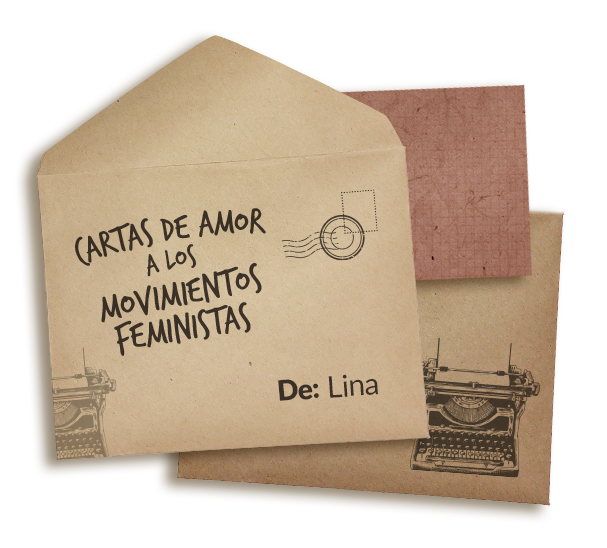
Sobres de álbum de recortes, el de arriba dicen Cartas de amor a los movimientos feministas. El sobre en la parte superior dice De: Lina

La integro desde que tengo uso de razón. De jovencita, no sabía que existía una palabra — «feminista»  — para nosotrxs, quienes aspiramos a superar y desmantelar el patriarcado; quienes buscamos refugio en los brazos de la inclusión y la interseccionalidad; quienes tratamos a las personas como iguales independientemente de su género, raza, sexualidad, religión y etnia; quienes estamos continuamente aprendiendo a obrar mejor, a ser mejores y a usar nuestros privilegios para que otras personas mejoren. 

Cuando tenía 14 años, mi profesor de francés de la escuela secundaria, un hombre de 1,80 metros de altura y 30 años de edad, agredió a una alumna de mi clase delante de todxs nosotrxs. La alumna, que era amiga mía desde la infancia, y varias chicas más fuimos a la dirección para denunciarlo, madres y padres se involucraron y toda la clase, treinta alumnxs, expresó su apoyo a la chica. Pero todos nuestros intentos para que el profesor rindiera cuentas por lo que había hecho fracasaron: la administración ocultóó la denunciaa y el profesor nunca fue despedido ni perseguido. Mis compañeras y yo estábamos indignadas, así que hicimos lo que toda joven feminista furiosa haría: LE TIRAMOS HUEVOS A SU AUTO. Si bien los huevos se lavaron con facilidad, costó más sacar la pintura que usamos para escribir las palabras «Cerdo» y «Khamaj» (basura). Nunca olvidaré cómo nos hizo sentir eso: liberadas, enfurecidas, felices, muy unidas y con poder. La misma emoción se repite en todos los ámbitos feministas en los que he estado desde entonces. La feminista adolescente que hay en mí creció y participó en Women Deliver, AWID, Unootha, facilitó talleres feministas en la universidad, e incluso fue perseguida por su filiación feminista a los 19 años, pero esa es otra historia para otra carta. 

Los movimientos y espacios feministas me brindan seguridad y empoderamiento. Son las madres que hubiéramos deseado tener y los vínculos que necesitábamos para conectarnos y organizarnos, a pesar de nuestras diferencias, contra un enemigo común, el patriarcado, que nos ha estado perjudicando a todxs. Con ustedes aprendí a ser resiliente y a reunir mis fuerzas y habilidades para estimular a otras personas, para sacar a la luz la situación de las personas marginadas, y dar voz a quienes no la tienen.

Lo que más me gusta de ustedes, movimientos feministas, es que a veces hacen mal las cosas, desprecian y también marginan, tienen prejuicios como cualquier otro movimiento, pero lo que los diferencia es que siempre se esfuerzan por ser mejores. La rendición de cuentas no es algo a lo que le teman, y son un colectivo en constante cambio que refleja cómo el altruismo y la filantropía que se proponen lograr la equidad de género también cambian con el paso del tiempo. 

Que crezcan siempre, que obren mejor, que siempre se enfurezcan, que siempre rujan, que siempre amen, que siempre hablen distintas lenguas y que siempre sientan su poder. 

Amor, luz y rabia, 
Lina

Will there be pre-Forum regional, thematic or other convenings?

We believe so! It is still very early in the planning process, so please stay tuned as plans are forming.

WITM - Refreshed INFOGRAPHIC 3 ES

¿Cómo se autofinancian las organizaciones feministas?

Las organizaciones feministas y por los derechos de las mujeres no solo dependemos del financiamiento institucional, también nos autofinanciamos. Son la pasión, el compromiso político, la solidaridad y el cuidado colectivo lo que empuja a nuestras organizaciones.
Estos recursos se autogeneran y son autónomos y, aunque a menudo no se reflejan en nuestros presupuestos, son la columna vertebral de las organizaciones.

Consulta los datos sobre la gestión autónoma de recursos

Nos droits en danger – Rapport sur les tendances 2017 de l'OURs

Rapport

Nos droits en danger – Rapport sur les tendances 2017 de l’OURs

Le premier rapport de l’Observatoire sur l’universalité des droits (OURs) - disponible en anglais et en espagnol - compile les informations disponibles sur les tendances antidroits dans les sphères internationales. Découvrez les principaux groupes religieux, les discours et les tactiques antidroits à l’œuvre au sein de l’ONU.

Obtenir le rapport Obtenir le rapport (en anglais)

Joanne Kobuthi-Kuria

Biography

Joanne is an African feminist who is passionate about dismantling gender inequalities on the African continent. Joanne has worked with a number of global organizations, media and think tanks including Amnesty International, Wrthy, Local Development Research Institute, BBC, East African Community (EAC) among others.She serves on a couple of boards including Freely in hope-an NGO based in Kenya and Zambia that seeks to equip survivors and advocates to lead in ending sexual violence and Msingi Trust-a movement of activists that meet at the confluence of faith and human rights. She has a Masters in Business Administration, Masters of Public Policy and a Bachelor of Laws. She is a book junkie with a penchant for fiction.

Position
Manager, Membership and Constituency Engagement
Add to stories
Off

Love letter to Feminist Movements #8

Dearest Beloved Feminist Movements,

Hello again, and again, and again. I have known and loved you my entire adult life, since I first met you meaningfully, after graduating from university. I’d seen you one time before then. That was you appearing as Betty Friedan on a local TV talk show in the US Midwest, in the late-1960s. At the time, Mrs. Wells, my other mother, and I commented on what wild, far-fetched ideas this woman was trying to convince us about. Decade after decade since then I have fallen more deeply in love with you, Beloved, and understand and witness your political and theoretical brilliance, ethical and moral authority, creativity, joy, and love, above all. Nearly 60 years later, I know we are partners forever.

Love letter to feminist movements from Your dramatically cloaked jungle nymph.

The early years of our acquaintanceship was ok. I was quite self-involved--figuring racial, gender, and sexual identity; getting clear on my core politics, values, and ethics; completing my formal education--and you provided numerous settings, intellectual drop-in centers, and comforting holding environments where and through which I was able to craft the young-adult building blocks of the feminist and human being whom I would become.

The predominantly white women’s movement of Cambridge and Boston, including Daughters of Bilitis, was my starting place. That suited me at the time but soon realized I desired something more. Poof! Like magic (serendipity), I connected with a small group of radical, anti-imperialist, Black, socialist lesbian women and we soon became the Combahee River Collective. 

That early Combahee experience, combined with critical life lessons and particular African-American/Korean immigrant racial politics of early-1990s in the US, prepared me for the journey that has led me to identify and work as a transnational feminist to address militarism and to dedicate myself to imagining other worlds where all living beings will thrive.

The next two critical women’s-movement moments were decades after Combahee years but deeply linked. First was meeting and being invited into the Korean feminist movement organizing against US military bases and supporting the “kijichon women” the Korean women whose lives, including for some, their mixed-race children, revolved around servicing US military personnel in numerous ways in villages and towns adjacent to the bases. Korean Beloved Feminists, especially Kim Yon-Ja and Ahn Il-Soon, the first sisters I met and traveled with, made me see and understand the critical importance of nation as an analytical and organizing principle. The “capstone” was living, working in occupied Palestine. The late Maha Abu-Dayyeh introduced me to the Palestinian women’s movement, with a profound comment, “you can leave Palestine but Palestine will never leave you.” So true. And, all my work and experiences across many borders brought me to AWID--my second home.

As you know, Beloved, being with you has not been easy or simple. Indeed, you are demanding, consistently riddled with contradictions, and sometimes even hurtful. Nonetheless, you continue to grow and develop, as you are supporting my political, emotional, and spiritual growth and development.  I guess we are growing each other--a very profound process to which I will dedicate the rest of my time in my current form.

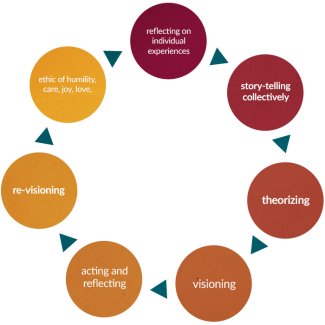
The through-line of being with you all these decades is this: 

Feminists Collectively Engaging the Heads, Hearts, Hands, and Spirits to transform our worlds

This is chart with 7 consecutive circles arranged in a circumference. Each one is separated by an arrow which makes the chart a loop. Starting at the top, and following left to right, the circles say: #1 reflecting on individual experiences, #2 story-telling collectively, #3 theorizing, #4 visioning, #5 acting and reflecting, #6 re-visioning, #7 ethic of humility, care, joy, love.


So much love, Feminist Movements!

Your Margo
AKA DJ MOR Love and Joy

Wellfleet Massachusetts USA

Soy parte de un fondo o donante individual. ¿Cómo puedo apoyar al Foro de AWID?

Te invitamos a que te pongas en contacto con nosotrxs para explorar formas de colaborar de manera más significativa con el Foro.

Snippet - COP30 - Radical Democracy - ES

Democracia radical y justicia climática: el debate ausente en la COP30

Modelos de gobernanza alternativos como vías para salir de la crisis climática.

📅 Miércoles 12 de noviembre de 2025
📍 Seminario Mar Nossa Sra Da Assunção, Pará, Brasil

Más información aquí

Snippet Kohl - Plénière: La révolution sera féministe — ou il n’y aura pas de révolution

Plénière: La révolution sera féministe — ou il n’y aura pas de révolution

Avec Manal Tamimi, Bubulina Moreno, Karolina Więckiewicz et Anwulika Ngozi Okonjo..

YOUTUBESOUNDCLOUD (anglais)