AWID es un organización feminista internacional de membresía, que brinda apoyo a los movimientos que trabajan para lograr la justicia de género y los derechos de las mujeres en todo el mundo.
El Tributo de AWID es una exhibición de arte que honra a feministas, a activistas por los derechos de las mujeres y de la justicia social de todo el mundo que ya no están con nosotrxs.
En 2020, hacemos un cambio
El Tributo de este año cuenta y comparte las historias y narraciones de quienes crearon conjuntamente realidades feministas, ofrecieron visiones de alternativas a los sistemas y actores que nos oprimen, y propusieron nuevas formas de organizarnos, de movilizarnos, de luchar, de trabajar, de vivir y de aprender.
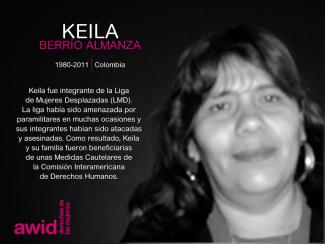
Se agregan a la galería 49 retratos nuevos de feministas y defensorxs de derechos humanos. Aunque muchxs feministas y defensorxs han fallecido debido a edad avanzada o enfermedad, muchísimxs han sido asesinadxs debido a su trabajo y por ser quienes eran.
Esta violencia creciente (de parte de Estados, empresas transnacionales, crimen organizado, sicarios no identificados, etc.) no se dirige solo a activistas individuales sino a nuestro trabajo común y a las realidades feministas.
Al compartir las historias de lxs activistas en este Tributo, mantenemos vivo su legado y nos inspiran para el trabajo futuro de nuestros movimientos.
Lors retratos de 2020 fueron diseñados por la ilustradora y animadora galardonada, Louisa Bertman.
En AWID nos gustaría agradecer a las familias y organizaciones que nos compartieron sus historias personales, y así haber contribuido a este memorial. Nos unimos a ellxs para continuar el extraordinario trabajo de estxs activistas y defensorxs, y en el esfuerzo para asegurarnos de que se logre justicia en los casos que permanecen en la impunidad
"Ellos trataron de enterrarnos pero no sabían que éramos semillas."‐ Proverbio Mexicano
Presentamos el Tributo por primera vez en 2012
Primero tomó forma como una exposición física de retratos y biografías de feministas y activistas que habían fallecido, en el 12º Foro Internacional de AWID, en Turquía. Ahora vive como una galería en línea, que actualizamos cada año.
Desde 2012 hemos presentado más de 467 feministas y defensorxs.
Snippet FEA how important essential workers are (FR)
La pandémie de COVID-19 a montré au monde l'importance des travailleur·euses essentiel·les. Nous parlons des personnes qui font le ménage, les travailleur·euses domestiques, les infirmier·ères, les d'ambulancier·ères, les personnes travaillant dans les transports, les supermarchés et autres. Leur travail consiste à prendre soin et à garantir le bien-être des autres et à faire fonctionner nos économies.
Об исследовании «Где же деньги для феминистских объединений?»
Глобальный опрос «Где деньги для феминистских объединений?» является ключевым элементом третьего этапа нашего исследования, ориентированного на конкретные действия: «Где деньги для феминистских объединений» (короткое название – «Где деньги?»). Результаты опроса будут доработаны и обстоятельно изучены в ходе бесед с активистами и донорами, а также сопоставлены с другими имеющимися аналитическими материалами и исследованиями о состоянии ресурсов феминистских движений и инициатив по достижению гендерного равенства во всем мире.
Полный отчет организации «Где деньги для феминистских объединений?» будет опубликован в 2026 году.
Чтобы узнать больше о том, как AWID освещает вопросы финансирования феминистских движений, ознакомьтесь с историей инициативы «Где деньги?» и нашими предыдущими отчетами здесь.
Reclaiming the Commons
Definition
There are varied conceptualizations about the commons notes activist and scholar Soma Kishore Parthasarathy.
Conventionally, they are understood as natural resources intended for use by those who depend on their use. However, the concept of the commons has expanded to include the resources of knowledge, heritage, culture, virtual spaces, and even climate. It pre-dates the individual property regime and provided the basis for organization of society. Definitions given by government entities limit its scope to land and material resources.
The concept of the commons rests on the cultural practice of sharing livelihood spaces and resources as nature’s gift, for the common good, and for the sustainability of the common.
Context
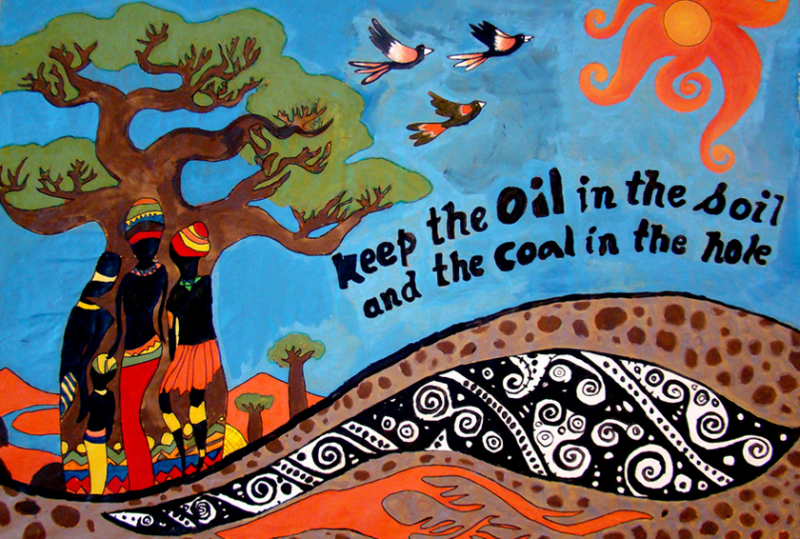
Under increasing threat, nations and market forces continue to colonize, exploit and occupy humanity’s commons.
In some favourable contexts, the ‘commons’ have the potential to enable women, especially economically oppressed women, to have autonomy in how they are able to negotiate their multiple needs and aspirations.
Feminist perspective
Patriarchy is reinforced when women and other oppressed genders are denied access and control of the commons.
Therefore, a feminist economy seeks to restore the legitimate rights of communities to these common resources. This autonomy is enabling them to sustain themselves; while evolving more egalitarian systems of governance and use of such resources. A feminist economy acknowledges women’s roles and provides equal opportunities for decision-making, i.e. women as equal claimants to these resources.
Feminism And The Politics Of The Commons by Silvia Federici looks at the politics of the commons from a feminist standpoint shaped by the struggle against sexual discrimination and reproductive work, to clarify the conditions under which the principle of the common/s can become the foundation of an anti-capitalist program.
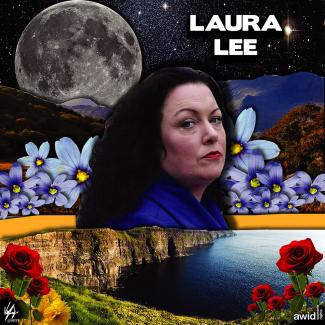
Laura était une activiste et une avocate de premier plan qui a mené une campagne courageuse en faveur de la dépénalisation du travail du sexe en Irlande.
On se souvient d'elle comme « une combattante de la liberté pour les travailleurs et les travailleuses du sexe, une féministe, une mère pour certainEs et une amie nécessaire pour beaucoup ».
Laura militait pour que les personnes de l'industrie du sexe soient reconnu-e-s comme des travailleurs et travailleuses sujets de droits. Elle a activement milité en faveur de la dépénalisation, notamment en engageant une procédure judiciaire devant la haute cour de Belfast qui concernent des dispositions criminalisant l’achat de services sexuels. Laura a déclaré que son intention était de porter l'affaire devant la Cour européenne des droits de l'homme.
Body
Tributo: Recordamos a lxs activistas feministas que cambiaron nuestro mundo
En esta galería en línea, rendimos homenaje a más de 450 valientes feministas y activistas de todas las regiones del mundo y 88 países que ya no están con nosotrxs.
Lxs traemos a todxs a nuestra memoria colectiva y llevamos su legado de lucha como nuestra antorcha en los movimientos feministas y por los derechos de las mujeres.
Member states and women's rights advocates and organisations are gathering at the United Nations Headquarters in New York from 13 - 24 March for the 61st Commission on the Status of Women to address ‘women’s economic empowerment’ in the context of Sustainable Development Goal 5.
Whilst AWID is looking forward to physically meeting those of you who will be in New York, we want to engage with all those who cannot attend CSW, and as much as possible, amplify your voices in relevant spaces.
Continue reading to find out how to engage with AWID around CSW, whether you are attending physically or not.
Participate in an artistic takeover!
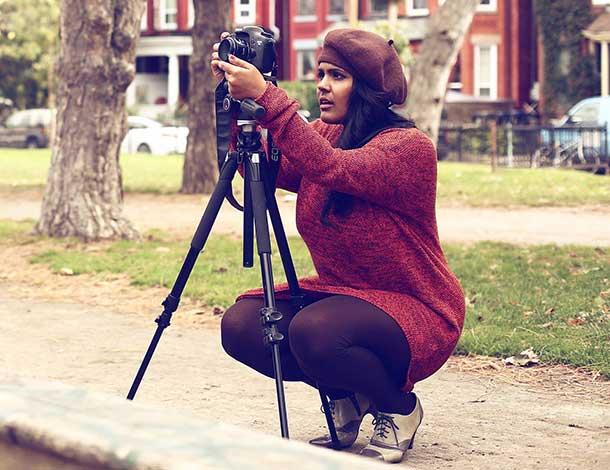
We are thrilled that AWID member Nayani Thiyagarajah is attending CSW this year and will take over the AWID Instagram. She will be available onsite to connect with other members for a possible feature on our Instagram. She will also explore possibilities of including some AWID members in a short film on the theme, ‘The personal is political’, a story of Nayani’s participation in this year’s CSW.
Nayani Thiyagarajah
Who is Nayani?
Nayani Thiyagarajah is a director, producer, and writer, dedicated to stories for the screen. A daughter of the Tamil diaspora, she calls Toronto home. For over 10 years, Nayani has worked in the arts and cultural industries. Her first independent feature documentary Shadeism: Digging Deeper (2015) had its World Premiere at the 2015 Zanzibar International Film Festival, where it won a Special Jury Prize. Nayani recently launched [RE]FRAME, with her producing partner Camaro West, a production company based out of Atlanta and Toronto, focused on re-framing the narratives around Black, Indigenous, and other people of colour through storytelling on screen.
On a more serious note, it should be noted that Nayani has a strange laugh, she's quite awkward, and her head is always in the clouds. She feels blessed beyond belief to create stories for the screen and play make believe for a living. Above all else, she believes in love.
Interested in meeting Nayani and being considered for inclusion in the film?
Send an email to membership@awid.org with the subject line “CSW Artistic Takeover”
By 13 March 2017
Please include your full name and country information.
Can't attend? Voice it!
If you are not able to attend CSW61 because of a travel ban, either due to the one imposed by the Trump administration or one you are facing from your own government, please share your story with us.
Send us messages you want heard in the United Nations spaces concerning funding, the impact of the reinstatement of the Global Gag Rule, and the need to push back against all types of religious fundamentalisms. You can send these in the following formats:
Video: no longer than two minutes and sent through a file sharing folder (for example dropbox, google drive)
Audio: no longer than two minutes and sent through a file sharing folder (for example dropbox, google drive)
Image: you can share a photo or a poster of your message
Text: no longer than 200 words and sent in the body of an email or in a word document
AWID members tell us that connecting with other members at CSW is valuable. In such a huge advocacy space, it is useful to connect with others including activists working on similar issues, or originating from the same country or region. Recognising the importance of connecting for movement building, we invite you to:
Interested in connecting with other members @CSW61?
If you are attending the CSW, we’d love to see what’s going on through your eyes!
Show us by capturing a moment you find speaks to the energy in the CSW space, be it on or off site. We hope to publish some of your ‘images’ on our social media channels and share on awid.org.
You can send us:
colour and/ or black and white photographs with a title (if you wish) and
a caption (no longer than 100 words) about the story your image tells.
Please also include:
your full name and country of origin and
let us know if we can publish the information you shared (in part or in full).
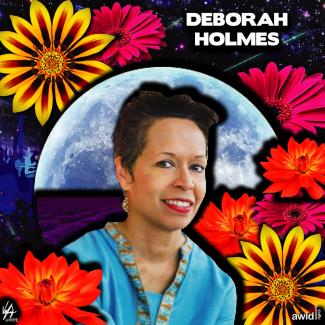
At the time of her death, following a short but aggressive battle with cancer, Deborah was the Chief Communication and Engagement Officer at the Women’s Funding Network (WFN).
Deborah also worked for the Global Fund for Women from 2008 to 2017. Deborah was extremely loved and respected by board, staff, and partners of Global Fund for Women.
Kavita Ramdas, former CEO of the Global Fund for Women aptly noted that Deborah was “a small package exploding with warmth, generosity, intelligence, style, and a passionate commitment to fusing beauty with justice. She understood the power of story. The power of women’s voice. The power of lived experience. The power of rising from the ashes and telling others it was possible. And, still we rise.”
Musimbi Kanyoro, the present CEO of the Global Fund for Women, added, “We have lost a sister and her life illuminates values that unite and inspire us all. As we all come together to mourn Deborah’s passing, let us remember and celebrate her remarkable, bold, and passionate life.”
Te presentamos el Sindicato Red de Solidaridad, un sindicato de servicios y salud liderado en su mayoría por mujeres. Surgiendo como respuesta a la creciente precariedad, salarios insuficientes y entornos laborales hostiles que enfrentan diariamente lxs trabajadorxs en Georgia, el Sindicato Red de Solidaridad lucha por lugares y condiciones de trabajo dignos.
¿Su objetivo? Crear un movimiento obrero democrático nacional. Para hacerlo, se ha asociado con otros sindicatos locales y regionales y ha creado lentamente una red de sindicatos, empoderando por el camino a cada vez más trabajadoras para que se conviertan en líderes sindicales.
Su enfoque político es holístico. Para el Sindicato Red de Solidaridad, los temas de derechos laborales están directamente conectados con agendas y reformas políticas y económicas nacionales más amplias. Por eso están presionando por la justicia fiscal, los derechos de las mujeres y personas LGBTQIA+, y luchando contra el desmantelamiento del estado de bienestar georgiano.
Solidarity Network también forma parte de Huelga Social Transnacional (Transnational Social Strike, TSS), una plataforma política e infraestructura inspirada en la organización de migrantes, mujeres y trabajadores esenciales que trabaja para construir conexiones entre los movimientos laborales a través de las fronteras y fomentar la solidaridad global.
É possível existir várias respostas para o inquérito WITM em nome de um grupo específico?
Não, solicitamos apenas um inquérito completo por grupo.
Background
Why this resource?
While active participants on the front lines of protests and uprisings in the Middle East and North Africa (MENA), women became invisible, absent from processes of formation of the new states, and excluded from decision-making roles, responsibilities, and positions in the aftermath of the uprisings. Except in rare cases, men dominated leadership positions in transitional structures, including the constitutional reform and electoral committees[i]. Subsequent elections brought very few women to parliamentary and ministerial positions.
Additionally, a strong and immediate backlash against women and women’s rights has clearly emerged in the aftermath. The rise of new religious fundamentalist groups with renewed patriarchal agendas aiming to obliterate previous gains of the women’s movements even in countries with longer histories of women’s rights, such as Tunisia, has been very alarming.
The varying contexts of governance and transition processes across the MENA countries presents an important opportunity for women human rights defenders to shape the future of these democracies. However, the lack of prioritization of women’s rights issues in the emerging transitions and the aforementioned backlash have posed a variety of complex challenges for the women’s movements. Faced with these enormous challenges and possibilities, women’s rights activists have been struggling to forge ahead a democratic future inclusive and only possible with women’s rights and equality. The particular historical and contextual legacies that impact women’s movements in each country continue to bear on the current capacities, strategies, and overall preparedness of the women’s movements to take on such a challenge. Burdened with daily human rights violations in one context, with lack of resources and tools in another, with organizational tensions in a third, in addition to the constant attacks on them as activists, women human rights defenders have voiced their desire to be more equipped with knowledge and tools to be effective and proactive in engaging with these fast-changing environments. Conceptual clarity and greater understanding of notions and practices of democratization, transitional justice tools and mechanisms, political governance and participation processes, international and local mechanisms, movement building strategies, constitutional reform possibilities, and secularization of public space and government are important steps to defining future strategic action.
It is clear that feminists and women’s rights activists cannot wait for women’s rights to be addressed after transitions – issues must be addressed as the new power configurations are forming. Experiences of earlier moments of transition, namely from colonial rule, have clearly demonstrated that women’s rights have to be inherently part of the transition movement towards a more just and equal society.
What is included?
This publication represents a research mapping of key resources, publications and materials on transitions to democracy and women’s rights in different countries of the world that have undergone such processes, such as: Indonesia, Chile, South Africa, Nepal, Mexico, Argentina, Poland, Ukraine, as well as within the Middle East and North Africa (MENA). It provides bibliographic information and short summaries of resources which succinctly identify the contextual changes and challenges facing women in those particular transitional moments, as well as clearly delineates the ways in which women’s rights activists sought to confront those challenges and what lessons were learned.
A key criterion in the selection process was the primacy of a women’s rights/feminist perspective; the few exceptions to this rule offer a unique and, we hope, useful, perspective on the issues that women’s rights organizations and activists face in the region. The texts have been selected to provide a wide range of information, relevant to women human rights defenders working from the grassroots to the international level, across issues (including different case studies and examples), from different perspectives (international human rights bodies, academic institutions, NGO contributions, activists’ experiences, etc.), and at a wide range of levels of complexity, in order to respond to the needs of as many readers as possible.
The mapping clusters resources under six major categories:
Transitions to Democracy
Political Participation
Movement Building
Transitional Justice
Constitutional/Legal Reform
Responses to Fundamentalisms
[i]This and other context points are drawn from the report from Pre AWID Forum meeting on Women’s Rights in Transitions to Democracy: Achieving Rights, Resisting Backlash, collaboratively organized by AWID, the Equality Without Reservation Coalition, Global Fund for Women and Women’s Learning Partnership
Carmen encabezaba el Construction Resource and Development Collective (CRDC, Colectivo de recursos para la construcción y el desarrollo) y fue fundamental para apoyar la participación de las mujeres en la industria de la construcción en Jamaica.
También trabajó con mujeres rurales y urbanas en temas relacionados a la preparación para afrontar desastres naturales. Trabajó de manera cercana con mujeres (especialmente madres solteras) enseñándoles cómo usar los cinturones para huracanes y otras tecnologías para poner sus hogares a resguardo. Trabajó en el área de agua y obras sanitarias y fue una fuerte defensora del manejo y desarrollo ambientalmente sustentable.
Fue parte de la Comisión Huairou y realizó incidencia en favor de las mujeres de base en temas vinculados a refugio, energía y medios de vida sustentables.
En rejoignant l’AWID, vous intégrez l’organisation féministe mondiale, un pouvoir collectif qui se fonde sur la solidarité et puise ses racines dans le travail entre les mouvements.
 Чтобы узнать больше о том, как AWID освещает вопросы финансирования феминистских движений, ознакомьтесь с историей инициативы «Где деньги?» и нашими предыдущими отчетами здесь.