L´AWID est une organisation féministe mondiale qui consacre ses efforts à la justice de genre, au développement durable et aux droits humains des femmes
S'organiser de manière créative face à des menaces croissantes
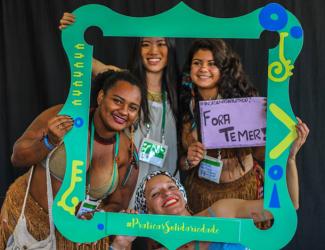
Les jeunes activistes féministes jouent un rôle crucial au sein des organisations et des mouvements pour les droits des femmes à travers le monde. Ce sont elles qui soulèvent les nouveaux problèmes auxquels les féministes sont confrontées aujourd'hui. Leur force, leur créativité et leur adaptabilité sont vitales pour assurer la viabilité des organisations féministes.
Pourtant, elles sont confrontées à toute une série d’obstacles particuliers, notamment l'accès limité au financement et au soutien, le manque de possibilités de renforcement des capacités et une augmentation considérable des agressions sur les jeunes défenseuses des droits humains. Ces obstacles entraînent un manque de visibilité qui rend leur intégration et leur participation effective au sein des mouvements pour les droits des femmes encore plus difficiles.
Une approche multigénérationnelle
Le Programme d’activisme des jeunes féministes de l'AWID a été mis en place pour veiller à ce que les voix des jeunes femmes soient entendues et représentées dans le discours féministe. Nous voulons faire en sorte que les jeunes féministes aient un meilleur accès à du financement, à des opportunités de renforcer leurs capacités et aux processus internationaux.
En plus de soutenir directement les jeunes féministes, nous travaillons également avec des activistes des droits des femmes de tout âge pour élaborer des modèles et des stratégies d’organisation multigénérationnelles plus efficaces.
Nos actions
Nous souhaitons que les jeunes féministes puissent jouer un rôle actif dans les prises de décisions qui concernent leurs droits. Nos actions incluent :
Favoriser la mise en commun et le partage d'informations par la Plateforme de jeunes féministes. Étant donné l'importance des médias en ligne pour le travail des jeunes féministes, notre équipe a lancé la Plateforme de jeunes féministes en mai 2010. Elle a pour objectifs d’échanger des renseignements, de renforcer les capacités des membres par le truchement de webinaires et de discussions en ligne, et d'encourager la consolidation d’une communauté de jeunes féministes.
Soutenir la recherche et le renforcement des connaissances sur l'activisme des jeunes féministes, pour accroître la visibilité et l'influence de leur activisme au sein et entre les mouvements pour les droits des femmes et auprès d'autres acteurs-trices clés, tels les donateurs.
Faire la promotion de la collaboration multigénérationnelle, en explorant de meilleures façons de travailler ensemble.
Inciter les jeunes féministes à s’engager dans les processus internationaux relatifs au programme de développement, notamment ceux des Nations Unies.
S’assurer leur collaboration dans tous les domaines prioritaires de l'AWID, y compris le Forum, pour faire en sorte que leurs contributions, leurs perspectives, leurs besoins et leur activisme se traduisent dans les débats, les politiques et les programmes qui les concernent.
Contenu lié
FRMag - Freeing the Church
Freeing the Church, Decolonizing the Bible for West Papuan Women
by Rode Wanimbo
I was born and grew up in Agamua, the Central Highlands of West Papua. My father belongs to the Lani tribe and my mother comes from Walak. (...)
< artwork: “Offerings for Black Life” by Sokari Ekine
Tendencias anti-derechos en los sistemas regionales de derechos humanos
Chapter 6
En la Comisión Africana y en el Sistema Interamericano, los actores antiderechos impulsan nociones esencialistas de cultura y género para impedir el avance de los derechos y socavar las responsabilidades. Como vemos, los actores anti-derechos están ejerciendo su influencia sobre los sistemas regionales de derechos humanos, así como en los espacios internacionales.
La Comisión Africana de Derechos Humanos y de los Pueblos ha comenzado a definir a los derechos sexuales y de las mujeres como un menoscabo a su capacidad de ocuparse de los «derechos reales» y como contrarios a los «valores africanos», con lo cual se establece un precedente anti-derechos preocupante. La anulación del estatus de observador de la Coalición de Lesbianas Africanas es un ejemplo de esta tendencia y muestra la forma en que el espacio para el involucramiento feminista panafricanista está siendo restringido.
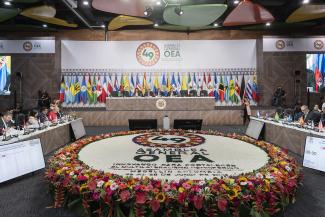
En la Organización de Estados Americanos (OEA) y en el Sistema Interamericano de Protección de los Derechos Humanos, las estrategias anti-derechos incluyen la oenegización de grupos religiosos, la utilización de discursos seculares, y la cooptación de marcos de discriminación. La influencia antiderechos se ha materializado de diversas maneras, que incluyen la intimidación de activistas trans y la obstrucción de la introducción de lenguaje progresista en las resoluciones.
Índice de contenidos
Silenciamiento de feministas en el Sistema Africano de Derechos Humanos
Grupos anti-derechos en América Latina: Asamblea General de la Organización de Estados Americanos (OEA) y el Sistema Interamericano de Protección de los Derechos Humanos
Cynthia Cockburn était une sociologue, écrivaine, universitaire, photographe et militante pour la paix féministe.
Elle a étudié les aspects genrés de la violence et du conflit et fait d’importantes contributions au mouvement pacifiste en explorant les thèmes de la masculinité et de la violence, ainsi que par son activisme local et international.
Ayant introduit une analyse féministe aux questions de militarisation et de guerre, Cynthia figurait parmi les universitaires dont les écrits et analyses illustraient la manière dont la violence basée sur le genre joue un rôle essentiel dans la perpétuation de la guerre. Travaillant en étroite collaboration avec des activistes pacifistes dans des pays en conflit, ses conclusions portaient sur des contextes aussi divers que l’Irlande du Nord, la Bosnie-Herzégovine, Israël et la Palestine, la Corée du Sud, le Japon, l’Espagne et le Royaume-Uni. Sa recherche et ses écrits universitaires ont permis d’éclairer le fait que la violence soit vécue selon un continuum de temps et d’échelle, et perçue très différemment lorsque l’on y applique le prisme du genre.
Elle disait que « [l]e genre nous aide à voir la continuité, la connexion entre les évènements de violence ».
Cynthia a pu mettre ses recherches en pratique grâce à son activisme local et international auprès de mouvements pour la démilitarisation, le désarmement et la paix. Elle a aidé à lancer le camp de femmes pour la paix de Greenham Common, qui prônait le désarmement nucléaire universel en Grande-Bretagne, ainsi que participé à la mise en place de la branche londonienne des Women in Black. Au fil des ans, Cynthia a organisé et participé à des veillées hebdomadaires locales et à la chorale politique Raised Voices, interprétant et écrivant certaines des paroles des chansons. Elle fut également active au sein du groupe Women’s International League for Peace and Freedom (WILPF), du Forum des socialistes féministes européennes et de Women Against Fundamentalism.
« Cynthia émettait une lumière féministe, tissait les communautés féministes entre elles, entonnait des chants de paix, écoutait, écoutait, écoutait, observait les oiseaux – et suspendait le flot de circulation. Je lui serai toujours reconnaissante et redevable, l’« autre » Cynthia. » – Cynthia Enloe
Cynthia est née en juillet 1934 et s’est éteinte en septembre 2019, à l’âge de 85 ans.
📅 Wednesday, March 12, 2025
🕒 12.00-1.30pm EST
🏢 UNDP, 304 E 45th St. Doha Room, 11th Floor (FF Building)
Organizers: UNDP, Femena, SRI and AWID
Snippet - Podcast Intro (ES)
Estamos encantadxs de anunciar el lanzamiento del nuevo podcast de AWID: ESE FUEGO FEMINISTA. Esta serie narrativa revela más de 40 años de movimientos feministas e imagina nuevos caminos a seguir.
En nuestra temporada piloto, escucharán cinco historias cautivadoras que forman parte de la actual constelación de activismo feminista. Presentado por nuestra Gopika Bashi, subdirectora de programas de AWID, cada episodio explora realidades feministas únicas pero interconectadas que están logrando una mayor justicia de género y asegurando derechos humanos.
ESE FUEGO FEMINISTA es producido en asociación con lxs ganadorxs de Webby, Hueman Group Media. Puedes suscribirte al podcast y escuchar nuestro primer episodio aquí.
Encuéntranos en Apple Podcasts, Spotify o donde sea que obtengas tus podcasts. ¡Comparte con tu red! Ayúdanos a difundir historias que enciendan nuestro fuego feminista y nos muevan a la acción.
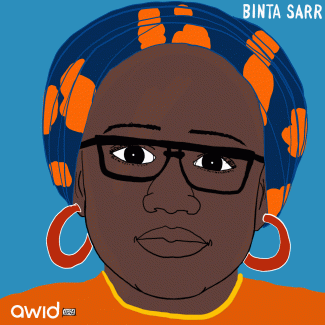
Binta Sarr was an activist for social, economic, cultural and political justice, and a hydraulic engineer in Senegal. After 13 years in civil service, she left this path to work with rural and marginalized women.
Out of this engagement grew the Association for the Advancement of Senegalese Women (APROFES), a grassroots movement and organization Binta founded in 1987. One of her main approaches was leadership training, relating not only to economic activities but also to women's rights and access to positions of decision-making.
“Grassroots populations must organize, mobilize, assume citizen control and demand democratic governance in all sectors of public space. The priority of social movements must go beyond the fight against poverty and must be focused on articulated and coherent development programs in line with human rights principles, while taking into account their needs and concerns both at the national and sub-regional levels and from a perspective of African and global integration.” - Binta Sarr
Rooted in Binta’s conviction that fundamental change in women’s status requires transformation in male attitudes, APROFES took an interdisciplinary approach, using radio, seminars and popular theatre, as well as providing innovative public education and cultural support for awareness-raising actions. Its popular theatre troupe performed original pieces on the caste system in Senegal, alcoholism, and conjugal violence. Binta and her team also looked at the crucial connection between the community and the broader world.
“For APROFES, it is a question of studying and taking into account the interactions between the micro and the macro, the local and the global and also, the different facets of development. From slavery to colonization, neocolonialism and the commodification of human development, most of the resources of Africa and the Third World (oil, gold, minerals and other natural resources) are still under the control of financial cartels and other multinationals that dominate this globalized world.” - Binta Sarr
Binta was one of the founding members of the female section of the Cultural and Sports Association Magg Daan. She received commendations from the Regional Governor and the Minister of Hydrology for her "devotion to rural people."
Born in 1954 in Guiguineo, a small rural town, Binta passed away in September 2019.
Tributes:
“The loss is immeasurable, the pain is heavy and deep but we will resist so as not to mourn Binta; we will not mourn Binta, we will keep the image of her broad smile in all circumstances, to resist and be inspired by her, maintain, consolidate and develop her work…” - Aprofes Facebook page, September 24, 2019
"Farewell Binta! We believe your immense heritage will be preserved." - Elimane FALL, president of ACS Magg-Daan
Sin trabajadorxs domésticxs no hay economía de los cuidados Un Manifiesto
Stories of Change AWID Forums
What does an AWID Forum mean to those who have been there? What is this magic that happens when feminists from around the world gather to celebrate, strategize, learn and share joy?
AWID spoke to over forty Forum participants to hear their stories of the transformations that happened to them as activists, to their organizations and to the movements they are part of. We also learned about what we should keep and build on that makes an AWID Forum different and how we can improve.
This report holds lessons and advice invaluable to anyone planning in-person regional and thematic convenings and for us as we plan for the 15th AWID International Forum.
Scroll down to dive in!
FRMag - Looking at me Looking at Safe Spaces
Recherche sur les espaces sécurisés : une prise de perspective
par Judyannet Muchiri
Je suis partie pour le Kenya en octobre de l'année dernière, pour entamer ce que j'en suis venue à considérer comme mon travail le plus important à ce jour. (...)
illustration : « Guérir ensemble », par Upasana Agarwal >
A Joy to the World: Six Questions with Naike Ledan
Interviewed by Chinelo Onwualu
Naike Ledan is a social justice defendant, a committed feminist that brings forward 20 years of experience in human rights and health justice advocacy, women’s empowerment, the fight for universal access to basic services and social inclusion, as well as civil society capacity building. She has built extensive work in Canada, West and southern Africa, as well as in Haiti, in civil rights advocacy, capacity building for CSOs, while emphasising the social determinants of structural exclusion. She values the principles of shared leadership, anticolonial, anti-oppressive, and anti-patriarchal spaces.
Chinelo You’re billed as a trans rights activist; I’m curious about how you made that journey.
Naike So, I grew up in Haiti until I was 18, then I lived in Montreal for 19 years. Coming back to Haiti in 2016, I thought I would be coming back home, but the place had changed and I had to readjust. I did not necessarily reconnect in the way that I’d expected to with childhood family and friends. I came back as an expat with a comfortable work situation, and I felt very much like a foreigner for a very long time. And at the same time, I felt very much at home because of the language, the understood silence, the not having to explain when we start singing a commercial – you know, that thing we share, that energy, that space, that spirit.
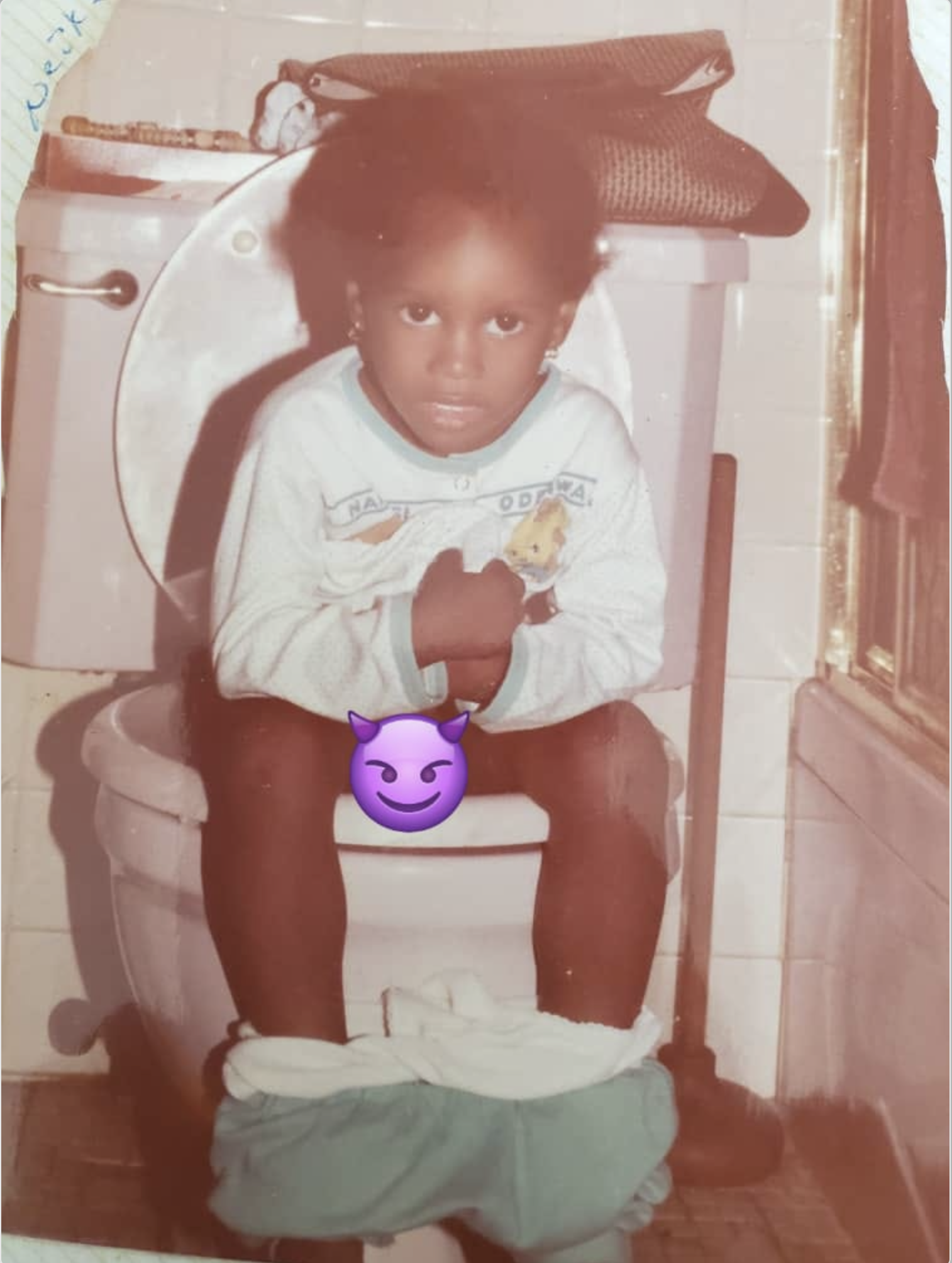
My return to self-love – I would call “rebirth” – coinciding with giving birth to my first child, giving birth to myself, and falling in love with my queerness or same-gender lovingness. (Photo credit: Naike Ledan)
What helped me was, I loved the work of going into the country and documenting people’s knowledge. So I left the comfort. I became a country director of a regional organisation that was queer as fuck! Most of my work was to find resources and build the capacity of civil society. My strategy was to go into the countryside, look for all these little organizations, help build their capacity, and fund them. I was not interested in politicians and shaking hands and taking pictures . I had a very good ally, Charlot Jeudy – the [queer] activist that got killed three years ago in his house. We got very close after an Afro-queer film festival we were planning got banned in Haiti. But it made a lot of noise and sparked conversations about queerness everywhere, so Charlot introduced me to every little CSO in every little corner of the country. And I would just be there to help organisation[s] with registering legally or building their strategic plan. So it’s been a lot of these kinds of work that made me a queer activist and by extension, a trans activist. Although I don’t call myself that – an activist. It’s such a loaded word, you know? And it’s something people call you. I think I’m just a lover and a fighter .
Chinelo Tell me about the workshop you conducted with AWID for the festival. What was it about and what was the context?
My deep self awareness during my childhood years and my engagement in questioning inequalities and injustice at a very very young age (+/- 4 years old). (Photo credit: Naike Ledan)
Naike International media doesn’t really talk about Haiti, but with a political environment that is as bad as ours, the economic environment is even more catastrophic. Being a more middle class Haitian, speaking different languages, having different passports, I was initially hesitant to take the space. But I often see myself as a bridge more than someone that would talk about themself. That is how I came to invite Semi, who is a brilliant young trans woman from outside Port-au-Prince, to take the space to talk for herself and walk us through the ecosystem of the realities for trans women in Haiti. We ended up building a session about uninclusive feminism – or, I would say, formal feminist spaces – and how trans girls in Haiti do not have spaces where they can contribute to women’s knowledge and sharing of women’s realities. So the AWID festival was the opportunity for me to give the space to the women who should have it. We had a wonderful time; we had wine online while hosting the conversation. My co-facilitator, Semi, shared what it is like to be a trans child/girl/woman at different stages of her life. She also shared the dangers of the street, of poverty, of exclusion, of “not passing,” and her victories as well.
Chinelo What is the relationship of trans women to feminist organizations in Haiti? What has been your experience with that?
Naike It’s been really hard – heartbreaking, actually – the experience of trans women in Haiti. From not existing at all to just being extremely sexualized. The other thing that’s been happening is how they’re being killed, and how those killings have gone unreported in the media. This is how non-existent, how erased trans women are. They’re everywhere but not in job settings, not in feminist settings, not in organizational settings. Not even in LGBT organizations. It’s only recently, and because of a lot of advocacy push, that some of these organization are kind of readjusting, but in feminist spaces, this is still out of the question. We are still having to deal with the old exclusionary discourse of “They’re not women. Of course, if they can pass…” The culture of passing, it’s a risk management conversation – how much you pass and how much you don’t pass and what it means for your body and the violence it inflicts. In the trans-exclusionary realities we live in, which are reproduced in a lot of feminist spaces, those that pass completely may be considered girls, but only to a certain extent. But how about falling in love, how about having a conversation, how about being in the closet, how about wanting a certain aesthetic, or a career? So really, the conversation about hormone therapy becomes about risk reduction, as Semi herself shared at the workshop. But we don’t have the option of hormone therapy, we don’t have the medical framework nor the system to support those who would like to pursue that option.
Chinelo When you talk about the way that trans people and queer people are thought of in society, it sounds like it might be similar to Nigeria, which can be a deeply homophobic environment.
Naike Haiti is a very complex country in a very beautiful way. Nothing is simple, you know, nothing is ever one way. Haitians are very tolerant – and they’re also very homophobic. You’re going to find regions in the countryside where people aren’t that homophobic at all because all the Vodou temples there, and this is a religion that respects life. One basic principle of the Vodou religion is that all children are children. So, there is no right or wrong in the religion. For the longest time, people thought of Haiti as a haven, a place where people are tolerant – we’re talking 70s, 80s, pre-HIV, 90s even. Then you had the earthquake [in 2010] where around 300,000 people died. And then all this money came from the south of the US through the Evangelicals to rebuild the country and find Jesus. So, the homophobia in Haiti is very recent. In the depth, in the heart of the soul of the culture, I cannot really say that it is homophobic. But in the everyday life, it surely lands on the skin of queer people, that violence. And that of women, of poor women, of dark women as well, because colorism runs deep in the Caribbean.
Chinelo How have you managed this? What’s been your strategy for survival?
My return to Haiti as part of my decolonizing process, and choosing to physically position my senses and my family’s senses to magic and blackness uncompromisingly. (Photo credit: Naike Ledan)
Naike I’m really in love with my work. I love working. When I first arrived, I was working with this horrible NGO but I was doing amazing work. I was always in the countryside, conversing and learning from people, from women. And that filled my heart for so long because I’m very much in love with my culture, with black people, with black women – old black women, black babies. It just fills me up in a spiritual way. When we were in Canada my kids were in these all-white schools and tokenized. They did not speak Creole nor French. And now, they’re running free in the yard and starting to fight in Creole. I also found hubs of survival with the people I met. I created bonds with the queers and others who were weirdos like me and it’s been really wonderful. But now I’m struggling because I don’t feel safe in Haiti anymore. We have about 40 kidnappings per week in Port-Au-Prince – and it’s been like that since 2018. I’ve developed anxiety and panic attacks. So It’s time to go, and I’ve been asking myself, “where is home?” I spent 19 years in Montreal but I never felt at home there. When I left, I never missed it so I don’t want to go back. I’ve been crying a lot lately because it feels like entering a second exile.
Chinelo What’s your relationship to pleasure, leisure, and rest?
Naike My relationship with pleasure, leisure, and rest are for me one and the same. It is the lived moment when I indulge in the heat of the sun on my face for example. It is pleasure, leisure, and rest at the same time.
Pleasure: My go-to space, most solely a haven of celebration of myself. I reserve myself the power and the right to be loud or quiet in the enjoyment of the pleasure I experience. All the pleasure I viciously and abundantly indulge in, including and not limited to the pleasure of solitude and silence.
Leisure: biking, music festivals, eating, wine discoveries, dancing in Haitian traditional Vodou dances are amongst many that occur at the moment.
Rest: is what I live for. As an overachiever and a person that is literally in love with work, it is a paradox how lazy I am. No one knows that because all of what the world sees is this: an accomplished overworker. They do not know how I can just, uncompromisingly and profoundly indulge in idleness.
ExploreTransnational Embodiments
This journal edition in partnership with Kohl: a Journal for Body and Gender Research, will explore feminist solutions, proposals and realities for transforming our current world, our bodies and our sexualities.
نصدر النسخة هذه من المجلة بالشراكة مع «كحل: مجلة لأبحاث الجسد والجندر»، وسنستكشف عبرها الحلول والاقتراحات وأنواع الواقع النسوية لتغيير عالمنا الحالي وكذلك أجسادنا وجنسانياتنا.
Laurie Carlos fue una actriz, directora, bailarina, dramaturga y poeta estadounidense, una artista y visionaria extraordinaria que tenía un poderoso don para hacer surgir el arte en otras personas.
«Laurie entraba en una habitación (cualquier habitación/todas las habitaciones ) con clarividencia arremolinada, con genio artístico, rigor corporizado, con un realismo feroz— y con la determinación de ser libre... y de liberar a otrxs. Una hacedora de magia. Una vidente. Alguien que cambiaba de formas. Laurie me dijo una vez que entraba en los cuerpos de las personas para descubrir qué necesitaban.» - Sharon Bridgforth
Combinaba estilos de actuación tales como gestos rítmicos y texto. Laurie era mentora de nuevxs actorxs, performers y escritorxs, y ayudaba a difundir su trabajo a través de «Naked Stages», una beca para artistas emergentes. Integraba el Penumbra Theater, con el que colaboraba mediante guiones que produjeran identificaciones, a fin de «traer más voces femeninas al teatro». Laurie integraba también Urban Bush Women, una compañía de danza contemporánea prestigiosa que relata historias sobre mujeres de la diáspora africana.
En 1976, como Lady in Blue, hizo su debut en Broadway, en la producción original galardonada del drama poético de Ntozake Shange For colored girls who have considered suicide / when the rainbow is enuf. La obra de Laurie incluye White Chocolate, The Cooking Show y Organdy Falsetto.
«Cuento las historias en el movimiento (las danzas internas que surgen espontáneamente, como en la vida), la música y el texto. Si escribo una línea, no necesariamente tiene que ser una línea que es hablada; puede ser una línea que es movida. Una línea a partir de la cual se crea música. El gesto se convierte en la oración. Gran parte de quienes somos como mujeres, como personas, tiene que ver con los gestos que hacemos entre nosotrxs todo el tiempo, y en particular, durante momentos emotivos. El gesto se convierte en una oración o una declaración de hechos. Si pongo en un guión “cuatro gestos”, eso no quiere decir que no estoy diciendo nada; significa que lo he abierto para que algo sea dicho físicamente.» - Laurie Carlos
Laurie nació y creció en la ciudad de Nueva York, trabajó y vivió en Twin Cities. Falleció el 29 de diciembre de 2016 a la edad de 67 años, luego de una batalla contra el cáncer de colon.
Tributos:
«Creo que esa era exactamente la intención de Laurie. Salvarnos. De la mediocridad. Del ego. De la pereza. De la producción de arte a medias. De estar paralizadxs por el miedo. Laurie quería ayudarnos a Brillar plenamente. En nuestra producción artística. En nuestras Vidas.» - Sharon Bridgforth para Pillsbury House Theatre
«Nadie que conociera a Laurie dejaría de definirla como una persona original. Era su propia persona. Era su propia persona, su propia artista; ponía en escena el mundo tal como lo conocía, con verdadero estilo y comprensión, y vivía su arte.» - Lou Bellamy, fundador de Penumbra Theater Company, para Star Tribune
GenderJobs.org:This is a platform with a comprehensive list of job opportunities to work on gender equality and LGBTQI+ rights, curated by gender professionals and intersectional feminists who intimately know the sector and are extremely passionate about supporting other gender professionals and anyone who is aspiring to become one! (source: https://genderjobs.org/about)
Snippet Watch Stories (EN)
En savoir plus sur l'impact du forum à travers ces histoires.
Film club - Tenderness is the sharpest resistance
Our first Feminist Film Club program is now available to view: “Tenderness is the Sharpest Resistance” is a film series on Asian/Pacific Feminist Realities curated by Jess X Snow
«لمّا نكون مُستَقتِلين للتغيير، لِكوننا في حالة مرضٍ وتمرّدٍ في آنٍ واحد، تخلو لغتنا من التعقيد وتنصقل لتعكس أبسط ركائزها. (...) لكن، ومع استمرار المرض والثورة، تصبح اللغة المُصاغة في هذه الحالة وعنها أكثرَ عمقاً وأكثرَ تعبيراً عن الفوارق الدقيقة، وتكون منغمسة انغماساً شديداً في التجربة الإنسانية التي يواجه فيها المرءُ حدودَه عند نهاية العالم». - جوانا هيدفا
بدأنا التخطيط لعدد المجلّة هذا مع نانا داركوا قُبيل مهرجان «ابدعي، قاومي، غيٍّري: مهرجان للحراكات النسوية» لجمعية «حقوق المرأة في التنمية» AWID، وانطلقنا وقتها من سؤالٍ هو بالأحرى ملاحظة حول حالة العالم، ورغبة في تغيير الاعتقادات السائدة: لماذا لا تزال جنسانيّاتنا وملذّاتنا تخضع للترويض والتجريم مع أنّه يتمّ تذكيرنا مراراً وتكراراً بأنّها لا تأتي بأيّ قيمة أو تطوّر؟ واستنتجنا أنّ جنسانيّاتنا، لمّا تتجسّد، فيها ما يتعارض مع النظام العالمي الذي ما زال يتجلّى من خلال ضوابط الحدود، والتمييز العنصري في توزيع اللقاح، والاستعمار الاستيطاني، والتطهير العرقي، والرأسمالية المُستشرية. هل يمكننا إذاً القول إنّ لجنسانيّاتنا قدرةٌ تعطيليّة؟ وهل يصحّ هذا القول عندما ننظر إلى واقع حركاتنا التي يتمّ الاستيلاء عليها ومأسستها في سعيها للتزوّد بالموارد؟
عندما يصبح عملنا المتجسّد مادةً ربحية في أيدي الأنظمة التي نسعى إلى إزالتها فلا عجب أنّ جنسانيّاتنا وملذّاتنا توضَع جانباً من جديد، لا سيّما أنّها ليست مُربِحة بما فيه الكفاية. لقد تساءلنا، في مواقف عدّة خلال إنتاج هذا العدد، ما الذي سيحدث إذا رفضنا مراعاة خدمات الرأسمالية الأساسية؟ لكن هل نجرؤ على هذا التساؤل وقد أنهكنا العالم؟ ربما يتمّ تجاهل جنسانيّاتنا بهذه السهولة لأنها لا تُعتَبَر أشكالاً من أشكال الرعاية. ربما ما نحتاجه هو أن نعيد تصوّر الملذّة كشكلٍ من أشكال الرعاية الجذرية، تكون أيضاً مناهضة للرأسمالية وللمؤسساتية.
بدأنا العام الثاني على التوالي لحالة الجائحة العالمية وكان لا بدّ أن تركّز مقاربتنا للتجسيدات العابرة للحدود القومية على ملاحظة سياسيّة واحدة: أنّ الرعاية هي شكل من أشكال التجسيد. وبما أنّ جزءاً كبيراً من عملنا يتمّ حالياً من دون أيّ اعتبار للحدود بيننا وفينا فنحن جميعاً متجسّدون بشكلٍ عابرٍ للحدود القومية، ونحن جميعاً نفشل. نحن نفشل في رعاية ذاتنا، والأهمّ أننا نفشل في رعاية الآخرين.
هذا الفشل ليس من صنع أيدينا.
إنّ الكثير من أهالينا اعتبروا العملَ مقايضةً، أي أنّه شيءٌ يُعطى مقابل أجرٍ وضمانة بالحصول على الرعاية. صحيحٌ أنّه تمّ الإخلال بهذه المقايضة أحياناً، لكنّ أهالينا ما كانوا يأملون أنّ عملهم سيوفّر لهم الرِضا الذاتي، وكانوا يعتمدون لهذا الغرض على نشاطهم الترفيهي وهواياتهم ومجتمعاتهم. أمّا اليوم، فنحن، أولادهم الذين تمّت تهيأتنا لنعتبر العمل متشابكاً مع الشغف، توقّعاتنا مختلفة تماماً. نحن لا نفرّق بين العمل والترفيه ونعتبرهما عنصراً واحداً، وبالنسبة للكثيرين بيننا، العمل بات يجسّد الذات بكاملها.
إنّ الرأسمالية القائمة على الأبويّة والمغايَرة الجنسية لا ترى لنا أيّ قيمة، ناهيك عن عملنا وجنسانيّاتنا. إنّه نظامٌ سيستمر في طلب المزيد والمزيد منك إلى يوم مماتك، وبعدها سيستبدلك بشخصٍ آخر. يُنتَظَر منّا أن نكون على اتصال بالإنترنت في كلّ الأوقات، ما يعني أنّه لا يمكننا الانصراف عن العمل حتى لو شئنا ذلك. إنّ هذا التَتْجير للعمل وفصله تماماً عن الشخص قد تسلّل إلى كلّ ناحية من نواحي حياتنا، ويتمّ ترسيخ هذا التَتْجير حتى في الأوساط الأكثر نسويّة والأكثر تمرّداً وتشدّداً.
لطالما حمَلَت تطلّعات الرأسمالية ضرراً كبيراً بالأجساد التي لا تتوافق مع النموذج المثالي، وأولئك الذين يسعون إلى ترسيخ سلطتهم استغّلوا الجائحة كفرصة لاستهداف النساء والأقلّيات الجنسية وكلّ مَن يعتبرونه دون المستوى.
تمّ إعداد هذا العدد الخاص بفعل هذا الواقع، وطبعاً، رغماً عن هذا الواقع.
لقد قدّم المساهمون/ المساهمات والعاملون/ العاملات كلّهم تقريباً مجهوداً يفوق طاقاتهم، وكلٌّ من الأعمال الواردة هنا هو نتاجُ سعيٍ شغوف ولكن أيضاً نتاج حالة إنهاكٍ شديد.
يشكّل هذا العدد، بطريقة غايةً في الواقعية، تجسيداً للعمل العابر للحدود القومية، علماً أنّ أيّ عمل في عصرنا الرقمي أصبحَ عابراً لتلك الحدود. وفيما فُرِضَ علينا تقبّل حدود جديدة، وهي حدود لا تخالف النظام القائم سابقاً بل تعزّزه، اختبرنا مباشرةً، إلى جانب مساهمينا، كيف تستنزف الرأسمالية طاقاتنا القصوى – كيف يصبح من الصعب بناء الحجج المتماسكة لا سيّما حينما تكون خاضعة لموعد التسليم. إننا نعاني بشكلٍ جَماعي من فقدان الكلام لأننا أساساً نعاني من فقدان العوالم.
الشعور بالضياع والوحدة في عالم الرأسمالية القائمة على الأبوية والمغايَرة الجنسية هو بالتحديد ما يجعل من الضروري أن نعيد تقييم أنظمة الرعاية التي نتّبعها وأن نُعيد النظر فيها. لقد حوّلنا هذا العدد بوسائل عدّة إلى مهمّة لإيجاد الملذّة في الرعاية. فبما أنّه بات من الصعب بناء الحجج المتماسكة، برزت الوسائط البصرية والمبتكرة وقد لجأ كثرٌ ممن اعتادوا الكتابة إلى هذه الوسائط كطرقٍ لإنتاج المعرفة واختراق الضباب الفكريّ الذي أحاط بنا. لقد ضمّينا في هذا العدد أصواتاً أخرى، بالإضافة إلى أصواتٍ عدّة استمعتم إليها في المهرجان، كوسيلة لإطلاق حوارات جديدة وتوسيع آفاقنا.
بما أنّ كلماتنا قد سُرِقَت منّا، يقضي واجبنا السياسي بأن نستمر في إيجاد الوسائل للحفاظ على أنفسنا والآخرين والاهتمام بأنفسنا وبالآخرين. بالتالي، يصبح تجسّدنا نوعاً من المقاومة إذ هو بداية إيجادنا لسبيل الخروج من الذات ودخولها.
ExploreTransnational Embodiments
This journal edition in partnership with Kohl: a Journal for Body and Gender Research, will explore feminist solutions, proposals and realities for transforming our current world, our bodies and our sexualities.
نصدر النسخة هذه من المجلة بالشراكة مع «كحل: مجلة لأبحاث الجسد والجندر»، وسنستكشف عبرها الحلول والاقتراحات وأنواع الواقع النسوية لتغيير عالمنا الحالي وكذلك أجسادنا وجنسانياتنا.