.

The “Where is the Money?” #WITM survey is now live! Dive in and share your experience with funding your organizing with feminists around the world.
Learn more and take the survey
Around the world, feminist, women’s rights, and allied movements are confronting power and reimagining a politics of liberation. The contributions that fuel this work come in many forms, from financial and political resources to daily acts of resistance and survival.
AWID’s Resourcing Feminist Movements (RFM) Initiative shines a light on the current funding ecosystem, which range from self-generated models of resourcing to more formal funding streams.
Through our research and analysis, we examine how funding practices can better serve our movements. We critically explore the contradictions in “funding” social transformation, especially in the face of increasing political repression, anti-rights agendas, and rising corporate power. Above all, we build collective strategies that support thriving, robust, and resilient movements.
Create and amplify alternatives: We amplify funding practices that center activists’ own priorities and engage a diverse range of funders and activists in crafting new, dynamic models for resourcing feminist movements, particularly in the context of closing civil society space.
Build knowledge: We explore, exchange, and strengthen knowledge about how movements are attracting, organizing, and using the resources they need to accomplish meaningful change.
Advocate: We work in partnerships, such as the Count Me In! Consortium, to influence funding agendas and open space for feminist movements to be in direct dialogue to shift power and money.
.
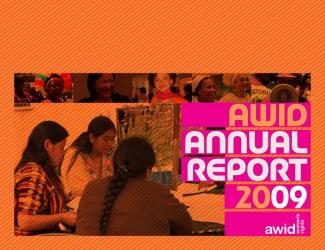
Our 2009 Annual Report includes highlights of another busy year of action and reflection at AWID as we implement our commitment to boldly, creatively and effectively contribute to the advancement of women’s rights and gender equality worldwide.
In the report you can find out about our programmatic achievements, membership, finances, what to watch out for in 2010, as well as information about our Board and Staff.
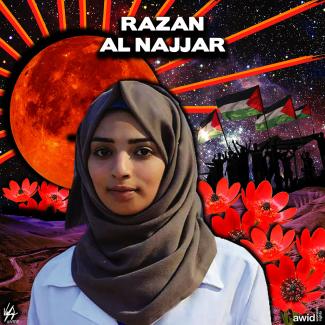
Razan was a 21-year-old volunteer medic in Palestine.
She was shot as she ran toward a fortified border fence, in an effort to reach a casualty in the east of the south Gaza city of Khan Younis.
In her very last Facebook post, Razan said: “I am returning and not retreating,” adding: “Hit me with your bullets. I am not afraid.”
Marianne Mesfin Asfaw is a Pan-African feminist who is dedicated to social justice and building community. She has a BA in Gender Studies and International Relations from the University of British Columbia (UBC), and an MA in Gender Studies and Law from SOAS University of London. She has previously worked in academic administration and international student support, and has worked as a researcher and facilitator in feminist and non-profit spaces. She has also worked and volunteered at non-governmental organizations including Plan International in administrative roles. Prior to taking up her current role she worked in logistics and administrative support at AWID. She is from Ethiopia, was raised in Rwanda and is currently based in Tkaronto/Toronto, Canada. She enjoys reading, traveling and spending time with her family and friends. In the warmer months she can be found strolling around familiar neighborhoods in search of obscure cafés and bookstores to wander into.
It is exactly the same process and same deadline. Please use the same form to submit your activity, whether it is in-person, online, or both (hybrid).
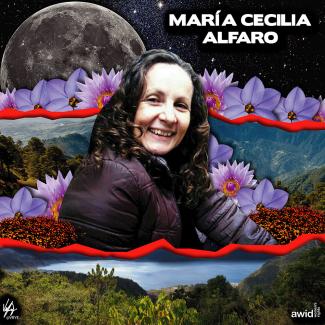
Most of María’s life was devoted to incorporating a feminist and gender perspective in institutional and organizational work, and capacity building in Latin America.
As a child, María had a strong interest in art, communication, nature, literature, and the achievement of justice, especially for women and marginalized groups.
María was committed to sexual and reproductive rights and was a member of the National Board for Integral Education in Sexuality. She is remembered by those who loved her as a “passionate and restless fighter” with a strong commitment to women’s and children’s rights.
Veena Singh is a Fiji Islander, feminist, and woman of colour. Born and raised in a small rural town in Fiji, she draws strength from her rich mixed heritage (her mother is an Indigenous Fijian woman and her father is Fijian of Indian descent). Veena’s identity and lived experiences deeply inform her commitment to justice, equity, and inclusion. With over two decades of experience in human rights, gender equality, community development, and social inclusion, Veena is a passionate advocate for shifting power to create transformative change and for building an “economy of kindness”. Her work spans diverse areas including community development; women, peace and security; social policy; human rights; and policy advocacy.
Veena is deeply committed to advancing inclusion, peace and justice, sexual and reproductive health and rights (SRHR), climate justice, transitional justice, and human rights. She brings a wealth of experience working across grassroots networks, international organizations, and government institutions, always centering community and locally led approaches and feminist principles.
Outside of her ‘office life’, Veena is an environmental advocate, mental health champion, and writer. She is a mum to 11 cats, a saree wearer, and a lover of snail-mails and postcards. A thoughtful observer of feminist movements in Fiji and the Pacific, Veena is on a personal journey to “decolonise the mind and the self through radical self-reflection.” Above all, she is driven by a desire and dream to produce relatable, resonant writing that connects with the Pacific diaspora and amplifies voices from the margins.
ภาษาที่ AWID ใช้งานคือ ภาษาอังกฤษ ภาษาฝรั่งเศส และภาษาสเปน โดยภาษาไทยจะถูกเพิ่มเข้ามาในฐานะภาษาท้องถิ่น รวมถึงภาษามือและมาตราการในการช่วยให้เข้าถึงอื่นๆ โดยภาษาอื่นๆอาจถูกเพิ่มเข้ามาหากมีงบประมาณเพียงพอ สามารถเข้ามาดูการอัปเดทว่ามีการเพิ่มภาษาอื่นใดบางได้เรื่อยๆ เราใส่ใจในความยุติธรรมด้านภาษาและจะพยายามให้มีภาษามากที่ที่สุดเท่าที่งบประมาณจะสามารถครอบคลุมได้ เราหวังว่าเราจะสามารถสร้างโอกาสมากมายให้พวกเราสามารถสื่อสารกันหรือนำเสนอในภาษาของตัวเองได้
Dora was born in Benue State, Nigeria. She was a globally acclaimed pharmacist, technocrat, erudite scholar and community leader.
Dora’s revolutionary work created a paradigm shift in the Nigerian public service when she served as Director General of National Agency for Food and Drugs Administration and Control (NAFDAC) from 2001-2008. She spearheaded reforms in policy and regulatory enforcement that radically reduced the measure of fake drugs that plagued the Nigerian pharmaceutical sector during her tenure.
Having exemplified the reality of a courageous, competent woman who challenged the ills of a dominantly patriarchal society and drove change, she became an icon for women’s empowerment. She was appointed the Minister of Information and Communication between 2008 and 2010.
She died after a battle with cancer and is survived by her husband, six children and three grandchildren.

Alejandra is passionate about women’s rights and gender justice. She dreams of creating a world that centers care – for people and nature. As a feminist human rights expert, she’s worked at the intersections of gender, climate, social and economic justice at various international organizations. Her areas of expertise include knowledge building and co-creation, research, facilitation, and advocacy. She holds a MA in Human Rights from the University of Essex and has authored and co-developed many publications, including the article “Enraged: Women and Nature”. The campaign Feminist Activism Without Fear draws on interviews and research carried out by Alejandra.
Originally from Argentina, she has lived and worked in several countries in Europe and Latin America over the past two decades. Alejandra loves photography, the sea, baking with her daughter, and enjoying food from around the world. As a mother, she aims to be a cycle breaker. Alejandra draws energy and inspiration from the amazing women in her life, who are spread in many corners of the world.
กรุณาคำนวณค่าใช้จ่ายโดยรวมถึงค่าเดินทางมายังกรุงเทพมหานคร ค่าที่พัก ค่าเบี้ยเลี้ยง ค่าวีซ่า ค่าสนับสนุนในการเข้าถึงต่างๆ และอื่นๆ ยังไม่รวมถึงค่าลงทะเบียนที่จะมีการประกาศเร็วๆนี้ โรงแรมในบริเวณสุขุมวิท กรุงเทพฯ มีราคาตั้งแต่ 1,700-6,800 บาทต่อคืน สำหรับการพักสองคน
โดยหากเป็นสมาชิก AWID จะได้รับส่วนลดค่าลงทะเบียน หากคุณยังไม่ได้เป็นสมาชิก เราขอเชิญชวนให้คุณสมัครสมาชิกและเข้าร่วมชุมชนเฟมินิสต์ระดับโลก
"She was not a person. She was a power."
- a fellow activist remembering Navleen Kumar
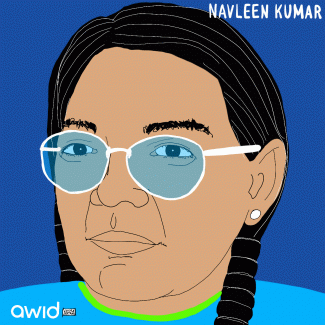
With commitment and integrity, she worked for more than a decade to protect and restore the lands of Indigenous people (adivasi) in Thane district, an area taken away by property and land developers using such means as coercion and intimidation. She fought this injustice and crime through legal interventions at different courts, realizing that manipulation of land records was a recurrent feature in most cases of land acquisition. In one of the cases, that of the Wartha (a tribal family), Navleen found out that the family had been cheated with the complicity of government officials.
Through her work, she helped restore the land back to the Wartha family and continued to pursue other cases of adivasi land transfers.
“Her paper on the impact of land alienation on adivasi women and children traces the history and complexities of tribal alienation from the 1970s, when middle class families began to move to the extended suburbs of Mumbai as the real estate value in the city spiralled.
Housing complexes mushroomed in these suburbs, and the illiterate tribals paid the price for this. Prime land near the railway lines fetched a high price and builders swooped down on this belt like vultures, to grab land from tribals and other local residents by illegal means.”
-Jaya Menon, Justice and Peace Commission
During the course of her activism, Navleen received numerous threats and survived several attempts on her life. Despite these, she continued working on what was not only important to her but contributed to changing the lives and realities of many she supported in the struggle for social justice.
Navleen was stabbed to death on 19 June 2002 in her apartment building. Two local gangsters were arrested for her murder.
AWID ฟอรัม ตลอดมาเป็นพื้นที่ที่ไม่กลัวการสนทนาที่จำเป็น หรือหัวข้อที่ท้าทาย เรายินดีรับข้อเสนอเหล่านี้เมื่อผู้จัดกิจกรรมสามารถรักษาพื้นที่สำหรับผู้เข้าร่วมด้วยความเคารพ ปลอดภัย และอย่างระมัดระวัง
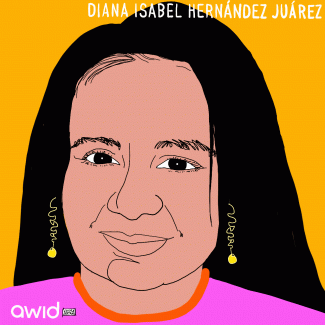
Diana Isabel Hernández Juárez was a Guatemalan teacher, human rights defender and environmental and community activist. She was the coordinator of the environmental program at Our Lady of Guadalupe Parish on the South coast of the country.
Diana dedicated her life to co-creating environmental awareness, working especially closely with local communities to address environmental issues and protect natural resources. She initiated projects such as forest nurseries, municipal farms, family gardens and clean-up campaigns. She was active in reforestation programmes, trying to recover native species and address water shortages, in more than 32 rural communities.
On 7 September 2019, Diana was shot and killed by two unknown gunmen while she was participating in a procession in her hometown. Diana was only 35 years old at the time of her death.
The 1st drafting session on the outcome document for the 3rd Financing for Development Conference
เราตระหนักดีถึงอุปสรรคในทางปฏิบัติและความทุกข์ทางอารมณ์ในการเดินทางระหว่างประเทศ โดยเฉพาะอย่างยิ่งจากซีกโลกใต้ โดย AWID กำลังทำงานร่วมกับ TCEB (สำนักงานส่งเสริมการจัดประชุมและนิทรรศการของประเทศไทย) เพื่อสนับสนุนผู้เข้าร่วมฟอรัมในการขอวีซ่า ข้อมูลอื่นๆเกี่ยวกับการขอวีซ่าจะถูกนำเสนอในช่วงที่เปิดให้ลงทะเบียน รวมถึงสถานที่และวิธีการขอวีซ่า
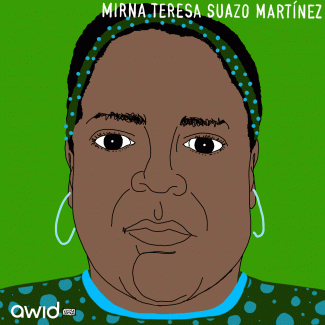
Mirna Teresa Suazo Martínez was part of the Garifuna (Afro-descendent and Indigenous) Masca community, living on the North Caribbean coast of Honduras. She was a community leader and a fervent defender of the Indigenous territory, a land that was violated when the National Agrarian Institute of Honduras gave territorial licenses to people outside of the community.
This deplorable deed resulted in repeated harassment, abuse and violence against the Masca, where economic interests of different groups met those of Honduran armed forces and authorities. According to the Black Fraternal Organization of Honduras (OFRANEH), the strategy of these groups is to evict and exterminate the Indigenous population.
“Masca, the Garifuna community located next to the Cuyamel Valley, is part of the area of influence of one of the supposed model cities, a situation that has triggered territorial pressures along the Garifuna coast.” - OFRANEH, 8 September 2019
Mirna Teresa, president of the Board of Trustees of the Masca Community in Omoa, was also firmly rejecting the construction of two hydroelectric plants on the river that carries the same name as her community, Masca.
“The Garífuna community attributes the worsening of the situation in their region to their opposition to tourist exploitation, the monoculture of African palm and drug trafficking, at the same time that it seeks to build an alternative life through the cultivation of coconut and other products for self-consumption.” - Voces Feministas, 10 September 2019
Mirna Teresa was murdered on 8 September 2019 in her Restaurant “Champa los Gemelos”.
She was one of six Garifuna women defenders murdered between September and October 2019 alone. According to OFRANEH, there was no investigation by the authorities into these crimes.
“In the case of the Garífuna communities, a large part of the homicides are related to land tenure and land management. However, squabbles between organized crime have resulted in murders, such as the recent ones in Santa Rosa de Aguán.” - OFRANEH, 8 September 2019
This information will only be available when registration opens.