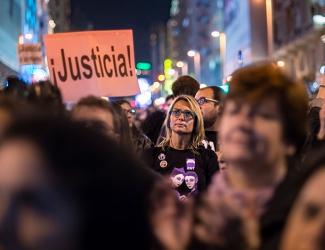
Adolfo Lujan | Flickr (CC BY-NC-ND 2.0)
Mass demonstration in Madrid on International Women's Day
Multitudinaria manifestación en Madrid en el día internacional de la mujer

Priority Areas

Supporting feminist, women’s rights and gender justice movements to thrive, to be a driving force in challenging systems of oppression, and to co-create feminist realities.

Advancing Universal Rights and Justice

Uprooting Fascisms and Fundamentalisms

Across the globe, feminist, women’s rights and gender justice defenders are challenging the agendas of fascist and fundamentalist actors. These oppressive forces target women, persons who are non-conforming in their gender identity, expression and/or sexual orientation, and other oppressed communities.


Discriminatory ideologies are undermining and co-opting our human rights systems and standards,  with the aim of making rights the preserve of only certain groups. In the face of this, the Advancing Universal Rights and Justice (AURJ) initiative promotes the universality of rights - the foundational principle that human rights belong to everyone, no matter who they are, without exception.

We create space for feminist, women’s rights and gender justice movements and allies to recognize, strategize and take collective action to counter the influence and impact of anti-rights actors. We also seek to advance women’s rights and feminist frameworks, norms and proposals, and to protect and promote the universality of rights.


Our actions

Through this initiative, we:

  • Build knowledge: We support feminist, women’s rights and gender justice movements by disseminating and popularizing knowledge and key messages about anti-rights actors, their strategies, and impact in the international human rights systems through AWID’s leadership role in the collaborative platform, the Observatory on the Universality of Rights (OURs)*.
  • Advance feminist agendas: We ally ourselves with partners in international human rights spaces including, the Human Rights Council, the Commission on Population and Development, the Commission on the Status of Women and the UN General Assembly.
  • Create and amplify alternatives: We engage with our members to ensure that international commitments, resolutions and norms reflect and are fed back into organizing in other spaces locally, nationally and regionally.
  • Mobilize solidarity action: We take action alongside women human rights defenders (WHRDs) including trans and intersex defenders and young feminists, working to challenge fundamentalisms and fascisms and call attention to situations of risk.  


Related Content

Disintegration | Small Snippet AR

تَفَسُخ

وصلتني رسالة يوم الأربعاء
مصحوبة بعنوانٍ على ظهرها. 

اقرأ أكثر

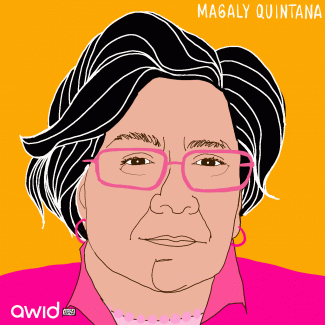
Magaly Quintana

Magaly Quintana was known by many in Nicaragua as ‘La Maga’ (meaning wizard). She was a feminist historian, activist, and an unyielding defender of women’s rights demanding justice for the victims of femicide.

Magaly was committed to documenting and building statistics on women and girls who were killed as a result of sexual violence in the country. 

“She rebuilt the life of each one, of their families, to show those lives that had been torn away.” - Dora María Téllez

Magaly also criticized the government for reforming Law 779 addressing violence against women. A product of the hard work of Nicaraguan women’s movements, this law included important provisions to criminalize femicide before its reform. She argued that legislative reforms weakened the law and limited the definition of femicides to homicides, as a result invisibilizing violent crimes against women.

Magaly’s feminist organizing began in the early 1980s. She was the director of Catholic Women for the Right to Choose, advocating for the right to therapeutic abortion after it was banned in 2006. In 2018, she supported the protests against Daniel Ortega’s government.

Magaly was born in May 1952 and passed away in May 2019.

“See you later, my dearest Magaly Quintana. Thanks so much, thanks for your legacy. We’ll see you again, as strong and powerful as ever.”- Erika Guevara Rosas (American Director of Amnesty International)
ฉันเสนอกิจกรรมไปในฟอรัมที่ผ่านมา ฉันยังจำเป็นต้องสมัครใหม่อีกครั้งหรือไม่

กรุณาสมัครใหม่อีกครั้ง โลกได้เปลี่ยนไปจากปี 2564 และเราขอเชิญชวนให้คุณเสนอกิจกรรมที่ถ่ายทอดความจริงและสิ่งที่คุณให้ความสำคัญในปัจจุบัน

CREDITS | Content Snippet EN

Credits

Editorial Team 
Co-editors
Chinelo Onwualu
Ghiwa Sayegh (Kohl)

Design and Illustration
Sophia Andreazza

Communications Strategist
Zuhour Mahmoud (Kohl)


Arabic Editor
Sabah Ayoub (Kohl)

Translation Manager
Maya Zebdawi (Kohl)

AWID’s Team
Nana Darkoa Sekyiamah
Lola Silva
Kamee Abrahamian
Tanya Lallmon
Maria Olivo
Marianne Asfaw
Ana Abelenda

Arabic Translators
Lina Yahya
Marina Samir
Maya Zebdawi
Nidal Majeed
Rania El Ghazal
Rola Alaeddine
Viviane Akiki    

English to Spanish
Translators 

Gabriela Adelstein
Maria Luisa Peralta
Alejandra Sarda
Gabby De Cicco

Proofreaders
Alejandra Sarda
Gabby De Cicco
María Eugenia Martí
                
English to French
Translators 
Camille Dufour
Morgane Boëdec

Proofreaders
Nathalie Thériault

Portuguese to English
Translator
Luiza Martello

Proofreader
Shaina Greiff


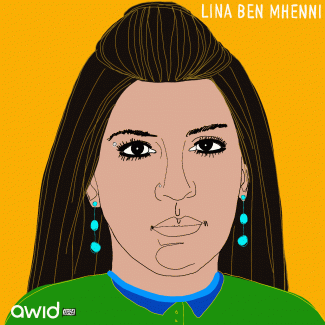
Lina Ben Mhenni

“I want to tell all Tunisians: We have to unite to say no to censorship and opinion trials.” - Lina Ben Mhenni (2013 interview)

Lina Ben Mhenni was a Tunisian blogger, activist and linguistics lecturer. She was vocal against internet censorship, defended the freedom of expression and was an advocate for women’s and human rights. Lina also fought for the release of students arrested under former President Zine El Abidine. 

“It’s true that information and the internet are important but being on the ground is crucial for a revolution. Some people here in Tunisia think that change can occur just by clicking like on the internet. I believe you have to be active on the ground. And of course, join actions on the field with the action on the web.” - Lina Ben Mhenni (Interview in POCIT)

In 2010, she co-organized a protest that challenged the government suppression of media and internet censorship. Lina was widely known for her blog “A Tunisian Girl and recognized for her work during the Tunisian revolution in 2011. In her blog, she reported on the news from the uprising, shared images documenting protests and was among the few voices who spoke about the killings and crackdown on protesters in Sidi Bouzid. Lina blogged using her real name instead of a pseudonym to protect her identity, one of only a few bloggers to do so. 

“Our freedom of expression is in real danger. I am afraid that we are losing the unique fruits of the revolution: the disappearance of fear and our freedom of speech. We have to keep on fighting to protect and preserve this right.” — Lina Ben Mhenni (2013 interview)

Lina was only 36 years old when she passed away on 27 January 2020, as a result of complications from an autoimmune disease. 


"Freedom, better education and health - that's all we wanted. When we failed, she pushed us." Lina’s school teacher Hala.


CFA FAQ - Accessibility and Health - Thai

สุขภาพและการช่วยในการเข้าถึง

Sexting Like a Feminist: Humor in the Digital Feminist Revolution | Content Snippet AR

الصياغات النسوية للرسائل النصّية ذات المحتوى الجنسي: الدُّعابة الجنسانيّة في فضاء الثورة النسوية الرقمية

في الثاني من أيلول/ سبتمير 2021، التمّ شمل مجموعة رائعة من الناشطات النسويات والمناديات بالعدالة الاجتماعية ضمن فعاليات مهرجان (AWID Crear | Résister | Transform). لم يقتصر هدف اجتماعهنّ على مشاركة استراتيجيات المقاومة وعمليات الابتكار الخلّاقة المشتركة التي ترمي إلى تغيير العالم. لقد اجتمعت الناشطات ليتبادلن الغزَل الإباحي على «تويتر». قادت نانا سيكياما النشاط.

نانا من مؤسسي «مغامرات من مضاجع النساء الإفريقيات» وهي كاتبة «حيوات النساء الافريقيات الجنسيّة». لقد جمعت عملها مع عمل المنبر النسائيّ الكويري المنادي بالوحدة الإفريقية (AfroFemHub) للبحث في جواب السؤال التالي: ما هي الصياغات النسوية للرسائل النصّية ذات المحتوى الجنسي؟

أعتقد أن هذا سؤال مهمّ للغاية، لأنه يبحث في القضية الأكبر المتعلّقة بالمقاربة النسوية لكيفية تنقّل المرء في عالم الإنترنت. في ظل الرأسمالية، يمكن للخطاب المُنتَج حول الجسد والجنس، أن يكون مجرّدًا من الإنسانية ومُشوّهًا. كما أن مساحات المتعة الجنسية في الفضاء الافتراضي لها طابع آدائي مبتذل. لذا، فإن البحث عن طرق تُمكّننا من استكشاف رغباتنا باستحسان، يمكن أن تولّد مقاومة للسائد من نماذج العرض والاستهلاك. تباعًا، تُستعاد هذه المساحات كمواقع للتشابك الحَقّ، ويتبيّن أنّ الرسائل النصّية ذات المحتوى الجنسي لا بد وأن تكون نسويّة.

بالإضافة إلى ذلك، فإن السماح للخطاب النسوي بتجسيد وجهه المرِح في فضاء الإنترنت، يساعد على مقارعة السردية الذائعة ومفادها أن التشابك في الفلك النسوي غير مرح وقاسٍ في طابعه العام. ولكن كما نعلم، فإن المتعة والمرح هي من صلب سياستنا وجزء متأصّل مما يعنيه أن يكون المرء نسويًا.

باستخدام وسم #SextLikeAFeminist، تقدَّم الناشطون والأكاديميون من حول العالم بـ»تويتات» تحمل نهمًا نسويًا كبيرًا. أورد لكم في هذا النص التويتات العشرة المفضّلة لدي.

يتبيّن من هذه التويتات الفكاهة المقرونة بالإثارة والاهتياج الجنسيّ، التي تتّسم بها المقاربة النسوية لكتابة الرسائل ذات المضامين الجنسية، دون أن تُسقط عن نفسها الالتزام بالمساواة والعدالة.

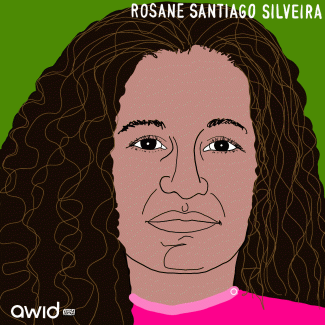
Rosane Santiago Silveira

Rosane Santiago Silveira was affectionately known as Rô Conceição. A Brazilian environmental and human rights activist, she fervently fought to protect the environment where it was most threatened. 

This included defending it on the island of Barra Velha, where it was endangered by oil exploration, as well as safeguarding it by campaigning against land-grabbing and expansion of eucalyptus plantations in Bahia State, where Rosane was a member of the Cassurubá Extractivist Reserve Council.

“Extractive Reserve is a protected area where resident families make their living off natural products extracted from the forest. These activities help maintain the forest integrity.” - Global Justice Ecology Project (original source: Rede Brasil Atual)

She was part of trade union activities, human rights and cultural movements. Rosane dedicated much of herself to causes that were not only close to her but are also of concern to land, forests, rivers, and communities whose rights and lives are continuously at risk.

She was tortured and murdered on 29 January 2019 in Nova Viçosa, a city in southern Bahia. 

“Unfortunately, today there is a feeling of total insecurity, because of the State’s absence in prosecuting these crimes. We were with her at Christmas, and everyone realised that she was worried and now we know that she had received three death threats,”  - Tuian, Rosane’s son in an interview with Rádio Brasil Atual (original source: Rede Brasil Atual)

Snippet - CSW68 Intro

Reclaiming Feminist Power

This year, we, alongside feminist activists from across the world, will be at CSW68 in New York, to challenge capitalist, neoliberal narratives and false solutions around poverty, development and financing. Through in-person events, lives on our socials, an exhibit booth and more; we are showing up to convene, amplify and support the voices and participation of our members, partners and allies.

Learn more about our program this year below.

Colectivo Morivivi Snippet EN

Colectivo Morivivi

Moriviví is a collective of young female artists, working on public art since April 2013. Based in Puerto Rico, we’ve gained recognition for the creation of murals and community led arts.

Colectivo Morivivi’s Exhibition

Snippet - WITM Who should - EN

Who should take this survey*?

The survey is for groups, organizations and movements working specifically or primarily for the rights of women, LBTQI+ people and on gender justice in all contexts, at all levels, and in all regions. If this is one of the core pillars of your group, collective, network or any other type of organization - whether registered or not, newly formed or long-standing, we invite you to take this survey.

Girl in a jacket

*At this time, we are not asking for responses from individuals or funders.

Learn more about the survey:
Consult the F.A.Q.

Snippet The revolution will be feminist_Fest (EN)

Plenary session:

The revolution will be feminist—or it won’t be a revolution

Manal Tamimi Palestine
Bubulina Moreno, Colombia
Karolina Więckiewicz, Poland
Anwulika Ngozi Okonjo, Nigeria

watch plenary


Snippet - WITM Survey will remain open - EN

Watch the "Where is the Money?" Webinar now.

On July 11, 2024, we had an amazing conversation with great feminists on the state of the funding ecosystem and the power of "Where is the Money?" research.

Special thanks to Cindy Clark (Thousand Currents), Sachini Perera (RESURJ), Vanessa Thomas (Black Feminist Fund), Lisa Mossberg (SIDA), and Althea Anderson (Hewlett Foundation).

Watch here! 

Watch with Arabic interpretation.

We re-grant money to grantee partners and identify as a feminist and/or women’s fund, should we take the survey?

No, we very much appreciate your work but are not asking for responses from women’s and feminist funds at this time. We do encourage you to share the survey with your grantee partners and feminist networks.

Is my participation confidential?

Absolutely. Your responses will be deleted at the end of data processing and analysis, and used for research purposes only. Data will NEVER be shared outside of AWID and will be only processed by AWID staff and consultants working on the WITM project. We prioritize your privacy and security. Our detailed privacy policy is available here.

Snippet - WITM why - RU

Почему Мне Следовало Бы Пройти Этот Опрос?

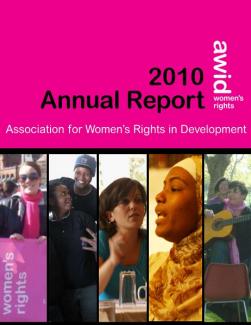
Annual Report 2010

AWID 2010 Annual Report Cover

Our 2010 Annual Report highlights the major accomplishments of each of our strategic initiatives during the year.

Along with activity highlights, we include a brief analysis of the impact of our initiatives as well as reflections from our members and partners that further illustrate the relevance of AWID’s work and its connection to broader women’s rights movements. 

This interactive document is complete with links to our websites and recent publications with in-depth information on the issues we address in the report.

Read online

Snippet - WITM To Strengthen - PT

Para fortalecer a nossa voz e poder coletivos para obter mais recursos de melhor qualidade para a organização feminista, de direitos das mulheres, de LBTQI+ e de aliados globalmente.

Margo Okazawa-Rey

Biography

Margo Okazawa-Rey is an activist-educator and transnational feminist working on issues of militarism for nearly 30 years. She is a founder member of the International Women’s Network against Militarism and Women for Genuine Security, the US group of the Network. She has long-standing activist commitments with Du Re Bang/My Sisters Place in South Korea and Women’s Centre for Legal Aid and Counselling in Palestine. She also serves on the International Board of PeaceWomen Across the Globe in Bern, Switzerland and is President of the Board of Directors of Association for Women’s Rights in Development (AWID). Her foundational activist/life principle is that love is a radical act. She is also known as DJ MOR Love and Joy.

Position
President
Add to stories
Off

Snippet - WITM Why now_col 2 - PT

O financiamento dos movimentos feministas é fundamental para garantir uma presença mais justa e pacífica, e um futuro liberto.

Na última década, os financiadores investiram significativamente mais dinheiro na igualdade de género; no entanto, apenas 1% do financiamento filantrópico e de desenvolvimento foi efetivamente direcionado para apoiar diretamente mudanças sociais lideradas por feministas

Na busca da abundância, e para acabar com esta escassez crónica, o inquérito WITM é um convite para os defensores do feminismo e da justiça de género se envolverem no percurso da recolha coletiva de testemunhos e de casos para mobilizar mais recursos financeiros de melhor qualidade e recuperar o poder no ecossistema de financiamento neste momento. Em solidariedade com os movimentos que continuam invisibilizados, marginalizados e sem acesso a financiamento central, de longo prazo, flexível e baseado em fundos fiduciários, o inquérito WITM destaca o estado efetivo dos recursos, desafia soluções falsas e aponta.