UN Women / Flickr (CC BY-NC-ND 2.0)
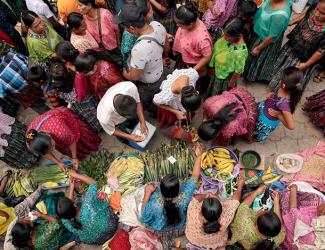
Guatemala - Rural Women Diversify Incomes and Build Resilience
Left
Half
Left

Priority Areas

Supporting feminist, women’s rights and gender justice movements to thrive, to be a driving force in challenging systems of oppression, and to co-create feminist realities.

Building Feminist Economies

Building Feminist Economies is about creating a world with clean air to breath and water to drink, with meaningful labour and care for ourselves and our communities, where we can all enjoy our economic, sexual and political autonomy.


In the world we live in today, the economy continues to rely on women’s unpaid and undervalued care work for the profit of others. The pursuit of “growth” only expands extractivism - a model of development based on massive extraction and exploitation of natural resources that keeps destroying people and planet while concentrating wealth in the hands of global elites. Meanwhile, access to healthcare, education, a decent wage and social security is becoming a privilege to few. This economic model sits upon white supremacy, colonialism and patriarchy.

Adopting solely a “women’s economic empowerment approach” is merely to integrate women deeper into this system. It may be a temporary means of survival. We need to plant the seeds to make another world possible while we tear down the walls of the existing one.


We believe in the ability of feminist movements to work for change with broad alliances across social movements. By amplifying feminist proposals and visions, we aim to build new paradigms of just economies.

Our approach must be interconnected and intersectional, because sexual and bodily autonomy will not be possible until each and every one of us enjoys economic rights and independence. We aim to work with those who resist and counter the global rise of the conservative right and religious fundamentalisms as no just economy is possible until we shake the foundations of the current system.


Our Actions

Our work challenges the system from within and exposes its fundamental injustices:

  • Advance feminist agendas: We counter corporate power and impunity for human rights abuses by working with allies to ensure that we put forward feminist, women’s rights and gender justice perspectives in policy spaces. For example, learn more about our work on the future international legally binding instrument on “transnational corporations and other business enterprises with respect to human rights” at the United Nations Human Rights Council.

  • Mobilize solidarity actions: We work to strengthen the links between feminist and tax justice movements, including reclaiming the public resources lost through illicit financial flows (IFFs) to ensure social and gender justice.

  • Build knowledge: We provide women human rights defenders (WHRDs) with strategic information vital to challenge corporate power and extractivism. We will contribute to build the knowledge about local and global financing and investment mechanisms fuelling extractivism.

  • Create and amplify alternatives: We engage and mobilize our members and movements in visioning feminist economies and sharing feminist knowledges, practices and agendas for economic justice.


“The corporate revolution will collapse if we refuse to buy what they are selling – their ideas, their version of history, their wars, their weapons, their notion of inevitability. Another world is not only possible, she is on her way. On a quiet day, I can hear her breathing”.

Arundhati Roy, War Talk

Related Content

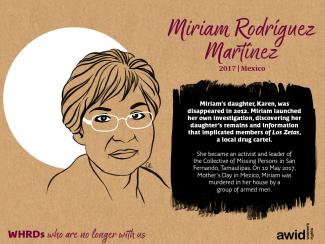
Miriam Rodríguez Martínez

When and Where will the Forum be?

2-5 December, 2024, Bangkok, Thailand! We will gather at the Queen Sirikit National Convention Center (QSNCC) as well as virtually online.

My group or I were supposed to participate in the Forum that was canceled in the pandemic, how can I be engaged in this Forum?

We will reconnect with past partners, to ensure past efforts are honored. If your contact information has changed since the last Forum process, please update us so that we may reach you.

CFA 2023 - Forum Theme - EN

Rising Together: Connect, Heal, Thrive

The Forum theme––Rising Together––is an invitation to engage with our whole selves, to connect with each other in focused, caring and brave ways, so that we can feel the heartbeat of global movements and rise together to meet the challenges of these times.

Feminist, women’s rights, gender justice, LBTQI+ and allied movements around the world are at a critical juncture, facing a powerful backlash on previously-won rights and freedoms. Recent years have brought the rapid rise of authoritarianisms, the violent repression of civil society and criminalization of women and gender-diverse human rights defenders, escalating war and conflict in many parts of our world, the continued perpetuation of economic injustices, and the intersecting health, ecological and climate crises.

Our movements are reeling and, at the same time, seeking to build and maintain the strength and fortitude required for the work ahead. We can't do this work alone, in our silos. Connection and healing are essential to transforming persistent power imbalances and fault lines within our own movements. We must work and strategize in interconnected ways, so that we can thrive together. The AWID Forum fosters that vital ingredient of interconnectedness in the staying power, growth and transformative influence of feminist organizing globally.

CFA 2023 - Online and Hybrid - thai

 ใหม่

การประชุมออนไลน์และแบบผสมผสานรูปแบบ

ผู้เข้าร่วมประชุมออนไลน์สามารถดำเนินรายการในโปรแกรมต่างๆ   เชื่อมต่อและสนทนากับผู้อื่น   และสัมผัสประสบการณ์ความคิดสร้างสรรค์ ศิลปะ และการเฉลิมฉลองของเวที AWID ได้โดยตรง ผู้เข้าร่วม         ที่เชื่อมต่อออนไลน์จะได้พบกับกับโปรแกรมที่เข้มข้นและหลากหลาย ตั้งแต่การประชุมเชิงปฏิบัติการ การอภิปราย  ไปจนถึงโปรแกรมกิจกรรมเยียวยาและการแสดงดนตรี  โดยที่กิจกรรมบางอย่างจะเน้น การเชื่อมต่อระหว่างผู้เข้าร่วมออนไลน์ด้วยกัน       ในขณะที่กิจกรรมอื่นๆจะเป็นการเชื่อมต่อแบบผสมผสาน  เพื่อการมีปฏิสัมพันธ์กันระหว่างผู้เข้าร่วมออนไลน์และผู้ที่อยู่กรุงเทพฯ

CFA 2023 - Submit Button - thai

Reason to join 5

Expand your boundaries. AWID members increasingly represent a diverse and vibrant cross-section of feminists working on land rights, workers’ rights, sexual rights and bodily autonomy, among other issues. By joining us as a member, you can connect your struggles across movements.

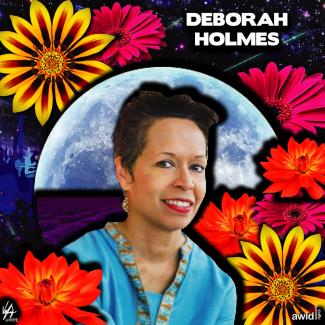
Deborah Holmes

At the time of her death, following a short but aggressive battle with cancer, Deborah was the Chief Communication and Engagement Officer at the Women’s Funding Network (WFN). 

Deborah also worked for the Global Fund for Women from 2008 to  2017. Deborah was extremely loved and respected by board, staff, and partners of Global Fund for Women.

Kavita Ramdas, former CEO of the Global Fund for Women aptly noted that Deborah was “a small package exploding with warmth, generosity, intelligence, style, and a passionate commitment to fusing beauty with justice. She understood the power of story. The power of women’s voice. The power of lived experience. The power of rising from the ashes and telling others it was possible. And, still we rise.”

Musimbi Kanyoro, the present CEO of the Global Fund for Women, added, “We have lost a sister and her life illuminates values that unite and inspire us all. As we all come together to mourn Deborah’s passing, let us remember and celebrate her remarkable, bold, and passionate life.”


Deborah Holmes, USA

Are there some red line topics we should avoid submitting?

The AWID Forum has always been a space that doesn’t shy away from much needed and difficult conversations. We welcome these submissions when the organizers can carefully hold a respectful and safer space for the participants.

“Where is the Money for Women’s Rights?" AWID’s WITM Toolkit (landing page intro)

A new edition of the Where is the Money?  research is underway.

Learn more.

A Do-it-Yourself Research Methodology

AWID offers the WITM Toolkit to support individuals and organizations who want to conduct their own research on funding trends for a particular region, issue or population by adapting AWID’s research methodology.


AWID’s WITM Toolkit builds on 10 years research experience. AWID’s WITM research and WITM Toolkit is a political and practical demonstration of the resources and steps it takes to conduct solid action-research.

Learn more about the context around the WITM research methodology

The Resourcing Feminist Movements team also offers technical and political support before and during the research process. Review the toolkit and contact us at fundher@awid.org if you need more information.

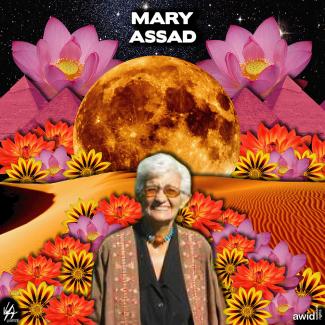
Mary Assad

An expert on social development and anthropologist by training, Mary was best known as a pioneer in the battle against Female Genital Mutilation (FGM).

Born in Cairo Egypt in 1922, Mary’s work in development started early, as she joined the Youth Women’s Christians’ Association (YWCA). Mary was a member of the World Council of Churches and became increasingly concerned with issues regarding women’s health. Her long struggle against FGM proved fruitful in 2008, when Egypt finally criminalized the practice.

She is remembered as a mentor to many Egyptian feminists and activists.


Mary Assad, Egypt

ทำไมจึงเป็นกรุงเทพ

ฟอรัมแต่ละครั้งถูกจัดขึ้นในภูมิภาคต่างๆทั่วโลก และครั้งนี้ AWID ฟอรัมกลับมาจัดที่เอีเชียอีกครั้ง! เราได้ผ่านการไปเยี่ยมเยือนประเทศต่างๆในเอเชียเพื่อหารือกับขบวนการเฟมินิสต์เพื่อประเมินรายละเอียดด้านโลจิสติกส์ การเข้าถึงง่าย ความปลอดภัย วีซ่า และความพร้อมด้านอื่นๆ โดยคณะกรรมการ AWID ของเรา อนุมัติให้จัดที่กรุงเทพอย่างกระตือรือร้นในฐานะทางเลือกที่ดีที่สุด เราตื่นเต้นที่ได้กลับมากรุงเทพที่ที่เราเคยได้จัด AWID ฟอรัมในปีพ.ศ. 2548

FRMag - Armenians

Armenians, Feminism is our Past and Future

by Sophia Armen

Like it or not fierce ungerhouis have been part and parcel to our histories of resistance and are here to stay. (...)

Read

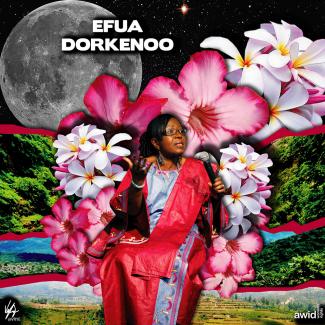
Efua Dorkenoo

Affectionately known as “Mama Efua”, her work to end Female Genital Mutilation (FGM) movement spanned three decades and helped bring international attention and action to end this harmful practice.

In 1983 Efua co-founded FORWARD (The Foundation for Women’s Health, Research and Development), which became a leading organisation in the battle to raise awareness about FGM. Her 1994 book, “Cutting the Rose: Female Genital Mutilation,” is considered the first on FGM and, featured in Columbia University’s “Africa’s 100 Best Books for the 20th Century”.

Originally from Ghana and a nurse by training, Efua joined the WHO in 1995 and successfully pushed for FGM to go on the agendas of WHO member states. She also worked closely with the Nigerian government in formulating a comprehensive National Policy that laid the groundwork for Nigeria’s anti-FGM laws, still in place today.

Her ground breaking work culminated in an Africa-led campaign, “The Girl Generation,” which is committed to ending FGM within a generation. Efua demonstrated how one person can become the unifying voice for a movement, and her wise words - “shared identity can help bring activists from different backgrounds together with a common sense of purpose” – are more relevant than ever.
 

Efua Dorkenoo, Ghana

CFA FAQ - Funding - Thai

การขอทุนสนับสนุนการเข้าร่วม