Related content
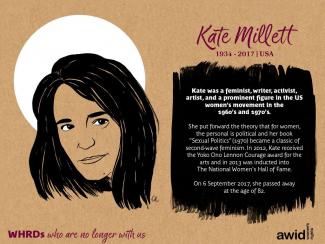
The Guardian: Kate Millett Obituary
New York Times: Kate Millett, Ground-Breaking Feminist Writer, Is Dead at 82
The New Yorker: A Last Interview with Kate Millett
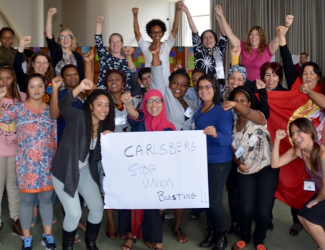
Women human rights defenders (WHRDs) worldwide defend their lands, livelihoods and communities from extractive industries and corporate power. They stand against powerful economic and political interests driving land theft, displacement of communities, loss of livelihoods, and environmental degradation.
Extractivism is an economic and political model of development that commodifies nature and prioritizes profit over human rights and the environment. Rooted in colonial history, it reinforces social and economic inequalities locally and globally. Often, Black, rural and Indigenous women are the most affected by extractivism, and are largely excluded from decision-making. Defying these patriarchal and neo-colonial forces, women rise in defense of rights, lands, people and nature.
WHRDs confronting extractive industries experience a range of risks, threats and violations, including criminalization, stigmatization, violence and intimidation. Their stories reveal a strong aspect of gendered and sexualized violence. Perpetrators include state and local authorities, corporations, police, military, paramilitary and private security forces, and at times their own communities.
AWID and the Women Human Rights Defenders International Coalition (WHRD-IC) are pleased to announce “Women Human Rights Defenders Confronting Extractivism and Corporate Power”; a cross-regional research project documenting the lived experiences of WHRDs from Asia, Africa and Latin America.
"Women Human Rights Defenders confronting extractive industries: an overview of critical risks and Human Rights obligations" is a policy report with a gender perspective. It analyses forms of violations and types of perpetrators, quotes relevant human rights obligations and includes policy recommendations to states, corporations, civil society and donors.
"Weaving resistance through action: Strategies of Women Human Rights Defenders confronting extractive industries" is a practical guide outlining creative and deliberate forms of action, successful tactics and inspiring stories of resistance.
The video “Defending people and planet: Women confronting extractive industries” puts courageous WHRDs from Africa, Asia, and Latin America in the spotlight. They share their struggles for land and life, and speak to the risks and challenges they face in their activism.
Challenging corporate power: Struggles for women’s rights, economic and gender justice is a research paper outlining the impacts of corporate power and offering insights into strategies of resistance.
AWID acknowledges with gratitude the invaluable input of every Woman Human Rights Defender who participated in this project. This project was made possible thanks to your willingness to generously and openly share your experiences and learnings. Your courage, creativity and resilience is an inspiration for us all. Thank you!
Related content
The Guardian: Kate Millett Obituary
New York Times: Kate Millett, Ground-Breaking Feminist Writer, Is Dead at 82
The New Yorker: A Last Interview with Kate Millett
Lancement du processus préparatoire intergouvernemental de la troisième Conférence sur le financement du développement, octobre 2014
The data will be processed for statistical purposes to shed light on the state of resourcing for feminist movements globally and will only be displayed in an aggregate form. AWID will not publish information about a particular organization or display information that would allow an organization to be identified by its location or characteristics, without their prior consent.
“It’s the indigenous knowledge and the practices that have always supported food sovereignty and this knowhow is in the hands of the women … Ecofeminism for me is the respect for all that we have around us.”
Mariama Sonko
Interview to The Guardian
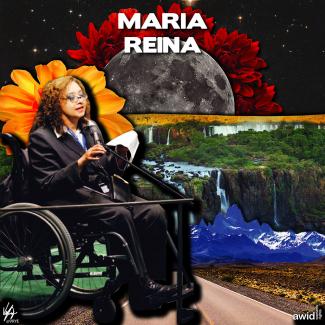
Representó al Consorcio Internacional sobre Discapacidad y Desarrollo (IDDC por su sigla en inglés) durante la negociación de la Convención sobre los Derechos de las Personas con Discapacidad (2001-2006). Su trabajo estaba dedicado a la implementación del objetivo de la Convención: el goce pleno de los derechos humanos universales por, para y con las personas con discapacidades, en pos de un mundo inclusivo, accesible y sostenible.
En sus propias palabras, su liderazgo consistía en «servir a la comunidad de personas con discapacidad, comenzando por aquellas pequeñas tareas que otrxs pueden no querer realizar».
Falleció el 27 de octubre de 2017 en su ciudad natal de Rosario, Argentina.
En esta nota puede leerse más sobre María Verónica Reina, en sus propias palabras.
Women's Forum on Financing for Gender Equality
The Third UN International Conference on Financing for Development
No, no lo es. Se basa en los 20 años de historia de AWID movilizando más y mejor financiamiento para el cambio social encabezado por los feminismos, y se trata de la tercera edición de la investigación ¿Dónde está el dinero para las organizaciones feministas? Aspiramos a repetir la encuesta ¿Dónde está el dinero? cada tres años.
Un lugar de trabajo no tiene que operar sobre la base de la competencia y las ganancias. No tiene que explotar a la gente en beneficio de unx dueñx o pequeña élite.
Las comunidades vulnerabilizadas al margen de las economías formales han ido construyendo modelos cooperativos alternativos basados en la autonomía, la cooperación, la corresponsabilidad, la autogestión y la solidaridad.
Las cooperativas y lugares de trabajo autogestionados por lxs trabajadorxs siempre han ofrecido formas alternativas de generar oportunidades de empleo, ingresos, seguridad social y ahorros y, al mismo tiempo, distribuir los ingresos de formas más comunitarias, sostenibles y seguras.
Pero es más que una oportunidad de empleo: es hacer realidad los sueños y construir economías feministas basadas en la solidaridad y el cuidado mutuo. Es crear un mundo donde nuestras vidas, nuestro trabajo y nuestras comunidades importen.
Esta es la historia de la Cooperativa Textil Nadia Echazú, la primera cooperativa creada y dirigida por y para personas travesti y trans en Argentina.
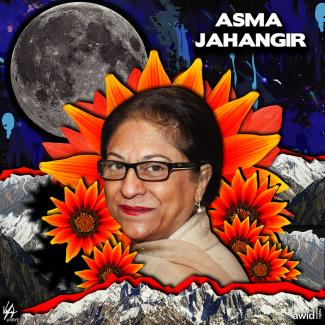
Asma était une militante pakistanaise des droits humains, une critique courageuse de l'ingérence de l'armée dans la politique et une défenseure acharnée de la primauté du droit.
Elle a été la présidente fondatrice de la Commission des droits de l'homme du Pakistan, un groupe indépendant ainsi qu’administratrice de l'International Crisis Group. Elle a remporté des prix internationaux et a été rapporteuse des Nations Unies sur les droits de l'homme et les exécutions extrajudiciaires.
Ses collègues et ami-e-s de l’AWID se souviennent d'elle avec affection
« Grâce à sa vie, Asma a réécrit l'histoire que beaucoup d'entre nous ont racontée en tant que femmes. Asma a changé le monde. Elle l'a changé au Pakistan et elle l'a changé dans notre imaginaire. »
El tema del 14° Foro Internacional de AWID es «Realidades feministas: nuestro poder en acción».
Entendemos las realidades feministas como los diferentes modos de existir y ser que nos muestran lo que es posible, a pesar de los sistemas de poder dominantes, y en desafío y resistencia contra ellos. Entendemos estas realidades feministas como recuperaciones y corporizaciones de esperanza y poder, multidimensionales, dinámicas, y arraigadas en contextos y momentos históricos específicos.
Si vous avez des questions ou des inquiétudes, merci de nous contacter par le biais de ce formulaire, en indiquant « Enquête WITM » dans l’objet de votre message. Vous pouvez également nous écrire à witm@awid.org.

1 personne trans et travesti sur 3 en Argentine vit dans un ménage à faible revenu.
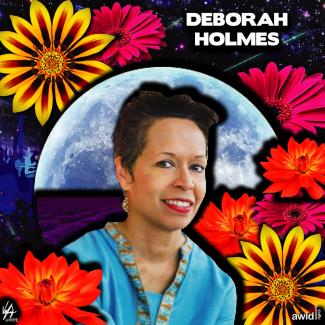
At the time of her death, following a short but aggressive battle with cancer, Deborah was the Chief Communication and Engagement Officer at the Women’s Funding Network (WFN).
Deborah also worked for the Global Fund for Women from 2008 to 2017. Deborah was extremely loved and respected by board, staff, and partners of Global Fund for Women.
Kavita Ramdas, former CEO of the Global Fund for Women aptly noted that Deborah was “a small package exploding with warmth, generosity, intelligence, style, and a passionate commitment to fusing beauty with justice. She understood the power of story. The power of women’s voice. The power of lived experience. The power of rising from the ashes and telling others it was possible. And, still we rise.”
Musimbi Kanyoro, the present CEO of the Global Fund for Women, added, “We have lost a sister and her life illuminates values that unite and inspire us all. As we all come together to mourn Deborah’s passing, let us remember and celebrate her remarkable, bold, and passionate life.”
Siempre hemos trabajado para garantizar que nuestros Foros sean desarrollados conjuntamente con nuestrxs afiliadxs, los movimientos, y nuestros colectivos prioritarios.
Para el Foro 2020 queremos profundizar y fortalecer este espíritu y esta práctica de creación conjunta y colaboración. También reconocemos la necesidad de mejorar el equilibrio entre la inclusión de muchas voces y experiencias y el espacio para que lxs participantes y el equipo respiren, se tomen una pausa, y disfruten de un poco de tiempo de inactividad.
Este Foro será diferente en cuanto a que:

لبناء وقائع نسوية ترتكز على الأدلة عن كيف يتحرك المال ولمن يصل