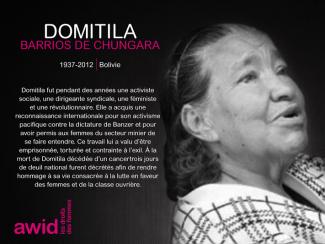
Domitila Barrios de Chungara
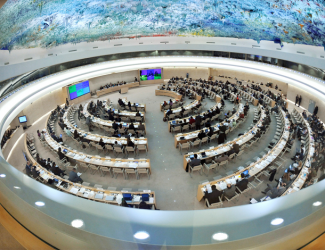
The Human Rights Council (HRC) is the key intergovernmental body within the United Nations system responsible for the promotion and protection of all human rights around the globe. It holds three regular sessions a year: in March, June and September. The Office of the UN High Commissioner for Human Rights (OHCHR) is the secretariat for the HRC.
Debating and passing resolutions on global human rights issues and human rights situations in particular countries
Examining complaints from victims of human rights violations or activist organizations on behalf of victims of human rights violations
Appointing independent experts (known as “Special Procedures”) to review human rights violations in specific countries and examine and further global human rights issues
Engaging in discussions with experts and governments on human rights issues
Assessing the human rights records of all UN Member States every four and a half years through the Universal Periodic Review
AWID works with feminist, progressive and human rights partners to share key knowledge, convene civil society dialogues and events, and influence negotiations and outcomes of the session.

Опрос доступен на английском, арабском, испанском, португальском, русском и французском языках!
As you may or may not know, AWID is celebrating its 40th Anniversary in 2022 - around the themes of “Gather, Seed, and Disrupt.” To honor this occasion we have invited AWID members, partners and staff to write their own “Love Letter to Feminist Movements”. Together, we have sparked a constellation of feminist movements. Stay close as we forge on the journey ahead and continue to Gather, Seed, and Disrupt.
A note about Our Collection Of Love Letters:
All of these letters are written by activists who are sharing their diverse experiences in feminist movements. Some of them may include difficult or challenging content about abuse, sexual violence, conflict, exclusion and other potential triggering or upsetting pieces. While these letters are filled with love, please take care of yourself when reading the letters.
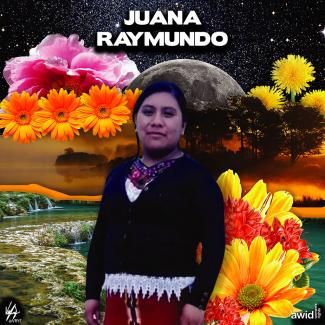
Juana was an Indigenous Mayan Ixil, professional nurse and coordinator of the Farmers’ Development Committee (Comité de Desarrollo Campesino – CODECA).
CODECA is a human rights organisation of Indigenous farmers dedicated to promoting land rights and rural development for Indigenous families) in the Nebaj Quiché micro-region. She first joined CODECA as a member of its youth branch (Juventud de CODECA). At the time of her death had been elected to be part of the Executive Committee of the Movement for the Liberation of Peoples (MLP).
Juana’s body was found by neighbours by a small river on the road near Nebaj and Acambalam Village, Guatemala. According to CODECA, her body showed signs of torture.
The 14th Forum theme is “Feminist Realities: our power in action”.
We understand Feminist Realities as the different ways of existing and being that show us what is possible, despite dominant power systems, and in defiance and resistance to them. We understand these feminist realities as reclamations and embodiments of hope and power, and as multi-dimentional, dynamic and rooted in specific contexts and historical moments.
Read more about Feminist Realities
Глобальный опрос «Где деньги для феминистских объединений?» является ключевым элементом третьего этапа нашего исследования, ориентированного на конкретные действия: «Где деньги для феминистских объединений» (короткое название – «Где деньги?»). Результаты опроса будут доработаны и обстоятельно изучены в ходе бесед с активистами и донорами, а также сопоставлены с другими имеющимися аналитическими материалами и исследованиями о состоянии ресурсов феминистских движений и инициатив по достижению гендерного равенства во всем мире.
Полный отчет организации «Где деньги для феминистских объединений?» будет опубликован в 2026 году.
 Чтобы узнать больше о том, как AWID освещает вопросы финансирования феминистских движений, ознакомьтесь с историей инициативы «Где деньги?» и нашими предыдущими отчетами здесь.
¿Qué pasaría si volviéramos a imaginar formas de cuidar a nuestras comunidades?
¿Y si la economía no estaría enfocada en la ganancia de una pequeña élite sino en el cuidado de nuestro bienestar individual y colectivo, y de la Naturaleza?
Estas historias tratan de la construcción de comunidades de cuidado con y para las personas que históricamente y actualmente están excluidas, privadas de sus derechos y deshumanizadas tanto por el Estado como por la sociedad.
Estas son las historias de las feministas que centran el cuidado en la economía.
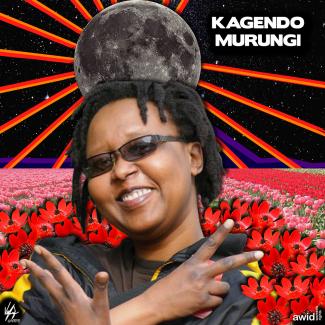
Kagendo es cariñosamente recordada por su familia y amigxs como una férrea activista feminista africana, artista y realizadora cinematográfica
Dedicó más de 20 años a defender los derechos y la dignidad de las personas LGBTIQ y de género no normativo de África. Lxs colegas de Kagendo la recuerdan como alguien con una personalidad jovial, convicciones férreas y amor a la vida. Kagendo murió por causas naturales en su hogar de Harlem, el 27 de diciembre de 2017.
Al producirse su fallecimiento, la escritora y activista keniata Shailja Patel destacó «el compromiso de toda la vida de Kagendo para establecer una relación entre todas las formas de opresión, mostrando de qué manera el colonialismo alentó la homofobia en el continente africano, para convertir así a Kenia en un país donde las personas queer y las mujeres libres puedan vivir y progresar».
We have always worked towards ensuring that our Forums are co-developed with partners, movements and our priority constituencies.
For our upcoming Forum, we aim to deepen and strengthen that spirit and practice of co-creation and collaboration. We also recognize the need to improve the balance between the inclusion of many voices and experiences with room for participants and staff to breathe, take pause and enjoy some downtime.
This Forum will be different in the following ways:
Есть много причин, по которым ваше участие в опросе очень важно. Это возможность поделиться своим опытом привлечения финансирования для деятельности вашей организации; заявить о себе как об эксперте в вопросах движения денежных средств и их получателей; внести свой вклад в коллективную и последовательную адвокацию среди доноров, чтобы привлечь более объемное и эффективное финансирование. За последние два десятилетия исследования AWID в этой области зарекомендовали себя как ключевой ресурс для активисток(-тов) и доноров. Мы приглашаем вас присоединиться к нам в реализации третьей части инициативы «Где деньги?», чтобы осветить реальное состояние ресурсного обеспечения, оспорить ошибочные решения и указать на то, как необходимо изменить финансирование, чтобы движения процветали и реагировали на сложные вызовы нашего времени.
Lorsque vous arriverez au centre-ville de São Paulo, vous verrez le bâtiment Ocupação 9 de Julho (Occupation de l’Avenue du 9 Juillet), un espace culturel et un site important dans la lutte pour le logement social.
C'est le travail du Mouvement des Travailleur·euses Sans-Abri (Movimento dos Sem-Teto do Centro, MSTC), un mouvement de plus de 2000 personnes qui agit dans le centre-ville et convertit les espaces abandonnés en logements pour les travailleur·euses à faible revenu, les enfants, femmes, adultes, personnes âgées, migrant·e·s et réfugié·e·s. Dans ce bâtiment en particulier, 122 familles sont nourries et logées.
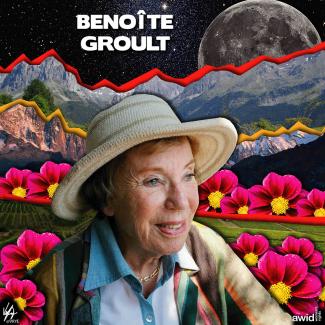
Benoîte était une journaliste, écrivaine et militante féministe française.
Elle a publié plus de 20 romans et de nombreux essais sur le féminisme
Son premier livre « Ainsi Soit-Elle » a été publié en 1975. Le livre explore l’histoire des droits des femmes ainsi que la misogynie et la violence à l’égard des femmes.
Son dernier livre, « Ainsi Soit Olympe de Gouges», a exploré la question des droits des femmes pendant la Révolution française, se concentrant sur la figure de l’ancienne féministe française Olympe de Gouges. De Gouges fut guillotinée en 1793 pour avoir défié l'autorité des hommes et publié la « Déclaration des droits de la femme et de la citoyenne » deux ans auparavant.
Please visit the "Funding ideas" page to get some ideas and inspiration for how you can fund your participation at the next Forum, including the limited support AWID will be able to provide.
Não, apreciamos muito o vosso trabalho, mas atualmente não solicitamos respostas de fundos feministas e de mulheres. Encorajamos-vos a partilhar o inquérito com os vossos parceires beneficiários e as vossas redes feministas.
Black women community organizing in the Cauca Valley in Colombia can be traced back to the country's colonial past, which is marked by the racism, patriarchy, and capitalism that sustained slavery as a means to exploit the region’s rich soils. These organizers are the heroines of a broad movement for black autonomy - one that fights for the sustainable use of the region's forests and natural resources as vital to their culture and livelihood.
For 25 years, the Association of Afro-Descendant Women of the Northern Cauca (Asociación de Mujeres Afrodescendientes del Norte del Cauca, ASOM) has been dedicated to bringing power to Afro-Colombian women’s organizing in northern Cauca.
They became established in 1997 as a response to ongoing human rights violations, the absence of public policies, inadequate management of natural resources, and the lack of opportunities for women in the territory.
They have forged the struggle to secure ethnic-territorial rights, to end violence against women, and gain recognition of women’s roles change-making peace-building in Colombia.
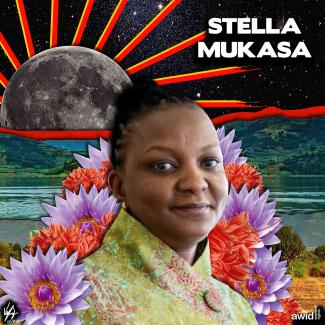
Stella began her career at the Ministry of Gender and Community Development in Uganda engaging with policymakers for law reform, including the 1995 Ugandan Constitution, which established some of the most progressive reforms for women in the region.
She is revered throughout the region for her tireless efforts to create and enforce gender-responsive laws and policies. She played a key role in drafting Uganda’s Domestic Violence Act and in mobilizing support for gender-responsive constitutions in both Uganda and in Rwanda.
Through her work with International Center for Research on Women (ICRW), she worked on violence against children, and worked to strengthen the capacities of grassroots organizations addressing gender-based violence. She was a lecturer on gender rights and the law at Makerere University and served on the boards of Akina Mama wa Afrika, ActionAid International Uganda and the Open Society Initiative for Eastern Africa.
We have been contacted by global and regional partners about some ideas for pre-Forum convenings and we will share more information about these ideas soon.
Many beautiful things emerged from the 2016 Black Feminisms Forum (BFF) that was organized by an Advisory Group and funded by AWID. Some of the independent organizing that arose from the BFF include Black feminist organizing in Brazil. While we won’t have another BFF this year, we remain committed to sharing some key learnings with anyone interested in continuing work around Black feminist organizing.