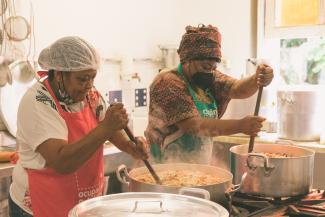
Flickr/Leonardo Veras (CC BY 2.0)

Special Focus

AWID is an international, feminist, membership organisation committed to achieving gender equality, sustainable development and women’s human rights

Protection of the Family

The Issue

Over the past few years, a troubling new trend at the international human rights level is being observed, where discourses on ‘protecting the family’ are being employed to defend violations committed against family members, to bolster and justify impunity, and to restrict equal rights within and to family life.

The campaign to "Protect the Family" is driven by ultra-conservative efforts to impose "traditional" and patriarchal interpretations of the family, and to move rights out of the hands of family members and into the institution of ‘the family’.

“Protection of the Family” efforts stem from:

  • rising traditionalism,
  • rising cultural, social and religious conservatism and
  • sentiment hostile to women’s human rights, sexual rights, child rights and the rights of persons with non-normative gender identities and sexual orientations.

Since 2014, a group of states have been operating as a bloc in human rights spaces under the name “Group of Friends of the Family”, and resolutions on “Protection of the Family” have been successfully passed every year since 2014.

This agenda has spread beyond the Human Rights Council. We have seen regressive language on “the family” being introduced at the Commission on the Status of Women, and attempts made to introduce it in negotiations on the Sustainable Development Goals.


Our Approach

AWID works with partners and allies to jointly resist “Protection of the Family” and other regressive agendas, and to uphold the universality of human rights.

In response to the increased influence of regressive actors in human rights spaces, AWID joined allies to form the Observatory on the Universality of Rights (OURs).  OURs is a collaborative project that monitors, analyzes, and shares information on anti-rights initiatives like  “Protection of the Family”.

Rights at Risk, the first OURs report, charts a map of the actors making up the global anti-rights lobby, identifies their key discourses and strategies, and the effect they are having on our human rights.   

The report outlines “Protection of the Family” as an agenda that has fostered collaboration across a broad range of regressive actors at the UN.  It describes it as: “a strategic framework that houses “multiple patriarchal and anti-rights positions, where the framework, in turn, aims to justify and institutionalize these positions.”
 

Related Content

¿Cuántas respuestas a la encuesta desean recoger?

Nuestra meta es alcanzar un total de 200 respuestas, prácticamente el doble de la cifra registrada en la última encuesta ¿Dónde está el dinero? de 2011.

2010: le quatrième Dialogue de haut niveau a lieu

  • Le quatrième Dialogue de haut niveau sur le financement du développement s’est tenu les 23 et 24 mars 2010 sur le thème Le Consensus de Monterrey et la Déclaration de Doha sur le financement du développement : état de la mise en œuvre et responsabilités futures. Dans ce cadre, quatre tables rondes ont été organisées sur les sujets suivants : la réforme des systèmes monétaires et financiers internationaux, l’impact de la crise financière sur les investissements étrangers directs, le commerce international et les flux financiers privés et enfin le rôle de la coopération financière et technique pour le développement – dont celui des nouvelles sources de financement du développement – dans l’optimisation de la mobilisation des ressources nationales et internationales en faveur du développement.
  • Un dialogue interactif informel a également permis à différentes parties prenantes de se concentrer sur le lien qui unit le financement du développement et les objectifs du Millénaire pour le développement.

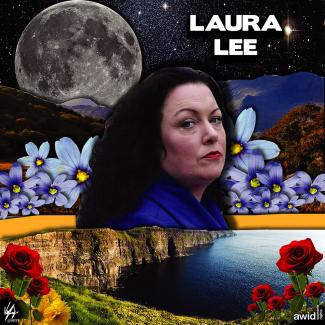
Laura Lee

Laura était une activiste et une avocate de premier plan qui a mené une campagne courageuse en faveur de la dépénalisation du travail du sexe en Irlande.

On se souvient d'elle comme « une combattante de la liberté pour les travailleurs et les travailleuses du sexe, une féministe, une mère pour certainEs et une amie nécessaire pour beaucoup ».

Laura militait pour que les personnes de l'industrie du sexe soient reconnu-e-s comme des travailleurs et travailleuses sujets de droits. Elle a activement milité en faveur de la dépénalisation, notamment en engageant une procédure judiciaire devant la haute cour de Belfast qui concernent des dispositions criminalisant l’achat de services sexuels. Laura a déclaré que son intention était de porter l'affaire devant la Cour européenne des droits de l'homme.


Laura Lee, Ireland

Club de cinéma féministe: Leitis in Waiting & programmation d'Amérique latine et d'Amérique centrale

Dans cette sélection de films, vous découvrirez les voix de réalisatrices qui ne se contentent pas de restituer les réalités féministes palpitant dans chaque recoin de ce territoire vaste et divers, mais explorerez aussi des oeuvres qui, dans leur conception même, s'interrogent sur le pourquoi, le qui et le comment du cinéma ou de l'audiovisuel. Ces femmes comprennent le cinéma comme un outil de lutte, comme quelque chose de plus que de simples images à apprécier sur un écran. Pour ces réalisatrices ou collectifs de cinéastes, le cinéma et l'audiovisuel constituent un outil capable de promouvoir la discussion, d'ouvrir un débat, bref, une ressource pour la pédagogie populaire et féministe.

Snippet - WITM FAQ - FR

Foire aux questions - FAQ

April 2015: Interactive hearings with the business sector and civil society take place

Informal interactive hearings with the business sector and civil society took place on 8 and 9 April 2015 respectively at UN headquarters in New York.

  • Women’s rights organizations and other CSOs raised concern about the limited participation of Member States during the CSO hearings and thus the Addis Ababa CSO Coordinating Group (ACG) issued a letter to the Co-facilitators
  • The second drafting session of the Addis Ababa outcome document was held from 13 – 17 April 2015 at the UN Headquarters. The basis of discussion was the Zero Draft.
  • The WWG on FfD presented recommendations on the FfD themes to Member States in different official sessions and side events. Among the key areas of concern for women was the fact that the zero draft did not give sufficient emphasis to the enormous, negative impacts of financial crises caused by instability in international financial systems on development, equality and human rights, particularly women’s human rights.

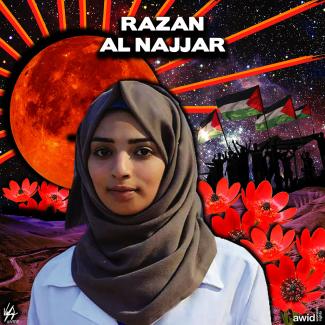
Razan Al-Najjar

Razan was a 21-year-old volunteer medic in Palestine.

She was shot as she ran toward a fortified border fence, in an effort to reach a casualty in the east of the south Gaza city of Khan Younis.

In her very last Facebook post, Razan said: “I am returning and not retreating,” adding: “Hit me with your bullets. I am not afraid.”


Razan Al-Najjar, Palestine

Do You Want To Organize Your Own Festival?_FR Snippet

Vous souhaitez organiser votre propre festival ?

Consultez notre guide : « Un tout petit guide pour l’organisation de festivals féministes internationaux et d’événements en ligne. »

Télécharger ici

Snippet - WITM to claim - AR

لتجسيد قوتكم/ن كخبيرات عن وضع التمويل للحركات النسوية

¿Qué está en juego en este proceso para los derechos de las mujeres?

La financiación para el desarrollo encierra amenazas y oportunidades concretas para los derechos de las mujeres y los derechos humanos de todas las personas. Una financiación y políticas para el desarrollo que sean transformadoras pueden constituir un aporte importante para los cambios sistémicos que se necesitan a fin de garantizar el respeto, la protección y la realización de los derechos humanos de las mujeres.

El año 2015 es importante en el proceso de la FpD. La tercera Conferencia Internacional sobre la FpD tuvo lugar del 13 al 16 de julio de 2015 en Adís Abeba, Etiopía, y los gobiernos están finalizando la Agenda de Desarrollo Post-2015 que incluye acuerdos acerca de cómo se van a financiar los Objetivos de Desarrollo Sostenible.

En su actual etapa, el proceso de la FpD ofrece una oportunidad importante para fijar un marco de financiación que garantice un apoyo financiero efectivo para la implementación de la Agenda Post-2015 y de los Objetivos de Desarrollo Sostenible (ODS). También constituye una oportunidad para abordar las condiciones estructurales y los cambios sistémicos necesarios para la plena implementación de otras agendas y compromisos como los tratados internacionales de derechos humanos y la Plataforma de Acción de Beijing.

En estos últimos trece años, organizaciones por los derechos de las mujeres y feministas han participado activamente en el proceso de la FpD.

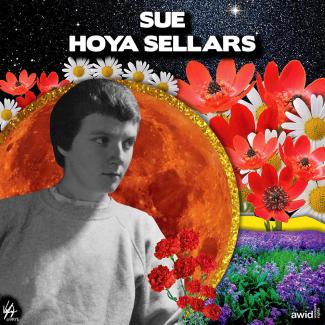
Sue Hoya Sellars

Sue fue artista, activista y maestra y nació en 1936 en Maryland, Estados Unidos.

Creó arte para mujeres y sobre mujeres. Como lesbiana feminista, y durante un tiempo también separatista, se dedicó a la creación de espacios sólo para mujeres. En 1976 compró tierras que todavía son conservadas por mujeres que van temporariamente a hacer arte. Sue mantuvo una apasionada posición en la protección de las mujeres y las niñas.

Con su innovador enfoque futurista, clásico y antropológico, llenaba cada habitación en la que entraba con su intelecto, su excentricidad auténtica, su ingenio implacable y su humor. Sus ideas acerca de la conciencia y la creatividad siguen inspirando a mucha gente.


Sue Hoya Sellars, USA

Snippet FEA Title Menu (EN)

The Feminist Economies

WE LOVE

CARING ECONOMIESLAND AND AGROECOLOGYFEMINIST COOPERATIVISMFEMINIST UNION ORGANIZING

Snippet - WITM Survey will remain open - RU

Опрос будет открыт до 31 июля 2024 года

Пройти опрос!

Пожалуйста выберите язык, на котором вы хотите отвечать на вопросы в правом верхнем углу страницы

Если вы хотите узнать больше, присоединяйтесь к нашей встрече участников исследования «Где деньги?», которая пройдет 27 мая, понедельник, в 9:00 UTC – с синхронным переводом на французский и английский языки. 14:00 UTC – с синхронным переводом на испанский и английский языки.

Становиться участником (in English).

I’m trying to submit a proposal but the online form is not working?

For any questions related to the Call for Forum Activities please contact us, selecting Forum Call for Activities as the subject of your email.

Contact us


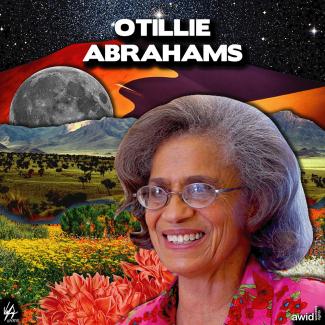
Ottilie Abrahams

Ottilie était une militante féministe, éducatrice et politicienne namibienne.

Elle était l'une des fondatrices de l'Organisation populaire du Sud-Ouest africain (SWAPO), du Yu Chi Chan Club (groupe révolutionnaire armé) et du Front de libération nationale du Sud-Ouest africain (SWANLIF). Ottilie a également été une des fondatrices de la Namibian Women’s Association et du Girl Child Project. Tout au long de sa vie, Ottilie a plaidé en faveur du droit de discuter, de penser, de contester et de réclamer. Elle a mobilisé des femmes, organisé des assemblées d’étudiants et d’enseignants et critiqué d'autres camarades pour leur élitisme et leur corruption.

Ottilie a œuvré sans relâche pour démanteler le patriarcat et faire émerger une démocratie participative, féministe, libératrice et transformatrice.

Ottilie disait souvent : « Je me reposerai quand je serai morte. »


Ottilie Abrahams, Namibia

Snippet FEA Occupation’s kitchen (ES)

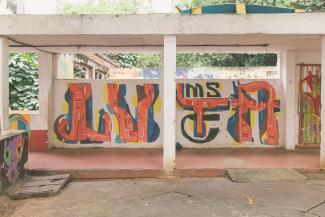
Photo of a wall with a graffiti which says “Luta’
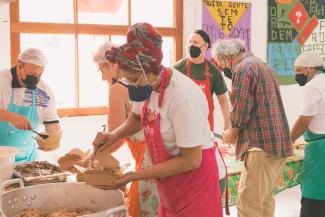
Photo of people in facemasks and aprons cooking together
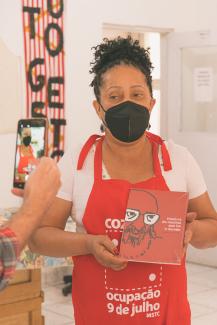
Photo of a black woman in a red apron and black facemask, holding a book
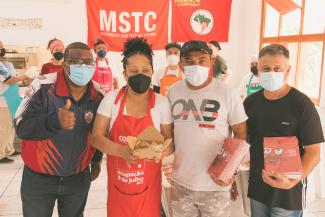
Photo of a group of 4 of people wearing facemasks, demonstrating food and books

Mujeres y colaboradorxs en la cocina de Ocupação 9 de Julho

Photo of two black women cooking