Flickr/Leonardo Veras (CC BY 2.0)

Special Focus

AWID is an international, feminist, membership organisation committed to achieving gender equality, sustainable development and women’s human rights

Protection of the Family

The Issue

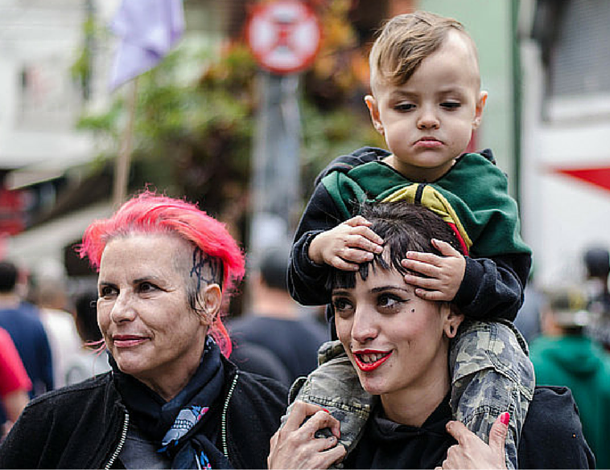
Over the past few years, a troubling new trend at the international human rights level is being observed, where discourses on ‘protecting the family’ are being employed to defend violations committed against family members, to bolster and justify impunity, and to restrict equal rights within and to family life.

The campaign to "Protect the Family" is driven by ultra-conservative efforts to impose "traditional" and patriarchal interpretations of the family, and to move rights out of the hands of family members and into the institution of ‘the family’.

“Protection of the Family” efforts stem from:

  • rising traditionalism,
  • rising cultural, social and religious conservatism and
  • sentiment hostile to women’s human rights, sexual rights, child rights and the rights of persons with non-normative gender identities and sexual orientations.

Since 2014, a group of states have been operating as a bloc in human rights spaces under the name “Group of Friends of the Family”, and resolutions on “Protection of the Family” have been successfully passed every year since 2014.

This agenda has spread beyond the Human Rights Council. We have seen regressive language on “the family” being introduced at the Commission on the Status of Women, and attempts made to introduce it in negotiations on the Sustainable Development Goals.


Our Approach

AWID works with partners and allies to jointly resist “Protection of the Family” and other regressive agendas, and to uphold the universality of human rights.

In response to the increased influence of regressive actors in human rights spaces, AWID joined allies to form the Observatory on the Universality of Rights (OURs).  OURs is a collaborative project that monitors, analyzes, and shares information on anti-rights initiatives like  “Protection of the Family”.

Rights at Risk, the first OURs report, charts a map of the actors making up the global anti-rights lobby, identifies their key discourses and strategies, and the effect they are having on our human rights.   

The report outlines “Protection of the Family” as an agenda that has fostered collaboration across a broad range of regressive actors at the UN.  It describes it as: “a strategic framework that houses “multiple patriarchal and anti-rights positions, where the framework, in turn, aims to justify and institutionalize these positions.”


Related Content

Sylvia Robinson

« La vie... c’est vivre dans la joie, se lever avec un but, sentir son énergie créative, répondre à son appel. » – Sylvia Robinson

Sylvia Robinson, infatigable leader et organisatrice communautaire, fut la fondatrice et directrice générale de l’Emergence Community Arts Collective (ECAC) à Washington, D.C.

Cet espace de performances créatrices foisonnantes rassemblait des initiatives d’éducation, d’engagement citoyen, d’arts, de services sociaux et spirituels et de pratiques de développement durable. Sylvia considérait cet endroit comme une maison où « il existe un équilibre et une synergie avec les activités dont les gens ont besoin pour entretenir la vie ».

Elle comptait également parmi les membres fondateur·trice·s du Georgia Avenue Community Development Taskforce, dans le nord-ouest de la capitale, un groupe de quartier actif dans le domaine de la justice sociale et de l’organisation qui veillait à ce que la communauté ait son mot à dire dans le redéveloppement et l’embourgeoisement du secteur.

« Nous demandons des logements abordables. Nous demandons que les petits commerces qui sont ici depuis longtemps ne soient pas balayés par de nouvelles enseignes. Nous demandons des espaces verts et des lieux où les gens peuvent se rencontrer. Nous demandons à ce que le paysage urbain soit amélioré, avec des rues en meilleur état et des éclairages publics. » – Sylvia Robinson, à propos du travail de la Taskforce

Avant de devenir organisatrice, et après avoir obtenu son diplôme en informatique, Sylvia avait travaillé dans le domaine des systèmes de contrôle du trafic aérien pendant plus d’une décennie. Elle s’est ensuite orientée vers le conseil relatif à la consommation d’alcool et de drogue, s’impliquant davantage dans le travail communautaire.

« Cette implication dans la communauté, c’était ma vocation. » – Sylvia Robinson

Née à Washington D.C. le 14 août 1961, Sylvia est décédée le 18 septembre 2017 après avoir lutté contre le cancer.

« L’esprit et l’héritage de Sylvia continueront d’inspirer cette communauté pour de nombreuses années. » – ECAC

Snippet - CSW69 - Full Calendar - EN

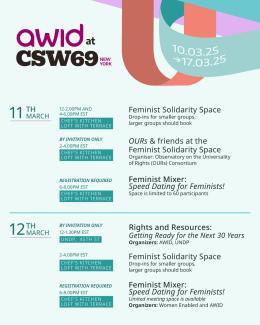
This image shows a full list of AWID at CSW69 activities

Advancing Movements

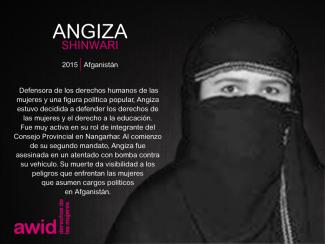
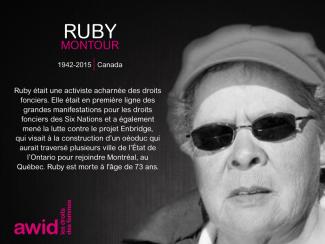
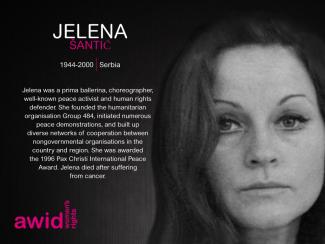
6 Women Human Rights Defenders (WHRDs) across Western and Southeastern Europe have in their lifetime researched, campaigned, participated in and advanced peace and women’s rights movements be it through political and social activism or through dance. We are grateful for the legacy they have left. Please join AWID in honoring these women, their activism and legacy by sharing the memes below with your colleagues, networks and friends and by using the hashtags #WHRDTribute and #16Days.


Please click on each image below to see a larger version and download as a file


Snippet FEA FEMINIST COOPERATIVISM (ES)

Cooperativismo

Feminista

Cuando el trabajo y
la solidaridad van juntos

Sarah Maldoror

“I’m no adherent to the concept of the ‘Third World’. I make films so that people - no matter what race or color they are - can understand them. For me there are only exploiters and the exploited, that’s all. To make a film means to take a position.” - Sarah Maldoror 

Sarah Maldoror, a French filmmaker of West Indies descent, was a pioneer of Pan-African cinema. At the core of her work, she placed political concerns along with her longstanding involvement in decolonization movements.

Her groundbreaking film and “revolutionary picture” Sambizanga (1972) follows Angolan militants’ anti-colonial liberation struggle, as well as captures a woman’s perspective in a historical moment she finds herself in. 

“For many African filmmakers, cinema is a revolutionary tool, a political education to raise consciousness. It is inscribed in the evolution of a Third Cinema striving to decolonize thought and advocate radical changes in society.” - Sarah Maldoror

Throughout her career, Sarah - together with a number of African and Caribbean artists - co-founded (1956) the first Black theatre troupe in France. She made around 40 films, comprising important documentaries that amplify the lives and work of black artists, including her friend and poet Aimé Césaire who wrote to her: 

“To Sarah Maldo
who, a camera in hand,
fights oppression, alienation
and flies in the face
of human bullshit.”

Sarah was also committed to giving African women more ownership of the filmmaking process. In an interview, she pointed out: 

"African women must be everywhere. They must be in the images, behind the camera, in the editing room and involved in every stage of the making of a film. They must be the ones to talk about their problems." 

Sarah left an incredibly powerful legacy to be carried forward. 

Born 19 July 1929, Sarah passed away on 13 April 2020 from complications of the coronavirus.


Watch Sambizanga and read a film review in a 1973 New York Times article
 

Snippet - CSW69 On anti-rights resistance - EN

On anti-rights resistance

2. Frame your research

A framework for your research will guide throughout your research process, and the framing document you develop can also serve as a concept note to advisors and partners, and a funding proposal to potential donors.

Before conducting any research:

Your research framing may evolve over time as you refine your questions and gather new information. However, building an initial research framing will allow you to work from a solid foundation.


Goals

To create a strong foundation for your WITM research, it is important to clarify what you hope to accomplish.

For example, one goal of AWID’s WITM global research was to provide rigorous data to prove what we already knew anecdotally: that women’s rights organizations are discrepantly underfunded. With this data, we felt we would be better positioned to influence funders in their decision-making.

Your goals could be to:

  • Generate hard data on funding realities and trends to prove or disprove existing myths.
  • Gain deeper insight into differences between the perspectives of donors and women’s rights organizations.
  • Influence donors in grant-making.
  • Add crucial input to key funding debates.
  • Explore collaboration between donors and women’s rights organizations on issues that emerge from the research.

Back to top


Key questions

Frame your research process with key questions that only your research can answer and limit those questions to a specific time frame (e.g. past five years, past year, etc.).

Consider the following points:

  • What exactly do you want to learn more about and what is the hypothesis you would like to test? Writing this out will assist you in your thought process.
  • Is there existing research on this? If research already exists, it may not make sense to conduct new WITM research unless you feel like the existing research is not extensive or specific enough.  
  • What time frame do you want to cover in your analysis? For example, will your research analyze only the past year, or several previous years, such as the past five years?
  • Are you planning to repeat your survey to collect data in the future?

Choosing a specific timeframe for your research can result in more precise findings than working with an open-ended timeframe. Also, deciding whether you will repeat this research at regular intervals will allow you to set up data collection benchmarks for easy replication and comparison over time.

These were the key questions that guided AWID’s WITM research process:

  • What is the current state of women’s organizations’ financial sustainability across the world?
  • What external and internal trends are impacting donors’ funding decisions to support women’s organizations and movements?

Back to top


Type of data

Now that you determined your key questions, you can determine what kind of data will help you answer your key questions. This will allow you to plan the rest of your schedule for your WITM research.

For example, will you conduct a survey that covers an extensive portion of your priority population? Will you analyze the applications that funders are receiving from a certain region? Will you also conduct interviews (recommended)? By determining the types of data you need, you can reach out to external parties who will provide this data early on, and plot out your full schedule accordingly. Some suggested sources of data could be:

  • Surveys you create for women’s rights organizations and donors
  • Application and grantmaking data from donors funding cycles
  • Interviews of prominent activists, organizations, and donors
  • Donor data from membership organizations and networks, such as  the Foundation Center, regional or national donor affinity groups.

Diverse data sets are a great way to create robust and rich analysis.

The data from AWID’s 2011 Global Survey formed the backbone of our analysis in Watering the Leaves, Starving the Roots report. However, we also collected data from interviews and interactions with several actors in the field, ranging from donors to activists and women’s rights organizations.

Back to top


Final products

In addition to allowing you to set your schedule, creating an initial plan of what products you will develop will also allow you to work out what resources you need.

For example, will you only produce a long research report or will you also create infographics, brochures and presentations? Depending on your products, you may need to hire a design firm, plan events and so on.

These products will also be the tools you use to achieve your goals, so it is important to keep those goals in mind. For example, is your WITM research exclusively intended as an advocacy tool to influence funders? In that case, your products should allow you to engage with funders at a deep level.

 Some sample products:

  • Long report for dissemination with key funders and organizations.
    Historically, AWID WITM research has centered on a long report, from which AWID distilled other smaller products  - see rest of list.
  • Infographic for viral distribution online
  • Short animation demonstrating key findings
  • Short brochure(s) distilling your findings and messages
  • Articles and blog posts on key findings to draw interest to your larger report
  • Seminars or webinars presenting key findings.

Back to top


Conclusion: Framing your research will give you the big picture

Framing your research to cover goals, key questions, types of data, and final products will allow you to create a well-planned schedule, prepare your resources in advance, and plan a realistic budget.

This will make interactions with external partners easier and allow you to be nimble when unexpected setbacks occur.


Previous step

1. Gather your resources

Next step

3. Design your survey


Estimated time:

• 1 month

People needed:

• 1 or more Research person(s)

Resources available:

AWID Research Framing: sample 1
AWID Research Framing: sample 2


Previous step

1. Gather your resources

Next step

3. Design your survey

Ready to Go? Worksheet

Download the toolkit in PDF

Snippet FEA In numbers (FR)

EN CHIFFRES

María Digna Montero

María Digna Montero fue una garífuna (afrodescendiente e indígena) defensora de la tierra e integrante de la Organización Fraternal Negra Hondureña (OFRANEH), una organización de base que trabaja para proteger a las comunidades garífunas, sus derechos ancestrales, su cultura, sus recursos y su territorio.

María también enseñaba en la escuela local, e integraba el grupo de trabajo de Educación Bilingüe Intercultural de OFRANEH.

El 12 de octubre (Día de la Resistencia Indígena) de 2019, sujetos desconocidos le dispararon a María varias veces en el patio de su casa.

Fue una de las seis defensoras garífunas asesinadas entre septiembre y octubre de 2019 y, según OFRANEH, no hubo ninguna investigación de estos crímenes por parte de las autoridades. En un comunicado oficial, la organización también subrayó la conexión entre la violencia contra líderes garífunas y el incremento de las industrias extractivas que explotan los recursos naturales en sus comunidades, y definieron esta violencia como «parte de una estrategia de intimidación y de expulsión sistemática por parte del Estado de Honduras.»

«El recrudecimiento de la tensión y de los riesgos crecientes para la seguridad y derechos humanos de las lideresas en las comunidades y territorios ancestrales es producto del despojo, desplazamiento y criminalización hacia las comunidades, y de los mega proyectos extractivos que impulsa el Estado junto con las corporaciones nacionales e internacionales.» - Pronunciamiento de OFRANEH, 13 de octubre de 2019

Snippet - CSW69 - Other events - EN

Find AWID staff at these partners' events!

6. Conduct desk research

Desk research can be done throughout your research. It can assist you with framing, help you to choose survey questions and provide insights to your results.

In this section

Giving context

Conducting desk research throughout your research process can assist you with framing, help you to choose survey questions and provide contextual clarity or interesting insights to your survey results, such as comparing similarities and differences between your survey results and information produced by civil society and donors.

Perhaps you notice trends in your survey data and want to understand them.

For example, your survey data may reveal that organization budgets are shrinking, but it cannot tell you why this is happening. Reviewing publications can give you context on potential reasons behind such trends.

Back to top


Building on existing knowledge

Desk research also ensures you are building your research on the existing knowledge regarding your topic, confirming the validity and relevance of your findings.

They may be complimentary or contradictory to existing knowledge, but they must speak to existing data on the topic.

To ensure comprehensive research of the entire funding landscape related to your topic, look at a diverse set of funding sectors.

You can consider:

  • Women’s Funds
  • Private and Public Foundations
  • International Non-Governmental Organizations (INGOs)
  • Bilateral and Multilateral Agencies
  • Private Sector Actors
  • Individual Philanthropists
  • Crowdfunders

Include any other relevant sectors to this research.

For example, you may decide that it is also important to research local non-governmental organizations (NGOs).

Back to top


Potential sources for desk research (non-exhaustive)

1. Donors’ websites and annual reports

These are direct sources of information about what funders are actually doing and generally contain information on policies and budgets. Researching this before interviewing donors can result in more focused questions and a stronger interview.

2. Online sources of information

Back to top


Previous step

5. Conduct interviews

Next step

7. Synthesize your research findings


Estimated time:

• 1-2 months

People needed:

• 1 or more research person(s)


Previous step

5. Conduct interviews

Next step

7. Synthesize your research findings


Ready to Go? Worksheet

Download the toolkit in PDF

Snippet FEA What Challenges Story 3 (EN)

What Challenges do Trans and Travesti People Face in Argentina?

Nilcéa Freire

Nilcéa Freire était une activiste, politicienne et universitaire brésilienne. Ardente défenseuse des droits des femmes et des minorités sous-représentées dans le pays, sa vie et son travail ont été marqués par une longue histoire de luttes et de victoires.

"Nous devons, tout en résistant, continuer à chercher à progresser, et ce que nous pouvons accomplir actuellement, je pense que nous le devons à la fantastique organisation des jeunes femmes blanches, et surtout des femmes noires, dans toutes les capitales d’États et les grandes villes brésiliennes.” - Nilcéa Freire

En 1999, elle est devenue la première femme à occuper le poste de doyenne de l'université d'État de Rio de Janeiro. Elle y a dirigé la mise en œuvre de la première politique d'action positive pour les étudiant·e·s des écoles publiques, demandant au sein d’une école publique que des places soient spécifiquement réservées aux étudiant·e·s noir·e·s à faible revenu. Ce système a été adopté dans des dizaines d'autres universités publiques. 

Quelques années plus tard, Nilcéa dirigea le Secrétariat spécial des politiques pour les femmes sous le gouvernement de l'ancien président Luiz Inácio Lula da Silva. C’est à ce titre qu’elle conduisit la première Conférence nationale des femmes. Plus de 12 000 femmes de tout le pays y participèrent et le résultat de ce travail collectif fut incorporé dans le Plan national des politiques pour les femmes. 

Son engagement envers les femmes, les Afro-Brésilien·ne·s et les populations autochtones se reflète aussi fortement dans son travail de défense de leurs droits, qu’elle a mené dans le cadre des initiatives du bureau de la Fondation Ford du Brésil, dont elle était la directrice régionale. 

L’activiste féministe Manoela Miklos a dit de Nilcéa qu'elle était "une femme sans égal·e".

Nilcéa s’est éteinte à Rio de Janeiro à l'âge de 66 ans, le 29 décembre 2019, des suites d’un cancer.


"Je n’ai pas de mots face à l’annonce de la mort de notre chère Nilcéa Freire. Il m’est trop triste de savoir qu’elle est partie si tôt. Elle s’est toujours rangée du côté de celleux qui ne tolèrent pas les injustices de ce monde. Elle était la ministre des femmes, sans cesse engagée dans la cause féministe. Elle nous manquera beaucoup!” - Jandira Feghali, Federal Deputy

Retrouvez sur YouTube la féministe brésilienne Nilcea Freire et pourquoi il importe de se montrer solidaires avec le Brésil

Snippet - WCFM type of funder - EN

Type of funder:

Filter your search by funders from different sectors i.e., philanthropic foundations, multilateral funders, women’s and feminist funds