Zarema Sadulayeva
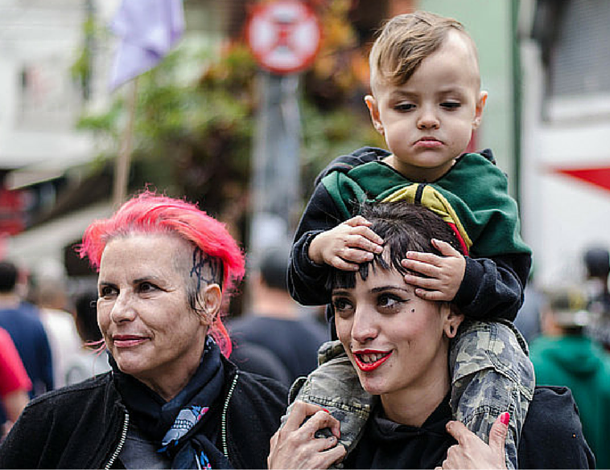
Over the past few years, a troubling new trend at the international human rights level is being observed, where discourses on ‘protecting the family’ are being employed to defend violations committed against family members, to bolster and justify impunity, and to restrict equal rights within and to family life.
The campaign to "Protect the Family" is driven by ultra-conservative efforts to impose "traditional" and patriarchal interpretations of the family, and to move rights out of the hands of family members and into the institution of ‘the family’.
Since 2014, a group of states have been operating as a bloc in human rights spaces under the name “Group of Friends of the Family”, and resolutions on “Protection of the Family” have been successfully passed every year since 2014.
This agenda has spread beyond the Human Rights Council. We have seen regressive language on “the family” being introduced at the Commission on the Status of Women, and attempts made to introduce it in negotiations on the Sustainable Development Goals.
AWID works with partners and allies to jointly resist “Protection of the Family” and other regressive agendas, and to uphold the universality of human rights.
In response to the increased influence of regressive actors in human rights spaces, AWID joined allies to form the Observatory on the Universality of Rights (OURs). OURs is a collaborative project that monitors, analyzes, and shares information on anti-rights initiatives like “Protection of the Family”.
Rights at Risk, the first OURs report, charts a map of the actors making up the global anti-rights lobby, identifies their key discourses and strategies, and the effect they are having on our human rights.
The report outlines “Protection of the Family” as an agenda that has fostered collaboration across a broad range of regressive actors at the UN. It describes it as: “a strategic framework that houses “multiple patriarchal and anti-rights positions, where the framework, in turn, aims to justify and institutionalize these positions.”
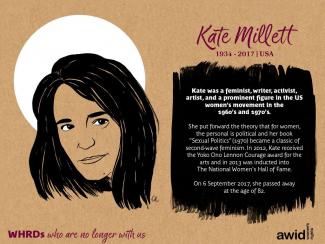
AWID honors feminists and Women Human Rights Defenders (WHRDs) who have died and whose contributions to the advancement of human rights are very much missed.
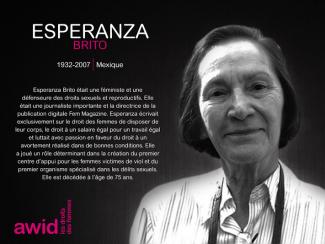
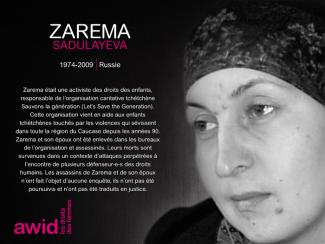
AWID’s WHRD Tribute is a photo exhibition featuring feminist, women’s rights and social justice activists from around the world who are no longer with us.
The Tribute was first launched in 2012, at AWID’s 12th International Forum, in Turkey. It took shape with a physical exhibit of portraits and biographies of feminists and activists who passed away. The initiative was described by Forum participants as being a unique, moving and energizing way to commemorate our collective history.
At the 13th International Forum in Brazil, we honored activists and WHRDs with a mural unveiling ceremony in four languages, a dance performance and a Brazilian ritual.
In between the events, the Tribute lives as an online gallery that is updated every year as part of the 16 Days Campaign Against Gender Based Violence (25 November – 10 December).
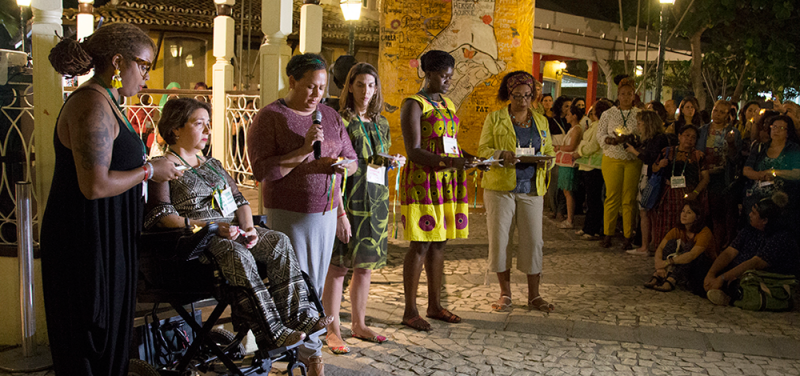
Since 2012, through our annual Tribute to Women Human Rights Defenders (WHRDs) no longer with us, over 400 feminists and WHRDs from 11 regions and 80 countries have been featured.
AWID would like to thank the families and organizations who shared their personal stories and contributed to this memorial. We join them in continuing the remarkable work of these women and forging efforts to ensure justice is achieved in cases that remain in impunity.
Visit the WHRD Tribute online exhibit
In addition to paying homage to these incredible activists, the Tribute particularly sheds light on the plight of WHRDs who have been assassinated or disappeared.
One third of those featured in the Tribute were activists who have been murdered or disappeared in suspicious circumstances. They were specifically targeted for who they were and the work they did to challenge:
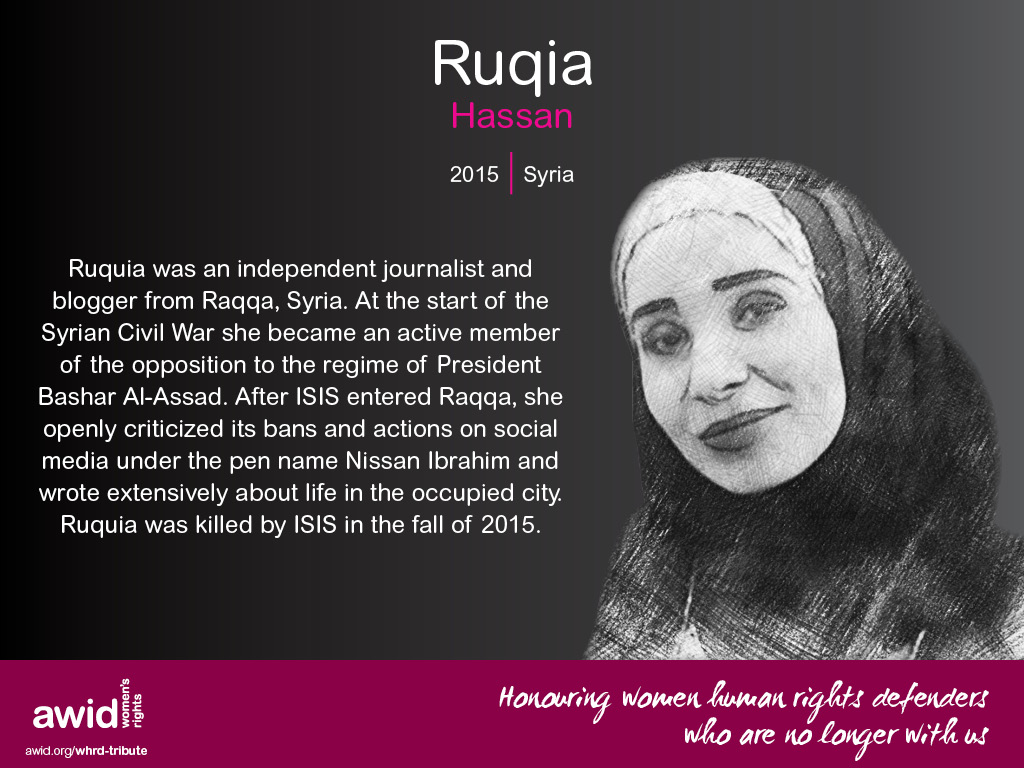
Women like Agnes Torres, from Mexico, was killed because of her gender identity and sexual orientation; or Cheryl Ananayo, an environmental activist from the Philippines was assassinated as she struggled against a mining company; or Ruqia Hassan, a Syrian independent journalist and blogger killed for her criticism of ISIS. And so many others.
With the WHRD Tribute, we bring them all into our collective memory and carry their legacy of struggle as our torch in the feminists’ and women’s rights movements. We recognize that security, safety and self-care must be a priority in all our political agendas. And we call on to governments and international bodies to collectively address violence against feminists and WHRDs.
Notre objectif est de recueillir 2 000 réponses à l’enquête, soit près du double de la dernière enquête WITM de 2011.
1 personne trans et travesti sur 3 en Argentine vit dans un ménage à faible revenu.
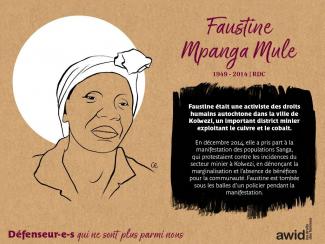
Este año honramos a 19 defensoras de la región de América Latina y el Caribe. De ellas, 16 fueron asesinadas, incluyendo a 6 periodistas y 4 defensoras LGBTQI. Únete a nosotras en la conmemoración de sus vidas y trabajo, compartiendo los memes aquí incluidos con tus colegas, amistades y redes; y tuiteando las etiquetas #WHRDTribute y #16Días.
Por favor, haz click en cada imagen de abajo para ver una versión más grande y para descargar como un archivo.


Conferencia Internacional de Seguimiento sobre la Financiación para el Desarrollo, Doha, Qatar
Основываясь на 20-летней истории привлечения более объемного и качественного финансирования для достижения социальных изменений под руководством феминисток(-ов), AWID приглашает вас принять участие в новом опросе:
(далее – «Где деньги?»)
Пожалуйста выберите язык, на котором вы хотите отвечать на вопросы в правом верхнем углу страницы
Related content
The Guardian: Kate Millett Obituary
New York Times: Kate Millett, Ground-Breaking Feminist Writer, Is Dead at 82
The New Yorker: A Last Interview with Kate Millett
7 Women Human Rights Defenders from across the South and Southeast Asian region are honored in this year’s Online Tribute. These defenders have made key contributions to advancing human and women’s rights, indigenous people’s rights, and the right to education. These WHRDs were lawyers, women’s rights activists, scholars, and politicians. Please join AWID in commemorating t their work and legacy by sharing the memes below with your colleagues, networks and friends and by using the hashtags #WHRDTribute and #16Days.
Please click on each image below to see a larger version and download as a file


Lancement du processus préparatoire intergouvernemental de la troisième Conférence sur le financement du développement, octobre 2014
Para reivindicar o seu poder como especialista sobre o estado dos recursos de movimentos feministas;
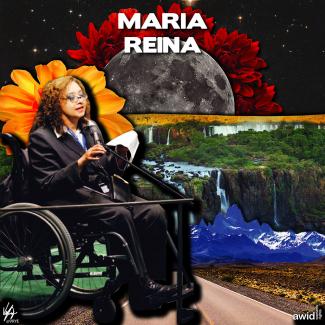
Representó al Consorcio Internacional sobre Discapacidad y Desarrollo (IDDC por su sigla en inglés) durante la negociación de la Convención sobre los Derechos de las Personas con Discapacidad (2001-2006). Su trabajo estaba dedicado a la implementación del objetivo de la Convención: el goce pleno de los derechos humanos universales por, para y con las personas con discapacidades, en pos de un mundo inclusivo, accesible y sostenible.
En sus propias palabras, su liderazgo consistía en «servir a la comunidad de personas con discapacidad, comenzando por aquellas pequeñas tareas que otrxs pueden no querer realizar».
Falleció el 27 de octubre de 2017 en su ciudad natal de Rosario, Argentina.
En esta nota puede leerse más sobre María Verónica Reina, en sus propias palabras.
Before starting the WITM research methodology, it is important you prepare the background and know what to expect.
With AWID’s WITM research methodology, we recommend that you first review the entire toolkit.
While this toolkit is designed to democratize WITM research, there are capacity constraints related to resources and research experience that may affect your organization’s ability use this methodology.
Use the “Ready to Go?” Worksheet to assess your readiness to begin your own WITM research. The more questions you can answer on this worksheet, the more prepared you are to undertake your research.
Before beginning any research, we recommend that you assess your organization’s connections and trust within your community.
In many contexts, organizations may be hesitant to openly share financial data with others for reasons ranging from concerns about how the information will be used, to fear of funding competition and anxiety over increasing government restrictions on civil society organizations.
As you build relationships and conduct soft outreach in the lead-up to launching your research, ensuring that your objectives are clear will be useful in creating trust. Transparency will allow participants to understand why you are collecting the data and how it will benefit the entire community.
We highly recommend that you ensure data is collected confidentially and shared anonymously. By doing so, participants will be more comfortable sharing sensitive information with you.
We also recommend referring to our “Ready to Go?” Worksheet to assess your own progress.