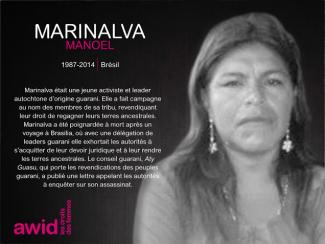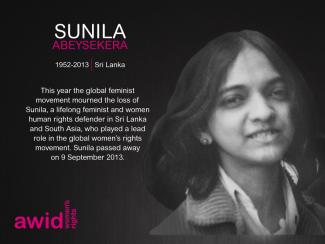
Sunila Abeyseke
Over the past few years, a troubling new trend at the international human rights level is being observed, where discourses on ‘protecting the family’ are being employed to defend violations committed against family members, to bolster and justify impunity, and to restrict equal rights within and to family life.
The campaign to "Protect the Family" is driven by ultra-conservative efforts to impose "traditional" and patriarchal interpretations of the family, and to move rights out of the hands of family members and into the institution of ‘the family’.
Since 2014, a group of states have been operating as a bloc in human rights spaces under the name “Group of Friends of the Family”, and resolutions on “Protection of the Family” have been successfully passed every year since 2014.
This agenda has spread beyond the Human Rights Council. We have seen regressive language on “the family” being introduced at the Commission on the Status of Women, and attempts made to introduce it in negotiations on the Sustainable Development Goals.
AWID works with partners and allies to jointly resist “Protection of the Family” and other regressive agendas, and to uphold the universality of human rights.
In response to the increased influence of regressive actors in human rights spaces, AWID joined allies to form the Observatory on the Universality of Rights (OURs). OURs is a collaborative project that monitors, analyzes, and shares information on anti-rights initiatives like “Protection of the Family”.
Rights at Risk, the first OURs report, charts a map of the actors making up the global anti-rights lobby, identifies their key discourses and strategies, and the effect they are having on our human rights.
The report outlines “Protection of the Family” as an agenda that has fostered collaboration across a broad range of regressive actors at the UN. It describes it as: “a strategic framework that houses “multiple patriarchal and anti-rights positions, where the framework, in turn, aims to justify and institutionalize these positions.”
Etendez vos frontières. Les membres de l'AWID représentent de plus en plus une section transversale dynamique et variée de féministes travaillant, entre autres, sur les questions foncières, les droits des travailleures, les droits sexuels et l'autonomie corporelle. En devenant membre, vous pouvez relier vos luttes entre mouvements.
Esta historia es sobre la manera en que un grupo cada vez más diverso de feministas del Pacífico se organizaron a lo largo de los años para asistir a los Foros de AWID, y el modo en que ese proceso lxs transformó en forma personal, como organizaciones y como movimiento a través de lo que aprendieron, descubrieron y experimentaron. Ilustra la importancia de los Foros como espacio que permitió que una región que tiende a ser marginada o ignorada a nivel global pueda construir una presencia sólida en el movimiento feminista, que luego es replicada en otros espacios internacionales de derechos de las mujeres.
هنالك 47 سؤال في الاستطلاع، منها 27 سؤال اجباري* والعشرين الباقين هي أسئلة اختيارية. أغلب الأسئلة هي أسئلة متعددة الخيارات. ندعوكم/ن للإجابة على جميع الأسئلة.
We strive for transparency, responsible use of our resources, fairness in our collaborations and accountability and integrity with our members, partners, funders and the movements with(in) which we work. We are committed to reflecting on our experiences, sharing our learnings openly, and striving to change our practices accordingly.
Thank you for your interest, but the page you're looking for no longer exists.
You can explore more content and updates at https://www.awid.org.
Данные будут обработаны в статистических целях, чтобы осветить состояние ресурсного обеспечения феминистских движений во всем мире, и представлены будут только в обобщенном виде. AWID не будет публиковать информацию о конкретных организациях или отображать информацию, которая позволила бы идентифицировать организации по их местоположению или характеристикам, без их согласия.
Dada la situación global, nuestra Junta Directiva tomó la difícil decisión de cancelar el Foro que estaba programado en 2021, enTaipei.
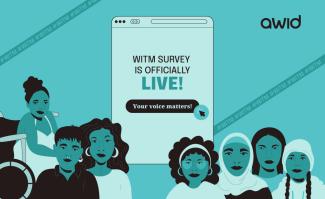
La encuesta "¿Dónde está el dinero?" #WITM ya está disponible. Participa y comparte tu experiencia en la financiación de tu organización con feministas de todo el mundo.
Obtén más información y participa de la encuesta
En todo el mundo, los movimientos feministas, de derechos de las mujeres y aliados están enfrentando al poder y reimaginando políticas de liberación. Las contribuciones que sostienen este trabajo llegan de muchas formas, desde recursos financieros y políticos a actos diarios de resistencia y supervivencia.
La iniciativa de AWID Financiando a los Movimientos Feministas (FMF) echa luz sobre el actual ecosistema de financiamiento, el cual abarca desde modelos autogenerados a corrientes de financiamiento más formales.
Mediante nuestra investigación y análisis, indagamos cómo las prácticas de financiamiento pueden servir mejor a nuestros movimientos. Analizamos críticamente las contradicciones de «financiar» la transformación social, especialmente en vistas de la creciente represión política, las agendas anti-derechos y el creciente poder corporativo. Sobre todo, construimos estrategias colectivas para apoyar movimientos prósperos, fuertes y resilientes.
Creamos y difundimos alternativas: Difundimos prácticas de financiamiento que ponen en el centro las prioridades de lxs propixs activistas e involucramos a un amplio espectro de financiadoras y activistas para que desarrollen nuevos y dinámicos modelos para financiar los movimientos feministas, especialmente en un contexto en el que se reducen los espacios para la sociedad civil.
Construimos conocimiento: Analizamos, intercambiamos y fortalecemos el conocimiento sobre cómo los movimientos atraen, organizan y utilizan los recursos que necesitan para lograr cambios significativos.
Hacemos incidencia: Trabajamos de manera colaborativa, como en el Consorcio Count Me In, para influir sobre las agendas de financiamiento y abrimos espacios para el diálogo directo entre/con los movimientos feministas para redistribuir poderes y dineros..
Não. Tem por base a história de 20 anos da AWID de mobilizar mais financiamento de maior qualidade para mudanças sociais lideradas por feministas e é a terceira edição do nosso inquérito “Onde está o dinheiro para organização feminista?”. O nosso objetivo é repetir o inquérito WITM a cada 3 anos.
L’AWID propose la Boîte à outils « Où est l’argent pour les droits des femmes? » (« Where Is The Money for Women's Rights? », WITM) pour soutenir les individus et les organisations qui souhaitent mener leur propre recherche sur les tendances de financement en adaptant la méthodologie de recherche de l’AWID à une région, une question ou une population spécifique.
La Boîte à outils WITM de l’AWID est le produit de dix ans de recherches. La rméthologie WITM de l’AWID proposent une démonstration politique et pratique des ressources et des étapes qu’exige une solide recherche-action.
L’équipe 'Ressources des mouvements féministes' offre également un soutien technique et politique, avant et pendant le processus de recherche. Parcourez la boîte à outils et contactez fundher@awid.org si vous souhaitez plus de renseignements.