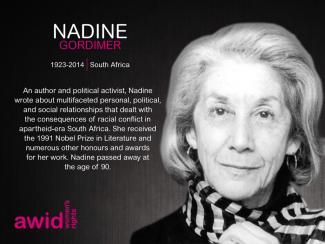
Nadine Gordimer
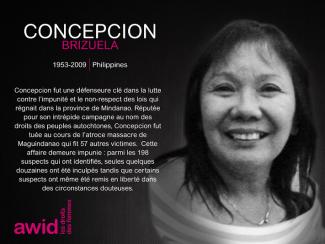
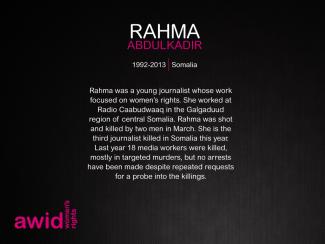
WHRDs are self-identified women and lesbian, bisexual, transgender, queer and intersex (LBTQI) people and others who defend rights and are subject to gender-specific risks and threats due to their human rights work and/or as a direct consequence of their gender identity or sexual orientation.
WHRDs are subject to systematic violence and discrimination due to their identities and unyielding struggles for rights, equality and justice.
The WHRD Program collaborates with international and regional partners as well as the AWID membership to raise awareness about these risks and threats, advocate for feminist and holistic measures of protection and safety, and actively promote a culture of self-care and collective well being in our movements.
WHRDs are exposed to the same types of risks that all other defenders who defend human rights, communities, and the environment face. However, they are also exposed to gender-based violence and gender-specific risks because they challenge existing gender norms within their communities and societies.
We work collaboratively with international and regional networks and our membership
We aim to contribute to a safer world for WHRDs, their families and communities. We believe that action for rights and justice should not put WHRDs at risk; it should be appreciated and celebrated.
Promoting collaboration and coordination among human rights and women’s rights organizations at the international level to strengthen responses concerning safety and wellbeing of WHRDs.
Supporting regional networks of WHRDs and their organizations, such as the Mesoamerican Initiative for WHRDs and the WHRD Middle East and North Africa Coalition, in promoting and strengthening collective action for protection - emphasizing the establishment of solidarity and protection networks, the promotion of self-care, and advocacy and mobilization for the safety of WHRDs;
Increasing the visibility and recognition of WHRDs and their struggles, as well as the risks that they encounter by documenting the attacks that they face, and researching, producing, and disseminating information on their struggles, strategies, and challenges:
Mobilizing urgent responses of international solidarity for WHRDs at risk through our international and regional networks, and our active membership.
Inna est une activiste et sociologue féministe queer comptant de nombreuses années d'engagement profond dans les luttes féministes et LGBTQI+, l'éducation politique et l'organisation par et pour les femmes migrantes, ainsi que la libération de la Palestine et la solidarité avec cette dernière. Inna a rejoint l'AWID en 2016 et occupé différents postes, dont celui de directrice des programmes plus récemment. Basée à Berlin, en Allemagne, elle a grandi à Haïfa, en Palestine/Israël, et est née à Saint-Pétersbourg en Russie. Elle porte ces territoires politiques et cette résistance au passé et au présent colonial dans son féminisme et sa solidarité transnationale.
Inna est l'auteure de « Women's Economic Empowerment: Feminism, Neoliberalism, and the State » (« L'autonomisation Économique des Femmes : Féminisme, Néolibéralisme et l’État », Palgrave Macmillan, 2022), un ouvrage basé sur une thèse qui lui a valu un doctorat de l'Université Humboldt de Berlin. En tant qu'universitaire, elle a enseigné des cours sur la mondialisation, la production de connaissances, l'identité et l'appartenance. Inna est titulaire d'un master en études culturelles de l'Université hébraïque de Jérusalem. Elle a été membre du conseil d'administration de +972 Advancement of Citizen Journalism, et l’est actuellement pour Jewish Voice for a Just Peace in the Middle East (en Allemagne). Auparavant, Inna a travaillé avec la Coalition des Femmes pour la Paix et est une passionnée de la mobilisation des ressources pour l'activisme populaire.
The artwork is a photography and illustration collaboration between Siphumeze and Katia during lockdown. The work looks at black queer sex and plesure narratives, bondage, safe sex, toys, mental health and sex and many more. It was created to accompany the Anthology Touch.
Interviews produce in-depth information that you cannot easily obtain from surveys. While surveys focuses mainly on quantifiable data and closed questions, interviews allow for expert opinions from activists and donors, and open-ended questions which can provide context to survey data results.
In this section
- General tips
1. Before conducting your interviews
2. During the interviews- Specialized interviews
1. Donor interviews
2. Women’s rights organizations and activists interviews- Preliminary findings
Send the interviewees a concept note with your objectives for the interview and for your overall research, as well as a list of questions.
This allows them to prepare answers for more complicated questions and look up information that they may not have immediately on hand.
Do not base your questions on assumptions about your interviewees’ knowledge.
Instead, first clarify what they know – this will reveal information as well.
- DON’T: “Given the current funding trends in Switzerland, do you know of any opportunities for collaboration? This question assumes that the interviewee knows current funding trends and that their understanding of funding trends matches yours.
- DO: First ask “What is your understanding of current funding trends in Switzerland?”, followed by “Do you know of any opportunities for collaboration?” This will reveal what their understanding is, giving you even more information than the first question.
Interviews with donors will allow you to build deeper relationships with them, which will be useful when you conduct post-research advocacy. They will also provide you with deeper insight into funders’ decision-making processes.
Suggested topics of focus for donor interviews:
Interviews with women’s rights organizations and activists will provide you with insight into their on-the-ground realities. Again, these interviews will allow you to build deeper relationships that can be incorporated into your advocacy, particularly to encourage collaboration between donors and activists.
Suggested topics of focus for women’s rights organizations and activist interviews:
Through the course of your WITM research, we recommend analyzing your preliminary findings. Presenting your preliminary findings opens up opportunities to conduct more interviews and get feedback on your research process and initial results. This feedback can be incorporated into your final research.
AWID conducts “WITM convenings” to share preliminary results of survey data and interviews. These gatherings allow participants (activists, women’s rights organizations, and donors) to debate and discuss the results, clarifying the context, creating more ownership amongst members of the movement, and providing more input for final research.
For example, the Resource Mobilization Hub for Indigenous Women’s Rights at the World Summit on Indigenous Philanthropy was used as a space to debut preliminary results.
4. Collect and analyze your data

• 1.5 - 3 months
• 1 or more research person(s)
• List of donors and women’s rights organizations and activists to interview
• Prepared interview questions
• Concept Note (You can use the research framing you created in the “Frame your research” section)
• AWID Sample Interview Questions: Donors
• AWID Sample Interview Questions: Activists & Women’s Rights Organizations
4. Collect and analyze your data
Sara AbuGhazal is a Palestinian feminist living in Beirut. She is a co-founder of Sawt al-Niswa, a collective that produces knowledge in Beirut. She is the co-director of The Knowledge Workshop, a feminist organization based in Beirut that works on feminist oral history and archiving. Sara is currently the Regional Coordinator of the Regional Coalition for Women Human Rights Defenders in the Middle East and North Africa.
Sara strives to help create spaces of feminist transformation and solidarity. Her work is mostly centered on building sustainable movements in the MENA region. She is invested in knowledge production, feminist transformation, and Palestine. She publishes regularly in sawtalniswa.org and her fiction also appears in Romman e-magazine.
Nicole Barakat es una artista femme queer de SWANA, que nació y vive en las tierras de Gadigal (llamadas Sydney) en Australia. Trabaja con procesos intuitivos y de escucha profunda, con la intención de transformar las condiciones de la vida cotidiana. Su obra se desarrolla a través de métodos artísticos no convencionales, creando objetos intrincados que plasman el amor y la paciencia característicos de las prácticas textiles tradicionales.
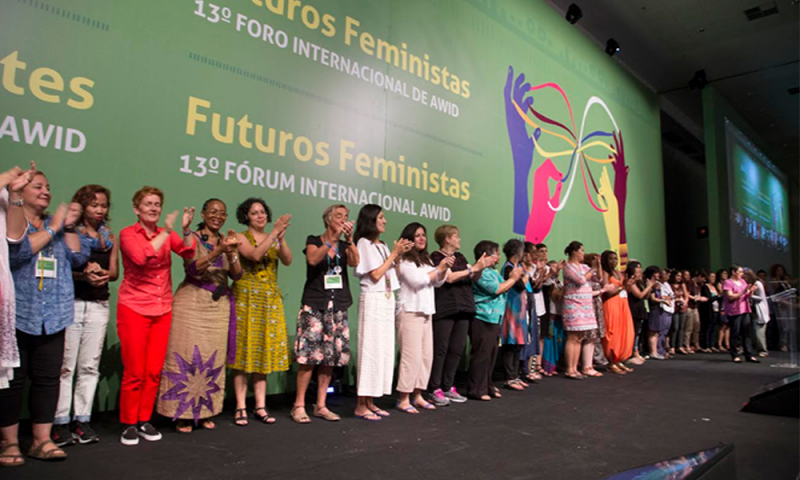
AWID agradece enormemente a todxs ustedes que han compartido con nosotrxs estos últimos cuatro días de aprendizaje, celebraciones, ideaciones, sueños y la construcción conjunta de nuestros futuros feministas en el Foro AWID 2016.
Nos sentimos muy inspiradxs, maravilladxs y llenxs de energía con todo el trabajo colectivo que hemos hecho para crear nuestros diversos futuros feministas.
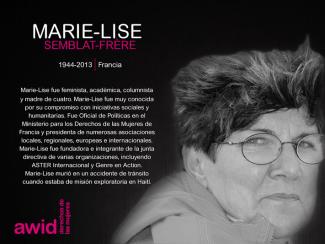
es una activista feminista de Tiflis, Georgia, dedicada a la justicia social y de género. Tiene una Maestría en estudios de género, y ha estado comprometida con movimientos feministas, queer y ecologistas desde hace nueve años, trabajando, entre otras problemáticas, sobre violencia de género, violencia doméstica, derechos y salud sexuales y reproductivos, derechos LGBTIQ, y seguridad y derechos holísticos y digitales, entre otros.
Desde 2014 trabaja activamente sobre asuntos de seguridad de activistas y defensoras de derechos humanos, ha organizado talleres sobre seguridad integrada y seguridad digital dirigidos específicamente a activistas de grupos desfavorecidos (personas queer, minorías étnicas y religiosas, mujeres y niñas rurales, etc.), y también para organizaciones feministas más grandes. Salome integra el «Independent Group of Feminists», una iniciativa informal, no jerárquica y no registrada que reúne feministas de distintos contextos de Georgia. Actualmente, trabaja con el Fondo de Mujeres de Georgia, que está comprometido con la construcción de movimientos feministas y de mujeres, brindando financiación feminista y alentando la filantropía feminista local.
Ce projet est le fruit d’une collaboration avec :
Aujourd'hui, de nombreux systèmes de savoirs communautaires sont en danger.
Les changements qui surviennent à une vitesse effrénée sur le plan économique, politique et culturel détruisent les environnements, les pratiques et les moyens de subsistance. Diverses formes de connaissances sombrent dans l’oubli, sont marchandées et colonisées dans le cadre de la mondialisation massive, de la promesse de gains à court terme, ou encore contre des solutions de fortune.
Le Buen Vivir (le bien-vivre), un concept adapté à partir des connaissances des peuples autochtones andins, est décrit comme la réalisation collective d'une vie d'accomplissement fondée sur des relations harmonieuses et équilibrées entre les êtres humains et tous les êtres vivants, dans la réciprocité et la complémentarité. Cela implique de reconnaître que les êtres humains sont une partie intégrante de la nature, que nous dépendons de la nature et que nous sommes interdépendant-e-s entre nous.
La vision inhérente à la notion de Buen Vivir intègre la production et la reproduction comme processus indissociables de l'économie, de la production de richesse et des conditions de vie.
D’une perspective féministe, le Buen Vivir valorise les relations et les ressources mobilisées dans les cycles de production et de reproduction, favorisant l’équilibre (non seulement celui des marchés) afin de garantir la continuité et les changements, tant qu'ils sont compatibles avec la justice économique et la pérennité de la vie.
Certaines conceptions binaires liées au genre et à la complémentarité entre les hommes et les femmes ont été critiquées par les féministes puisqu’elles laissent peu de place à une discussion plus approfondie sur le patriarcat hétérocentrique et les relations de genre ‘non conformes’.
Cela dit, l'une des principales contributions de l’application du principe Buen Vivir aux cadres politiques, économiques et sociaux, consiste à ce que l'égalité ne représente plus le paradigme des droits individuels, ayant plutôt pour objet la transformation de l’ensemble de la société.

Michelle est une féministe d'Asie du Sud-Est qui aime concerterer pour rassembler des gens et susciter des conversations en faveur du changement social et du partage des connaissances féministes, à travers l'art, la poésie, la musique et les jeux. Forte d'une expérience en plaidoyer digital et en développement de stratégies de communication, elle a contribué à des initiatives en matière de droits digitaux, de recherche sur les droits humains et de création de coalitions de la société civile dans toute l'Asie du Sud-Est. Elle est titulaire d'une licence de droit de l'Université nationale de Singapour, aime se balader dans des rues au hasard de la ville et apprécie un peu trop le café.
Sí, por favor. El mundo ha cambiado desde 2021, y te invitamos a proponer una actividad que refleje tus realidades y prioridades actuales.
During her 38-year career, Debbie Stothard, has worked with diverse communities and activists to engage states, IGOs and other stakeholders throughout Asia, Africa, Europe, and the Americas on human rights and justice. Her work is focused on the thematic priorities of business and human rights, atrocity prevention, and women’s leadership. Accordingly, she has either facilitated or been a resource person at nearly 300 training events in the past 15 years. Most of these were grassroots-oriented workshops delivered in the field, focused on human rights advocacy, economic literacy and business and human rights, and transitional justice and atrocity prevention. Her work in transitional justice and atrocity prevention has mainly focused on Burma/Myanmar, however she has provided advice on responses to other country situations around the world.
During 1981 – 1996, Debbie worked as a crime reporter, student organizer, policy analyst, academic, government advisor and food caterer in Malaysia and Australia while volunteering for human rights causes. In 1996, she founded ALTSEAN-Burma which spearheaded a range of innovative and empowering human rights programs. This includes ALTSEAN’s ongoing intensive leadership program for diverse young women from Burma, which in the past 22 years, has helped strengthen and expand women’s leadership in conflict-affected zones. She served as a member of the Board of the International Federation for Human Rights (FIDH) for 9 years as Deputy Secretary-General (2010-2013) and Secretary-General (2013 – 2019) during which she promoted the mission and profile of FIDH at approximately 100 meetings and conferences per year.
Kay Thi Win, Asia Pacific Network of Sex Workers (APNSW)
Thin Pa Pa Htun, Aye Myanmar Association
Xiao Shuang, Northeast Transgender Support Network
Cathy Ketepa, Friends Frangipani Inc. PNG
Rajeshwari Prajapati, Society for Women Awareness Nepal (SWAN)