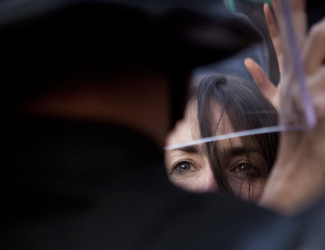
Philippe Leroyer | Flickr (CC BY-NC-ND 2.0)

Special Focus

AWID is an international, feminist, membership organisation committed to achieving gender equality, sustainable development and women’s human rights

Women Human Rights Defenders

WHRDs are self-identified women and lesbian, bisexual, transgender, queer and intersex (LBTQI) people and others who defend rights and are subject to gender-specific risks and threats due to their human rights work and/or as a direct consequence of their gender identity or sexual orientation.

WHRDs are subject to systematic violence and discrimination due to their identities and unyielding struggles for rights, equality and justice.

The WHRD Program collaborates with international and regional partners as well as the AWID membership to raise awareness about these risks and threats, advocate for feminist and holistic measures of protection and safety, and actively promote a culture of self-care and collective well being in our movements.


Risks and threats targeting WHRDs  

WHRDs are exposed to the same types of risks that all other defenders who defend human rights, communities, and the environment face. However, they are also exposed to gender-based violence and gender-specific risks because they challenge existing gender norms within their communities and societies.

By defending rights, WHRDs are at risk of:

  • Physical assault and death
  • Intimidation and harassment, including in online spaces
  • Judicial harassment and criminalization
  • Burnout

A collaborative, holistic approach to safety

We work collaboratively with international and regional networks and our membership

  • to raise awareness about human rights abuses and violations against WHRDs and the systemic violence and discrimination they experience
  • to strengthen protection mechanisms and ensure more effective and timely responses to WHRDs at risk

We work to promote a holistic approach to protection which includes:

  • emphasizing the importance of self-care and collective well being, and recognizing that what care and wellbeing mean may differ across cultures
  • documenting the violations targeting WHRDs using a feminist intersectional perspective;
  • promoting the social recognition and celebration of the work and resilience of WHRDs ; and
  • building civic spaces that are conducive to dismantling structural inequalities without restrictions or obstacles

Our Actions

We aim to contribute to a safer world for WHRDs, their families and communities. We believe that action for rights and justice should not put WHRDs at risk; it should be appreciated and celebrated.

  • Promoting collaboration and coordination among human rights and women’s rights organizations at the international level to  strengthen  responses concerning safety and wellbeing of WHRDs.

  • Supporting regional networks of WHRDs and their organizations, such as the Mesoamerican Initiative for WHRDs and the WHRD Middle East and North Africa  Coalition, in promoting and strengthening collective action for protection - emphasizing the establishment of solidarity and protection networks, the promotion of self-care, and advocacy and mobilization for the safety of WHRDs;

  • Increasing the visibility and recognition of  WHRDs and their struggles, as well as the risks that they encounter by documenting the attacks that they face, and researching, producing, and disseminating information on their struggles, strategies, and challenges:

  • Mobilizing urgent responses of international solidarity for WHRDs at risk through our international and regional networks, and our active membership.

Related Content

Renforcement des mouvements

Related Content

Snippet 3 - What's happening at HRC61 Intro

Expected Resolutions Relevant to Gender and Sexuality

  • The rights of the child (EU & GRULAC)

  • Birth registration and the right of all to recognition as a person before the law (Mexico, Turkiye)

  • Adequate housing as a component of the right to an adequate standard of living and the right to non-discrimination in this context (Germany, Finland)

  • Negative impact of unilateral coercive measures on the enjoyment of human rights (Non-Aligned Movement)

  • Effects of foreign debt and other international  financial obligations on the enjoyment of human rights (mandate renewal) (Cuba)

  • Rights of persons with disabilities, digital technologies, and inclusive disability infrastructure (Mexico, New Zealand)

  • Rights of the child (focus: Children in armed conflict) (Uruguay on behalf of a group of States from Latin America and the Caribbean and European Union)

  • Right to work (Egypt, Greece)

  • Right to food (Cuba)

  • Promotion of the enjoyment of cultural rights of all and respect for cultural diversity (Cuba)

  • Human rights situation in the Occupied Palestinian Territory, including East Jerusalem and the obligation to ensure accountability and justice (Organisation of Islamic Cooperation)

  • Right of the Palestinian people to self-determination (Organisation of Islamic Cooperation)

  •  Israeli settlements in the Occupied Palestinian Territory, including East Jerusalem and in the occupied Syrian Golan (Organisation of Islamic Cooperation)

Sylvia Rivera

Sylvia Rivera était une militante pour les droits civiques, travestie et travailleuse du sexe.

Connue comme la drag queen de couleur de New York, Sylvia était une infatigable et féroce défenseure des marginalisé·e·s et exclu·e·s au début des années 1970, alors que le mouvement pour les « droits des gays » prenait de l’ampleur aux États-Unis.

Dans un discours bien connu prononcé pour Chistopher Street Day en 1973, Sylvia s’est exclamée, parmi une foule de membres de la communauté LGBT : 

« Vous me dites tous d’aller me cacher, la queue entre les jambes.
Je ne supporterai plus ces conneries.
On m’a battue.
On m’a cassé le nez.
On m’a jetée en prison.
J’ai perdu mon travail.
J’ai perdu mon appartement.
Tout ça pour la libération gay, et vous me traitez de la sorte?
C’est quoi votre putain de problème à tous?
Réfléchissez à ça! » 

En 1969, à l’âge de 17 ans, Sylvia a participé aux célèbres émeutes de Stonewall en jetant, paraît-il, le deuxième cocktail molotov en signe de protestation contre la descente de la police dans le bar gay de Manhattan. Elle a continué à être une figure centrale des soulèvements qui ont suivi, organisant des rassemblements et ripostant aux brutalités policières.

En 1970, Sylvia a collaboré avec Marsha P. Johnson à la création de Street Transvestite Action Revolutionaries (S.T.A.R.), collectif et organisation politique qui mettait sur pied des projets de soutien mutuel pour les personnes trans vivant dans la rue, celles et ceux aux prises avec la toxicomanie ou en détention, et spécialement pour les personnes trans de couleur et celles et ceux vivant dans la pauvreté. 

Refusant les étiquettes, Sylvia a incité les personnes du mouvement de libération gay à penser différemment, et ce, tout au long de sa vie. Elle a déclaré : 

« J’ai quitté ma maison en 1961, à l’âge de 10 ans. Je me suis démenée sur la 42e rue. Le début des années 1960 n’était pas génial pour les drag queens, les garçons efféminés ou les garçons qui se maquillaient comme on le faisait. À l’époque, on se faisait battre par la police, par tout le monde. Je n’ai pas vraiment fait mon coming out en tant que drag queen avant la fin des années 1960. C’était vraiment la débandade lorsque des drag queens se faisaient arrêter. Je me rappelle la première fois où je me suis fait arrêter, je n’étais même pas habillée entièrement en drag. Je marchais dans la rue et les flics m’ont tout simplement attrapée. Les gens maintenant prétendent que je suis une lesbienne, parce que je suis avec Julia, ce à quoi je leur je réponds : « Non, je suis juste moi. Je ne suis pas une lesbienne. » J’en ai marre d’être étiquetée. Je ne suis même pas en faveur de l’étiquette de transgenre. J’en ai marre de vivre avec des étiquettes. Je veux juste être qui je suis. Je suis Sylvia Rivera »

Par son activisme et son courage, Sylvia Rivera a présenté un miroir où se reflétait tout ce qui n’allait pas dans la société, mais aussi la possibilité d’une transformation. Sylvia est née en 1951 et décédée en 2002.


CFA 2023 - Themes - thai

ธีมหัวข้อของกิจกรรม 

เรายินดีรับข้อเสนอกิจกรรมจากหลากหลายสาขาที่เชื่อมโยงกับแนวคิดสตรีนิยมและความยุติธรรมทางเพศ ในแบบฟอร์มใบสมัครนั้น ท่านจะสามารถทำเครื่องหมายเลือกประเด็นหลักที่เหมาะกับกิจกรรมของท่านได้ มากกว่าหนึ่งหัวข้อ

  • Free Bodies, Free Spirits: ปลดปล่อยร่างกายและจิตวิญญาณให้เป็นอิสระ: เป็นอิสระทาง ร่างกาย เพศวิถีและเพศสภาพ สิทธิและอนามัยการเจริญพันธุ์ การเป็นอิสระจากความรุนแรง ที่มาจากอคติทางเพศวิถี เสรีภาพที่จะใช้ชีวิตอย่างปลอดภัย ความพึงพอใจและ ความสุขในร่างกาย อัตลักษณ์ และชุมชนที่หลากหลายของเรา และอื่นๆ อีกมากมาย
  • Resisting Anti-Right: การต่อต้านการละเมิดสิทธิ: นักสตรีนิยมเป็นผู้นำในการต่อต้าน การกดขี่ทุกรูปแบบทั้งในระดับท้องถิ่นและระดับโลก รวมถึงลัทธิฟาสซิสต์ ลัทธิรากฐานนิยม การยึดถือหลักความเชื่อถือเดิมอย่างเคร่งครัด และระบอบอำนาจนิยม เรามีอะไรมากมายที่จะ แลกเปลี่ยน แบ่งปันและวางแผนยุทธศาสตร์ร่วมกัน
  • Movements and Organizing: การเคลื่อนไหวและการจัดตั้ง: มาทำความรู้จัก งานเคลื่อนไหว ของกันและกัน จากการค้นหาเส้นทางของอำนาจ (ภายในและภายนอก) ไปจนถึงยุทธศาสตร์ ในการปกป้อง คุ้มครองเมื่อสตรีและนักปกป้องสิทธิมนุษยชนที่มีความหลากหลายทางเพศ เผชิญกับ การกดขี่ การสร้างพันธมิตรไปจนถึงรูปแบบการรวมตัวที่สร้างสรรค์และประสบความสำเร็จ มาเรียนรู้และสร้างแรงบันดาลใจซึ่งกันและกัน
  • Economic Justice and Feminist Economies: ความยุติธรรมทาง เศรษฐกิจ และ เศรษฐกิจสตรีนิยม: หัวข้อนี้ครอบคลุมความพยายามของนักสตรีนิยมทั้งหมด ในการเปลี่ยนแปลง เศรษฐกิจของพวกเรา โดยเริ่มจากการท้าทายรูปแบบที่ครอบงำ การปกป้องสิทธิ แรงงาน ไปจนถึงดำเนินชีวิตตามแนวปฏิบัติทางเศรษฐกิจของสตรีนิยม และทางเลือกในชีวิต ประจำวัน
  • Funding/Resourcing Activitism: การจัดสรรเงินทุน/การจัดหาทรัพยากร: การจัดหาเงินทุน ที่ยั่งยืนถือเป็นความท้าทายร่วมกันสำหรับขบวนการเคลื่อนไหวทั่วโลก มาร่วมแสวงหาแหล่งทุน สำหรับนักสตรีนิยมตั้งแต่การวิเคราะห์เชิงวิพากษ์ ไปจนถึงประสบการณ์ตรง และแนวทางปฏิบัติ ใน การหาทุนให้กับการทำงานของนักสตรีนิยม
  • Climate, Environment Justice, Land and Water: สภาพภูมิอากาศ ความยุติธรรม ด้านสิ่งแวดล้อมที่ดินและน้ำ: ความยุติธรรมทางนิเวศวิทยาและสภาพภูมิอากาศนั้นมีรากฐาน ที่หยั่งรากลึกในขบวนการเคลื่อนไหวและชุมชนต่างๆของเรา จากประเพณีโบราณไปจนถึงวิสัยทัศน์ แห่งอนาคต จากหมู่บ้านนิเวศวิทยาไปจนถึงการรณรงค์ยุติการขูดรีดทรัพยากรธรรมชาติและ ความยุติธรรมด้านสุขภาพ ขอเชิญท่านมาร่วมออกแบบกิจกรรมเต็มรูปแบบที่เกี่ยวข้องกับสภาพ ภูมิอากาศ และความยุติธรรมด้านสิ่งแวดล้อม
  • Militarization, War and Conflict: การทหาร สงคราม และความขัดแย้ง: เรามุ่งเน้นย้ำไปที่ การแสดงถึงบทบาทเด่นของนักสิทธิสตรีในการจัดการ การวิเคราะห์ และประสบการณ์ในการรับมือ กับวิกฤต การดำรงรักษาชีวิต ชุมชน และความยุติธรรมในช่วงเวลาที่เลวร้ายที่สุดของสงคราม และ ความขัดแย้งที่ยืดเยื้อ Decolonization: การให้เอกราชและปลดปล่อยอาณานิคม: การให้เอกราชและปลดปล่อย อาณานิคมเป็นศูนย์กลางของแต่ละประเด็นหลักของเรา แต่ก็เป็นประเด็นเดี่ยวด้วยเพราะเป็นวาระ สำคัญของสตรีนิยมในการต่อต้านและการสร้างโลกในสภาวะอาณานิคมและหลังอาณานิคม
  • Digital Realities and Feminist Tech: สภาวะจริงของโลกดิจิทัลและเทคโนโลยีสตรีนิยม: เรายินดีที่จะเปิดรับโอกาสในการเฉลิมฉลอง ความคิดริเริ่มของสตรีนิยมอันน่าทึ่ง ซึ่งเปลี่ยนแปลง โลกดิจิทัล การท้าทายโครงสร้างอำนาจทางเทคโนโลยีขนาดใหญ่ และทำให้เทคโนโลยีเป็นประชา- ธิปไตยอย่างแท้จริง โดยประชาชนและเพื่อประชาชน
  • Healing Justice: การเยียวยาความยุติธรรม: มีแนวทางที่หลากหลายอย่างไม่น่าเชื่อ ในการดูแล ร่วมกันและรักษาความยุติธรรมทั่วโลก ผู้เยียวยาและขบวนการเคลื่อนไหวกำลังเรียกร้องความ ยุติธรรม ในฐานะหลักการทางการเมือง ชุดแนวทางปฏิบัติ หนทางแห่งการเรียนรู้ วิถีชีวิต และอื่นๆ อีกมากมาย
  • และท่านสามารถเพิ่มประเด็นของท่านได้ที่นี่

Louise Malherbe | Title Snippet ES

Sobre lxs autorxs

Portrait of Louise Malherbe

Louise Malherbe es una comisaria y programadora cinematográfica y crítica de cine radicada en Berlín. Trabajó como programadora de cine para Metropolis Cinema Association de Beirut, y actualmente coordina el proyecto Reel Streams, el cual se orienta a apoyar la difusión del cine independiente en la región árabe. Es jefa de programación del Festival de Cine de Soura, un festival de cine queer enfocado en la región de Asia sudoccidental y Norte de África, escribe crítica de cine para Manifesto XXI y, recientemente, comenzó a desempeñarse como comisaria de cine y festivales para Cinema Akil.

2018: Apoyo a los movimientos feministas para que prosperen y desestabilicen

Este informe recuerda y celebra el primer año del nuevo plan estratégico de AWID, cuando dimos nuestros primeros pasos hacia los resultados deseados: el apoyo a los movimientos feministas para que prosperen, la impugnación de las agendas antiderechos, y la creación conjunta de realidades feministas.

Descargar el informe


Trabajamos con feministas para desestabilizar las agendas antiderechos, y logramos importantes victorias, peleadas y ganadas dentro del sistema de Naciones Unidas, cuando se logró la inclusión de lenguaje innovador sobre discriminación estructural, derechos sexuales y obligaciones de los Estados en una cantidad de resoluciones. Sí, el sistema multilateral está en crisis y necesita un sólido fortalecimiento, pero estas victorias son importantes, ya que contribuyen a la legitimidad de las demandas feministas, brindando a los movimientos feministas más puntos de presión y más impulso para promover nuestras agendas.

Ensayamos y pusimos a prueba distintas formas de construir conocimientos con los movimientos feministas a través de seminarios en línea, podcasts y conversaciones «en vivo». Desarrollamos guías de facilitación con educadorxs populares para recuperar saberes en pos de la justicia social y de género, incluso sobre un tópico tan aparentemente opaco como los flujos financieros ilícitos. Auspiciamos blogs y opiniones sobre cómo los grupos feministas obtienen fondos y recursos, y señalamos las amenazas que enfrentan nuestros sistemas de derechos humanos.

Dentro de AWID, pusimos en práctica y aprendimos de nuestro enfoque de liderazgo compartido, y relatamos la historia de las dificultades y tribulaciones de dirigir conjuntamente una organización global virtual. No tenemos una respuesta definitiva sobre cómo es un liderazgo feminista, pero un año más tarde sabemos que el compromiso continuo con la experimentación y el aprendizaje colectivos nos ha permitido seguir construyendo una organización  con la cual nos entusiasma contribuir.

Al recordar este año, queremos agradecer a todxs nuestrxs amigxs y promotorxs, colegas y compañerxs, que han aportado su tiempo y han compartido su bagaje de conocimiento y sabiduría con nosotrxs. Queremos agradecer a nuestrxs afiliadxs, que han ayudado a construir nuestro plan estratégico y se han unido a nosotrxs para formular demandas feministas. No podríamos hacer este trabajo sin ustedes.


Descargar el informe

Clone of Clone of Clone of Publications - Homepage - es

Publicaciones

Enciende tu fuego feminista leyendo nuestras investigaciones y publicaciones varias sobre financiamiento, defensoras de derechos humanos, construcción de movimientos, fundamentalismos, justicia económica, seguimiento y evaluación feminista y más

Leer más

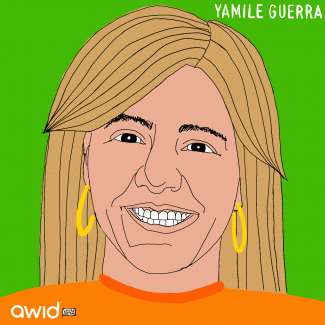
Yamile Guerra

Yamile Guerra was a well-known lawyer, community leader and political activist in the Santander region of Colombia.

She was actively working to resolve disputes between local communities and developers, advocating against illegal land appropriation. Yamile had occupied various political posts, including as the Secretary General for the Santander government in Bogota and also aspired for the Mayor’s Office of Bucaramanga. In the last few years of her life, Yamile became increasingly active in environmental causes, particularly in the defense of the biodiverse wetlands of Santurbán against development, a region which supplies nearly 2 million people with freshwater.

According to her family and friends, Yamile received daily threats against her life and had asked the authorities for protection. 

“She was very very aware of this issue [land litigation] and she said many times that she felt insecure.” - Alixon Navarro Munoz, journalist and friend of Guerra family

On July 20, 2019 Yamile was shot to death by two men in Floridablanca, Santander. She had just finished discussing a land dispute with them. A suspect was later arrested for her murder and admitted to being paid to carry out her assassination. According to reports, Yamile was the third member of her family to have been killed in relation to land disputes. Her father, Hernando Guerra was murdered several years previously.

Yamile’s assassination is part of a wave of violence and systematic killing of hundreds of social activists and human rights defenders in Colombia. According to the Institute for Development and Peace Studies (INDEPAZ), at the time of Yamile’s death, over 700 community leaders and human rights activists had been killed since the country signed a peace agreement in August 2016. Most were murdered for confronting illegal drug trafficking and mining operations, with indigenous people, Afro-Colombians and women human rights defenders being most at risk. 

Less than a week after Yamile’s death, thousands of Colombians marched all over towns and cities, holding up black and white photos of activists who had been killed, with signs that read: "Without leaders there can be no peace" and "No more bloodshed”.

Yamile Guerra was only 42 years old at the time of her assassination. 

Forum 2024 - FAQ - Registration FR

Inscription

Ishtar sur pellicule | Small Snippet FR

Ishtar sur pellicule

À l’âge de six ans, j’appris que mon grand-père avait un cinéma. Ma mère me raconta comment il l’avait ouvert au début des années 1960, quand elle avait également à peu près six ans. Elle se rappelait qu’il avait projeté La Mélodie du bonheur le soir de l’ouverture...

Lire plus

Illustration of film reel

2022: Transiciones, Inspiración & Poder Colectivo

Nuestro plan estratégico “Realidades Feministas” completó su último año a finales de 2022. Durante los últimos cinco años, este intrépido marco nos empujó a ir más allá de los futuros feministas y a reconocer las soluciones y formas de vida feministas que ya existen aquí y ahora. Realidades que deben ser enaltecidas, celebradas y popularizadas. El proyecto de historias multimedia Las Economías Feministas que Amamos y el centro de conocimiento Our Resource sobre modos autónomos de dotar de recursos al activismo feminista son sólo dos ejemplos de este trabajo visionario, siempre profundamente colectivo y en colaboración con diversos movimientos feministas.

Descargar el informe anual 2022


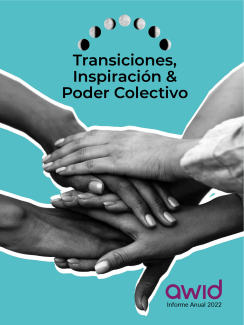
Portada del Informe Anual 2022 de AWID. La portada es de color azul claro y muestra a un grupo de personas uniéndose de la mano. Sobre el texto "Transiciones, inspiración y poder colectivo" hay un semicírculo formado por pequeñas lunas, que representan las transiciones.

El 2022 fue un año de transiciones en AWID.

Con la presente reflexión sobre este año, te invitamos a celebrar con nosotrxs hermosos finales y auspiciosos comienzos. El cambio y las transiciones son una parte inseparable de la vida y de los movimientos, que procuramos abrazar con un sentido de responsabilidad y cuidado.

Descargar el informe anual 2022

Snippet - WD2026 - Membership Booth_ES

Stand de Membresía de AWID: Resistir, Descansar, Reimaginar

📅 A lo largo de la conferencia | April 27 - 30
🏢 Melbourne Convention and Exhibition Centre, Booth B17

Binta Sarr

Binta Sarr fue una activista por la justicia social, económica, cultural y política, y una ingeniera hidráulica en Senegal. Después de 13 años en la administración pública, Binta dejó ese camino para trabajar con mujeres rurales y marginadas.

Fue de este compromiso que surgió la Association for the Advancement of Senegalese Women [Asociación para el Avance de las Mujeres Senegalesas] (APROFES, por sus siglas en inglés), un movimiento y organización de base que Binta fundó en 1987. Uno de sus principales enfoques fue la formación de dirigentes, en relación no solo con las actividades económicas, sino también con los derechos de las mujeres y el acceso a los puestos de toma de decisiones.

"Las poblaciones de base deben organizarse, movilizarse, asumir el control ciudadano y exigir la gobernabilidad democrática en todos los sectores del espacio público. La prioridad de los movimientos sociales debe ir más allá de la lucha contra la pobreza y debe centrarse en programas de desarrollo articulados y coherentes en consonancia con los principios de los derechos humanos, teniendo en cuenta al mismo tiempo sus necesidades y preocupaciones tanto a nivel nacional como subregional y desde una perspectiva de integración africana y mundial". - Binta Sarr

Partiendo de la convicción de Binta de que el cambio fundamental de la condición de la mujer requiere una transformación de las actitudes masculinas, APROFES adoptó un enfoque interdisciplinario,  al utilizar la radio, los seminarios y el teatro popular, además de proporcionar una educación pública innovadora y  brindar apoyo cultural a las acciones de sensibilización. Su compañía de teatro popular representó piezas originales sobre el sistema de castas en el Senegal, el alcoholismo y la violencia conyugal. Binta y su equipo también analizaron la conexión crucial entre la comunidad y el mundo en general.

"Para APROFES, se trata de estudiar y tener en cuenta las interacciones entre lo micro y lo macro, lo local y lo global y también, las diferentes facetas del desarrollo. Desde la esclavitud hasta la colonización, el neocolonialismo y la mercantilización del desarrollo humano, la mayor parte de los recursos de África y del Tercer Mundo (petróleo, oro, minerales y otros recursos naturales) están todavía bajo el control de carteles financieros y las otras multinacionales que dominan este mundo globalizado". - Binta Sarr

Binta fue una de las integrantes fundadoras de la sección femenina de la Asociación Cultural y Deportiva Magg Daan. Recibió distinciones del Gobernador Regional y del Ministro de Hidrología por su "devoción por la población rural".

Nacida en 1954 en Guiguineo, un pequeño pueblo rural, Binta falleció en septiembre de 2019.


Tributos:

"La pérdida es inconmensurable, el dolor es pesado y profundo, pero resistiremos para no llorar a Binta; no lloraremos a Binta, mantendremos la imagen de su amplia sonrisa en todas las circunstancias, para resistir e inspirarnos en ella, para mantener, consolidar y desarrollar su obra..." - Página de Facebook de Aprofes, 24 de septiembre de 2019.

"¡Adiós Binta! Creemos que tu inmenso legado será preservado." - Elimane FALL , presidente de ACS Magg-Daan

Une personne ou une organisation peut-elle proposer plusieurs activités ?

En tant qu’organisatrice, une personne ou organisation peut proposer un maximum de 2 (deux) activités. Cela ne vous empêche pas d’être partenaires dans d’autres activités.

Ester Lopes | Snippet ES

Ester Lopes Portrait

Ester Lopes y escritora, y se dedica a la investigación centrada en el cuerpo, el género, la raza y las relaciones de clase. Es instructora de pilates y profesora de arte. Ester se graduó en Teatro Contemporáneo y Procesos Creativos (en FAINC) y en Danzas y Conciencia Corporal (en USCS). En el campo de la música, su especialización incluye el canto y la percusión populares. Se formó en Novos Brincantes con Flaira Ferro, Mateus Prado y Antonio Meira en el Instituto Brincante en 2015 y 2016.

Isabel Marler

Biography

Isabel is a feminist from the United Kingdom with over a decade of experience in feminist responses to fascisms, fundamentalisms, and anti-rights trends. At AWID, her work centers on knowledge-building and has included leading the production of the Rights at Risk series in collaboration with the Observatory on the Universality of Rights (OURs). She holds a Master’s degree in Gender Studies from the School of Oriental and African Studies (SOAS) and previously worked with Women Living Under Muslim Laws (WLUML). She is passionate about cross-movement work, movement-centered knowledge-building, and the use of creative expression to disrupt systems of oppression. Outside of work, Isabel is active in various disability justice spaces for collective care, learning, and advocacy.

Position
Advancing Universal Rights and Justice Lead
Add to stories
Off

Snippet - WD2026 - Movement Hubs Intro - FR

Les Movement Hubs sont des espaces organisés localement où des organisations membres de l’AWID se rassemblent pour s’engager dans des processus féministes mondiaux depuis leurs propres territoires. Les Hubs aux Fidji et en Géorgie organisent des ateliers et des espaces de dialogue en lien avec les discussions menées à Women Deliver autour du financement féministe, de la solidarité intersectionnelle, de la justice climatique et du care collectif. Découvrez leur programme et suivez l’AWID sur les réseaux sociaux pour recevoir les dernières actualités en direct !