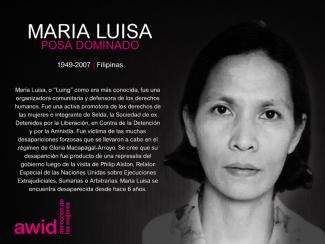
Maria Luisa Posa Dominado
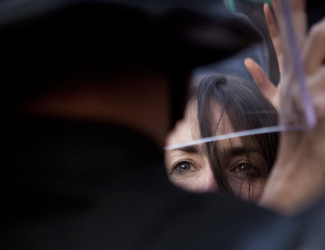
WHRDs are self-identified women and lesbian, bisexual, transgender, queer and intersex (LBTQI) people and others who defend rights and are subject to gender-specific risks and threats due to their human rights work and/or as a direct consequence of their gender identity or sexual orientation.
WHRDs are subject to systematic violence and discrimination due to their identities and unyielding struggles for rights, equality and justice.
The WHRD Program collaborates with international and regional partners as well as the AWID membership to raise awareness about these risks and threats, advocate for feminist and holistic measures of protection and safety, and actively promote a culture of self-care and collective well being in our movements.
WHRDs are exposed to the same types of risks that all other defenders who defend human rights, communities, and the environment face. However, they are also exposed to gender-based violence and gender-specific risks because they challenge existing gender norms within their communities and societies.
We work collaboratively with international and regional networks and our membership
We aim to contribute to a safer world for WHRDs, their families and communities. We believe that action for rights and justice should not put WHRDs at risk; it should be appreciated and celebrated.
Promoting collaboration and coordination among human rights and women’s rights organizations at the international level to strengthen responses concerning safety and wellbeing of WHRDs.
Supporting regional networks of WHRDs and their organizations, such as the Mesoamerican Initiative for WHRDs and the WHRD Middle East and North Africa Coalition, in promoting and strengthening collective action for protection - emphasizing the establishment of solidarity and protection networks, the promotion of self-care, and advocacy and mobilization for the safety of WHRDs;
Increasing the visibility and recognition of WHRDs and their struggles, as well as the risks that they encounter by documenting the attacks that they face, and researching, producing, and disseminating information on their struggles, strategies, and challenges:
Mobilizing urgent responses of international solidarity for WHRDs at risk through our international and regional networks, and our active membership.
The global survey is a key pillar of the third iteration of our action-oriented research: “Where is the Money for Feminist Organizing?” (in short, Where is the Money or WITM). The results of the survey will be further elaborated and explored through in-depth conversations with activists and funders and cross-referenced with other existing analysis and research on the state of funding for feminists and gender equality globally.
The full “Where is the Money for Feminist Organizing” report will be published in 2026.
 To learn more how AWID has been shining a light on money for and against feminist movements check out the work of our Resourcing Feminist Movements Initiative here.
Para preguntas adicionales, por favor escríbenos utilizando nuestro formulario de contacto. Selecciona «14o Foro de AWID» como asunto de mensaje.
This is body text
After the gallery
Some English aside content

Consideramos a Taipéi como el mejor lugar de la región Asia-Pacífico para construir ese espacio seguro y rebelde destinado a nuestra comunidad feminista global.
Taipéi ofrece un cierto grado de estabilidad y seguridad para la diversidad de participantes que convocamos al Foro. Tiene también capacidad logística, y resulta accesible para muchxs viajerxs (con la facilitación de un trámite de visa electrónico para conferencias internacionales).
El Foro es bien recibido por el movimiento feminista local, que está muy interesado en interactuar con feministas de todo el mundo.
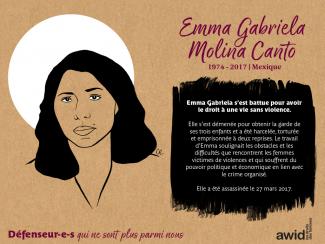
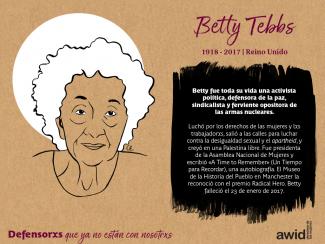
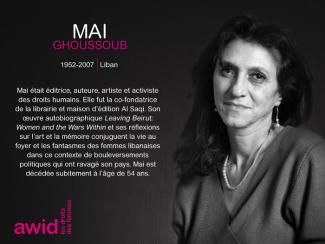
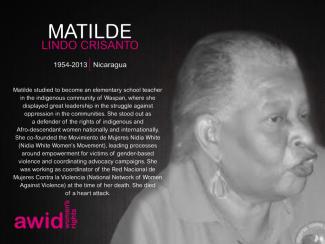
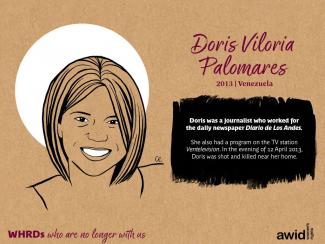
Student, Writer, Leader, Advocate. Each of the four women honored below had their own way of activism but what they had in common is that they all promoted and defended Lesbian Gay Bisexual Transgender Queer and Intersex rights. Join us in remembering and honoring these Women Human Rights Defenders, their work and legacy by sharing the memes below and tweeting by using the hashtags #WHRDTribute and #16Days.
Please click on each image below to see a larger version and download as a file


NOUS SOMMES LA SOLUTION
We are the Solution
No, we are asking for just one completed survey per group.
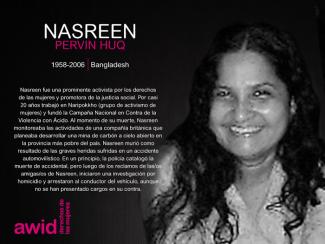
Estas mujeres trans* fueron asesinadas por su activismo y por su identidad de género. Son escasas las leyes que reconocen los derechos de las personas trans* e, incluso donde están vigentes, es muy poco lo que se ha hecho para salvaguardar sus derechos. Únete a AWID para honrar a estas defensoras de derechos humanos, su trabajo y su legado, compartiendo los memes aquí incluidos con tus colegas, amistades y redes; y tuiteando las etiquetas #WHRDTribute y #16Días.
Por favor, haz click en cada imagen de abajo para ver una versión más grande y para descargar como un archivo.


This is Mariama Sonko, an inspiring small-scale rural farmer, eco-feminist and a woman human rights defender.
She lives in Niaguiss, a town in the southwest of Senegal. Growing up in a family and community of rural farmers, she witnessed the essential role of women in food production and seed preservation from a very early age, while also being immersed in the rhythms and working of the land. Mariama has been defending local agricultural knowledge and peasant practices since the 1990s. As a mother of five children, the food she grows herself is the main source of sustenance for her family.
She is currently the president of “Nous Sommes la Solution'' and is involved in promoting agroecological practices and family farming, encouraging food sovereignty, biodiversity and farmer seed preservation, and demanding equitable access to resources and land for women across West Africa.
Source: AWID’s Feminist Realities Festival Crear | Résister | Transform - Day 2/ 2ème jour/ 2º día
Salvo que existan cuestiones de accesibilidad o que respondas la encuesta en otro idioma, alentamos encarecidamente a usar KOBO a los efectos de contar con una recopilación y un análisis de datos estandarizados para la investigación ¿Dónde está el dinero?