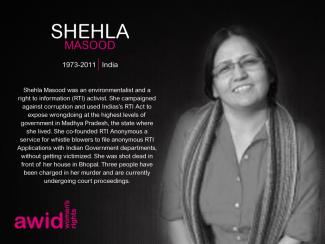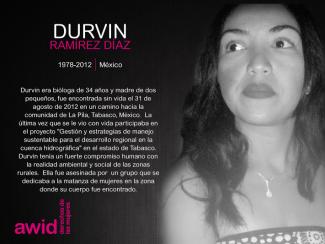
Philippe Leroyer | Flickr (CC BY-NC-ND 2.0)

Special Focus

AWID is an international, feminist, membership organisation committed to achieving gender equality, sustainable development and women’s human rights

Women Human Rights Defenders

WHRDs are self-identified women and lesbian, bisexual, transgender, queer and intersex (LBTQI) people and others who defend rights and are subject to gender-specific risks and threats due to their human rights work and/or as a direct consequence of their gender identity or sexual orientation.

WHRDs are subject to systematic violence and discrimination due to their identities and unyielding struggles for rights, equality and justice.

The WHRD Program collaborates with international and regional partners as well as the AWID membership to raise awareness about these risks and threats, advocate for feminist and holistic measures of protection and safety, and actively promote a culture of self-care and collective well being in our movements.


Risks and threats targeting WHRDs  

WHRDs are exposed to the same types of risks that all other defenders who defend human rights, communities, and the environment face. However, they are also exposed to gender-based violence and gender-specific risks because they challenge existing gender norms within their communities and societies.

By defending rights, WHRDs are at risk of:

  • Physical assault and death
  • Intimidation and harassment, including in online spaces
  • Judicial harassment and criminalization
  • Burnout

A collaborative, holistic approach to safety

We work collaboratively with international and regional networks and our membership

  • to raise awareness about human rights abuses and violations against WHRDs and the systemic violence and discrimination they experience
  • to strengthen protection mechanisms and ensure more effective and timely responses to WHRDs at risk

We work to promote a holistic approach to protection which includes:

  • emphasizing the importance of self-care and collective well being, and recognizing that what care and wellbeing mean may differ across cultures
  • documenting the violations targeting WHRDs using a feminist intersectional perspective;
  • promoting the social recognition and celebration of the work and resilience of WHRDs ; and
  • building civic spaces that are conducive to dismantling structural inequalities without restrictions or obstacles

Our Actions

We aim to contribute to a safer world for WHRDs, their families and communities. We believe that action for rights and justice should not put WHRDs at risk; it should be appreciated and celebrated.

  • Promoting collaboration and coordination among human rights and women’s rights organizations at the international level to  strengthen  responses concerning safety and wellbeing of WHRDs.

  • Supporting regional networks of WHRDs and their organizations, such as the Mesoamerican Initiative for WHRDs and the WHRD Middle East and North Africa  Coalition, in promoting and strengthening collective action for protection - emphasizing the establishment of solidarity and protection networks, the promotion of self-care, and advocacy and mobilization for the safety of WHRDs;

  • Increasing the visibility and recognition of  WHRDs and their struggles, as well as the risks that they encounter by documenting the attacks that they face, and researching, producing, and disseminating information on their struggles, strategies, and challenges:

  • Mobilizing urgent responses of international solidarity for WHRDs at risk through our international and regional networks, and our active membership.

Related Content

Snippet Festival In Review - Presentation (ES)

Crear | Résister | Transform: ¡un festival de movimientos feministas!

¿Quieres inspirarte con las estrategias de resistencia creativas de feministas de todo el mundo? ¿Quieres descubrir iniciativas feministas que nos muestran las maneras en que todxs podemos vivir en un mundo más justo? ¿Quieres aprender sobre modelos de cuidado y sanación feministas para aplicarlos en tu propia comunidad?¿Eso que escuchamos es un estruendoso sí? ¡SÍ!

Entonces explora Crear | Résister | Transform: un festival de movimientos feministas. Este festival se llevó a cabo en línea durante todo el mes de septiembre de 2021 en todas las plataformas de AWID, y ahora puedes experimentarlo en tu propio tiempo.

Las sesiones a continuación son para ti y todas lxs increíbles activistas feministas y por la justicia social que conoces. Unámonos para compartir nuestras estrategias de resistencia, co-crear magia feminista y transformar este mundo juntxs.

El Festival fue una experiencia multicultural y multilingüe.

Lxs expositorxs participaron en su idioma de preferencia y en AWID incluimos subtítulos en los videos para tu accesibilidad.

Winnie Madikizela-Mandela

Winnie has been described as a “militant firebrand activist” who fought the apartheid regime in South Africa.

She was imprisoned multiple times, and on many occasions placed in solitary confinement.

Ma’Winnie, as she is affectionately remembered, was known for being outspoken about the challenges Black women faced during and after apartheid, having been on the receiving end of these brutalities herself as a mother, wife and activist during the struggle. She transcended the misconception that leadership is gender, class or race-based. Despite being a controversial figure, she is remembered by many by her Xhosa name, “ Nomzamo”, which means "She who endures trials".  

Ma’Winnie continues to be an inspiration to many, particularly young South African women for whom her death has spurred a burgeoning movement, with the mantra: "She didn't die, she multiplied."
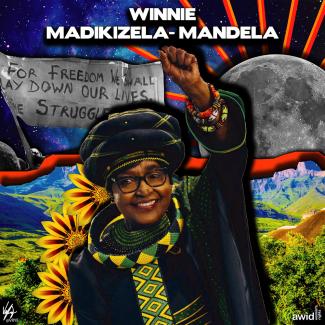
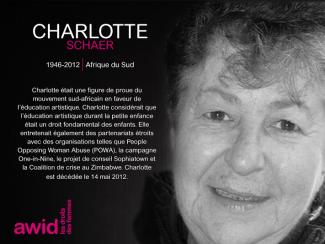


Winnie Madikizela-Mandela, South Africa

Do I have to be an AWID member to participate in the Forum?

No, you don't have to be an AWID member to participate but AWID members receive a discounted registration fee as well as a number of other benefits.

Learn more on how to become an AWID member

ฉันเสนอกิจกรรมไปในฟอรัมที่ผ่านมา ฉันยังจำเป็นต้องสมัครใหม่อีกครั้งหรือไม่

กรุณาสมัครใหม่อีกครั้ง โลกได้เปลี่ยนไปจากปี 2564 และเราขอเชิญชวนให้คุณเสนอกิจกรรมที่ถ่ายทอดความจริงและสิ่งที่คุณให้ความสำคัญในปัจจุบัน

Snippet Relive the Festival_Fest (ES)

Revive el Festival

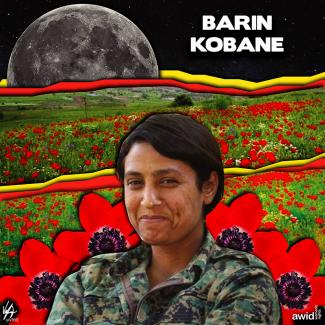
Barin Kobane

Barin integraba la unidad de batalla formada íntegramente por mujeres de la Unidad de Protección del Pueblo Kurdo (YPG).

La mataron cuando estaba en servicio activo.

La periodista libanesa Hifaa Zuaiter escribió: «Barin representa todo lo que hemos oído acerca del coraje de las combatientes kurdas, y su muerte es mucho más que el matar a un rival o el resultado de una lucha política o étnica. El horror de exhibir su cuerpo sólo porque es una mujer surge del hecho de que ella se atrevió a amenazar la hegemonía masculina al convertirse en una combatiente en un campo de batalla que se suponía era solo para hombres».


Barin Kobane, Kurdistan

My question isn’t answered here

For additional questions, please use our contact form, and select “14th AWID Forum" from the dropdown menu.

Contact us

CFA FAQ - Accessibility and Health - Thai

สุขภาพและการช่วยในการเข้าถึง

Snippet Love Letters from our Co-EDs and the Board (FR)

Lettres d'amour de notre Conseil d'Administration et des nos codirectrices exécutives

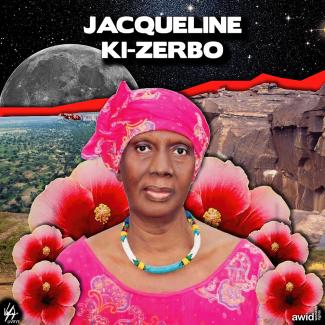
Jacqueline Coulibaly Ki-Zerbo

Jacqueline était une éducatrice malienne pionnière de la cause féministe et nationaliste.

Elle a d’abord enseigné l'anglais au Sénégal avant d'être recrutée en 1961 par le Lycée Philippe Zinda Kaboré à Ouagadougou, au Burkina Faso. Etant donné son engagement militant, elle a pris part au soulèvement populaire du 3 janvier 1966. Entre 1961 et 1966, Jacqueline était par ailleurs responsable de la presse syndicale, La voix des enseignants. Elle a été nommée directrice du Cours normal des jeunes filles (aujourd’hui connu sous le nom de lycée Nelson Mandela) jusqu'en 1974 et s'est consacrée à l'éducation des filles et à la promotion des droits des femmes.

En 1984, elle a reçu le prix Paul G. Hoffmann pour sa contribution remarquable en matière de développement national et international.


Jacqueline Coulibaly Ki-Zerbo, Mali/ Burkina Faso

Why did AWID choose Taipei as the location for the Forum?

We see Taipei as the location in the Asia Pacific region that will best allow us to build that safe and rebelious space for our global feminist community.

Taipei offers a moderate degree of stability and safety for the diversity of Forum participants we will convene. It also has strong logistical capacities, and is accessible for many travellers (with a facilitated e-visa process for international conferences).

The local feminist movement is welcoming of the Forum and keen to engage with feminists from across the globe.

Read more about our considerations when choosing Taipei

CFA 2023 - breadcrumbs Menu _ FAQ-ar

Snippet FEA São Paulo City Center (EN)

São Paulo’s City Center

Source: Centro de população de rua da cidade de São Paulo

A woman sitting on the floor on a piece of cloth and a cup for change in front of her
   

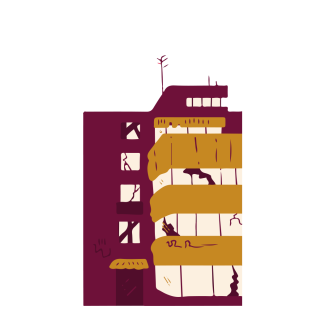
Abandoned / Unoccupied Buildings

Illustration of an abandoned, run down building to depict the housing crisis

Population living in the streets 


31,000


40.000

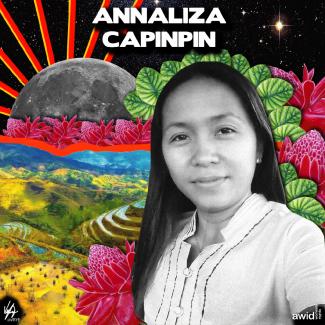
Annaliza Dinopol Gallardo Capinpin

Known as “Ate Liza,” Annaliza was the president of the Agrarian Reform Council for Mindanao Pioneers, an umbrella group in Tacurong City, Philippines.

A loved mother of four, teacher and community leader, Annaliza is remembered by her community as “she who leads when no one wants to lead, she who talks when no one wants to talk, she who stood with courage to help the agrarian reform beneficiaries to own lands.”

Annaliza was shot dead by unknown assailants in front of the Sultan Kudarat State University (SKSU) while on her way to Salabaca National High School in Esperanza.

Her family have said “Naghihintay pa rin kami ng hustisya para sa kanya” (we are still waiting justice for her).