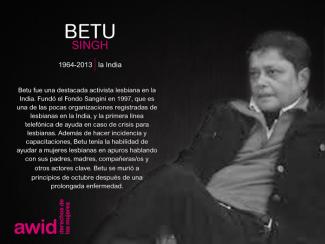
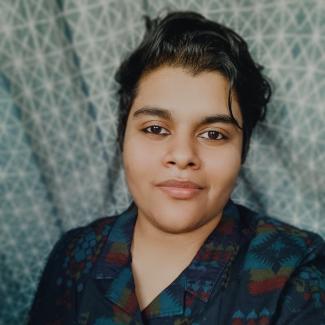
Betu Singh
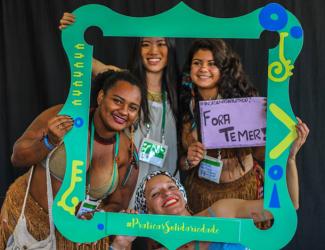
Young feminist activists play a critical role in women’s rights organizations and movements worldwide by bringing up new issues that feminists face today. Their strength, creativity and adaptability are vital to the sustainability of feminist organizing.
At the same time, they face specific impediments to their activism such as limited access to funding and support, lack of capacity-building opportunities, and a significant increase of attacks on young women human rights defenders. This creates a lack of visibility that makes more difficult their inclusion and effective participation within women’s rights movements.
AWID’s young feminist activism program was created to make sure the voices of young women are heard and reflected in feminist discourse. We want to ensure that young feminists have better access to funding, capacity-building opportunities and international processes. In addition to supporting young feminists directly, we are also working with women’s rights activists of all ages on practical models and strategies for effective multigenerational organizing.
We want young feminist activists to play a role in decision-making affecting their rights by:
Fostering community and sharing information through the Young Feminist Wire. Recognizing the importance of online media for the work of young feminists, our team launched the Young Feminist Wire in May 2010 to share information, build capacity through online webinars and e-discussions, and encourage community building.
Researching and building knowledge on young feminist activism, to increase the visibility and impact of young feminist activism within and across women’s rights movements and other key actors such as donors.
Promoting more effective multigenerational organizing, exploring better ways to work together.
Supporting young feminists to engage in global development processes such as those within the United Nations
Collaboration across all of AWID’s priority areas, including the Forum, to ensure young feminists’ key contributions, perspectives, needs and activism are reflected in debates, policies and programs affecting them.
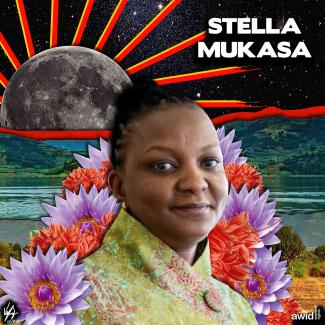
Stella comenzó su carrera en el Ministerio de Género y Desarrollo Comunitario en Uganda colaborando con lxs legisladores en reformas legales, incluida la Constitución de Uganda de 1995, que estableció algunas de las reformas más progresistas para las mujeres en la región.
Stella es respetada y admirada en toda la región por sus incansables esfuerzos para crear y hacer cumplir leyes y políticas que tomen en cuenta cuestiones de género. También desempeñó un papel clave en la redacción de la Ley de Violencia Doméstica de Uganda y en la movilización de apoyo para las constituciones sensibles al género tanto en Uganda como en Ruanda.
A través de su trabajo con el Centro Internacional para la Investigación sobre la Mujer (ICRW, por sus siglas en inglés), abordó la violencia contra lxs niñxs y trabajó para fortalecer las capacidades de las organizaciones de base que abordan la violencia de género. Stella fue profesora en cursos sobre derechos de género y la ley, en la Universidad Makerere, y formó parte de las juntas directivas de Akina Mama wa Afrika, ActionAid International Uganda y Open Society Initiative para África Oriental.
При необходимости, вы можете сохранить свои ответы и вернуться к опросу позже. Eсли Вы хотите сохранить ответы и вернуться к опросу позже, это можно сделать при условии, что Вы продолжите работу на том же устройстве. KOBO сохранит Ваши ответы в левом верхнем углу страницы опросника и подгрузит Ваш черновик, когда Вы вернетесь к опросу.
Welcome to Crear | Résister | Transform: a festival for feminist movements!
AWID is committed to creating an online space that invites and challenges us all to operate from a place of courage, curiosity, generosity and shared responsibility.
We invite you to co-create spaces with us that are free of harassment and violence, where everyone is respected in their gender identity and expression, race, ability, class, religion, language, ethnicity, age, occupation, type of education, sexuality, body size, and physical appearance. Spaces where we recognize inequalities in our world and strive to transform them in our own interactions with each other.
This means that we are able to listen, understand and relate to each other. To feel close, in spite of it all being virtual. For this, we will make interpretation available and open channels (like chat and other tools) for you to react and share. To hear each other better, we invite you to wear headphones during the conversation. If it is possible for you , we suggest that you close your email and any other likely source of distraction while you are in the conversation.
Let us celebrate the multiple ways in which knowledge shows up in our lives. We invite you to approach the conversation with curiosity and openness to learn from others, allowing ourselves to unlearn and relearn through the exchange, as a way to start collectively building knowledge.
We are committed to holistically approaching accessibility by being mindful of different physical, language, mental and safety needs. We want a space that is welcoming of folks from various backgrounds, beliefs, abilities and experiences. We will be proactive but we also ask that you communicate your needs with us, and we will do our best within our capacity to address these needs.
We all commit individually and collectively to respect each other’s privacy and to seek people’s consent before sharing any images or content generated during the conversation that involves them.
Creating a safer, respectful and enjoyable environment for the conversations, is everybody's responsibility.
If you notice that someone is behaving in a discriminatory or offensive manner, please contact the reference person who will be indicated at the beginning of the session.
Any participants that express oppressive language or images, will be removed from the call and will not be readmitted. We will not engage with them in any way.
por Karina Ocampo
A un rincón escondido de Chiapas, México, llegamos mujeres y disidencias sexuales para organizar nuestras acciones. (...)
< arte: «Proyecto fotográfico: La muerte sale por el Oriente», de Sonia Madrigal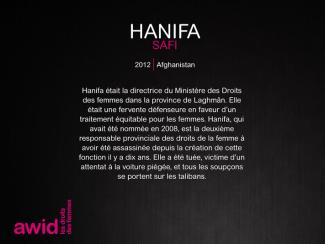
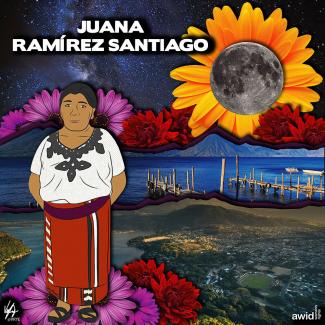
Ayant co-fondé le réseau Red de Mujeres Ixiles de Nebaj, une organisation de défense des droits des femmes autochtones, membre de l’Initiative mésoaméricaine des femmes défenseur-e-s des droits humains (IM-Defensoras en espagnol), Juana était actuellement membre de son conseil d’administration.
Elle était également sage-femme et mère de 7 enfants. Juana avait reçu des menaces de mort qui avaient été signalées au bureau du procureur. Juana est la troisième défenseure autochtone assassinée dans la région en 2018. L'Ombudsman pour le Guatemala a signalé qu'au total 20 défenseur-e-s ont été tué-e-s dans le pays cette année.
Juana Ramírez Santiago a été abattue par des assaillants non identifiés alors qu'elle traversait un pont à Nebak, Quiché, au Guatemala. Les enquêtes visant à identifier les auteurs sont en cours.
Tem o direito de eliminar a sua resposta, por qualquer motivo e se assim o desejar. Queira entrar em contacto connosco através deste formulário, ao indicar "WITM Survey" ("Inquérito WITM") no título da sua mensagem, e iremos proceder à eliminação da sua resposta.
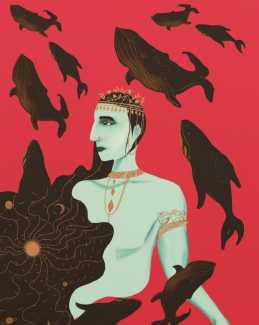
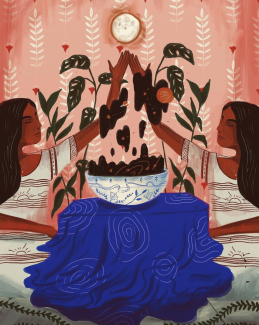
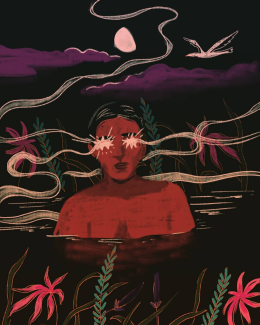
Nous vivons dans un monde où la destruction de la Nature alimente notre économie mondiale actuelle. Même en période de crise climatique, les gouvernements continuent d'encourager les industries agricoles à grande échelle à se développer. Ces activités empoisonnent la terre, menacent la biodiversité et détruisent la production alimentaire et les moyens de subsistance locaux. Pendant ce temps, alors que les femmes produisent la majorité de la nourriture dans le monde, elles ne possèdent presque aucune terre.
Et si nous percevions la terre et la Nature non pas comme une propriété privée à exploiter, mais comme une totalité avec laquelle vivre, apprendre et coexister harmonieusement ? Et si nous réparions nos relations avec la terre et adoptions des alternatives plus durables qui nourrissent à la fois la planète et ses communautés?
Nous Sommes la Solution (NSS) est l'un des nombreux mouvements dirigés par des femmes qui s'efforcent d'atteindre cet objectif.
Voici leur histoire.
par Alejandra Laprea
Je vis dans le pays de l’impossible, où les bombes ne tombent pas alors que nous connaissons la guerre. (...)
illustration : « Entretejidas » (« Entrelacées »), par Surmercé >
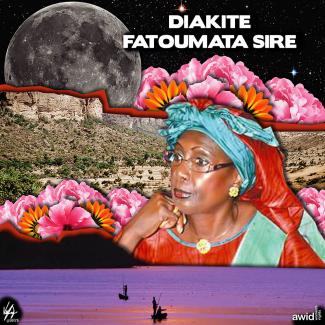
Diakite was actively involved in advocating for women in political and public life in Mali.
She worked to support training of women candidates in elections, and spoke out against the practice of Female Genital Mutilation (FGM). She was a strong proponent of reproductive health and rights.
نعم! الرجاء القيام بذلك! نشجعكم/ن على مشاركة رابط الاستطلاع في شبكاتكم/ن. سيسمح لنا جمع وجهات النظر أكثر تنوعاً، فهم البيئة التمويلية للحركات النسوية بشكل أكبر.
Bien plus de la moitié de la population mondiale est aujourd’hui dirigée par l’extrême droite. C’est sur cette toile de fond que défenseur·e·s des droits humains et féministes luttent pour « tenir bon », protéger le multilatéralisme et le système international des droits humains, alors que leurs engagements les exposent à de violentes répressions. Ces institutions sont cependant de plus en plus soumises aux intérêts du secteur privé. Les grandes entreprises, surtout les sociétés transnationales, siègent à la table des négociations et occupent des fonctions de leadership dans plusieurs institutions multilatérales, l’ONU notamment. Le lien entre ultranationalisme, restriction de l’espace civique et emprise des entreprises a un impact considérable sur la réalisation ou non des droits humains pour tout le monde.
La inversión con impacto de género (IIG) se ha convertido en tendencia como una solución a la desigualdad de género. Sin embargo, como lo demuestra nuestro informe, en realidad es parte del problema. Las instituciones públicas y privadas que fomentan la IIG la equiparan con la promoción de la igualdad de género y con mayores recursos para mujeres y niñas.
Por el contrario, la IIG es otra expresión de la subordinación de nuestras vidas y nuestras sociedades a la misma lógica financiera que ha configurado, y sigue configurando, las profundas desigualdades de nuestro mundo.
Con este informe, AWID ofrece a lxs lectorxs (feministas, defensorxs de la justicia de género y otrxs actorxs del sector de la inversión con impacto de género) un análisis crítico y pruebas fundamentadas para entender la IIG, sus narrativas y sus implicancias económicas y políticas para los movimientos feministas.
by Siufung Law
“97..! 98.. where is 98? 98! Please come back to the lineup!... 99! 100!...” The backstage lady relentlessly asked each athlete to queue up at the humid, sweaty, overcrowded backstage. (...)
< artwork: “When They See Us” by Lame Dilotsotlhe