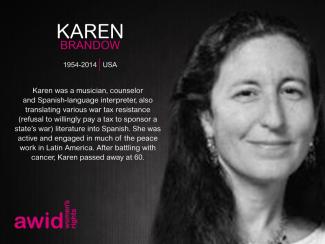
Karen Brandow
Over the past few years, a troubling new trend at the international human rights level is being observed, where discourses on ‘protecting the family’ are being employed to defend violations committed against family members, to bolster and justify impunity, and to restrict equal rights within and to family life.
The campaign to "Protect the Family" is driven by ultra-conservative efforts to impose "traditional" and patriarchal interpretations of the family, and to move rights out of the hands of family members and into the institution of ‘the family’.
Since 2014, a group of states have been operating as a bloc in human rights spaces under the name “Group of Friends of the Family”, and resolutions on “Protection of the Family” have been successfully passed every year since 2014.
This agenda has spread beyond the Human Rights Council. We have seen regressive language on “the family” being introduced at the Commission on the Status of Women, and attempts made to introduce it in negotiations on the Sustainable Development Goals.
AWID works with partners and allies to jointly resist “Protection of the Family” and other regressive agendas, and to uphold the universality of human rights.
In response to the increased influence of regressive actors in human rights spaces, AWID joined allies to form the Observatory on the Universality of Rights (OURs). OURs is a collaborative project that monitors, analyzes, and shares information on anti-rights initiatives like “Protection of the Family”.
Rights at Risk, the first OURs report, charts a map of the actors making up the global anti-rights lobby, identifies their key discourses and strategies, and the effect they are having on our human rights.
The report outlines “Protection of the Family” as an agenda that has fostered collaboration across a broad range of regressive actors at the UN. It describes it as: “a strategic framework that houses “multiple patriarchal and anti-rights positions, where the framework, in turn, aims to justify and institutionalize these positions.”
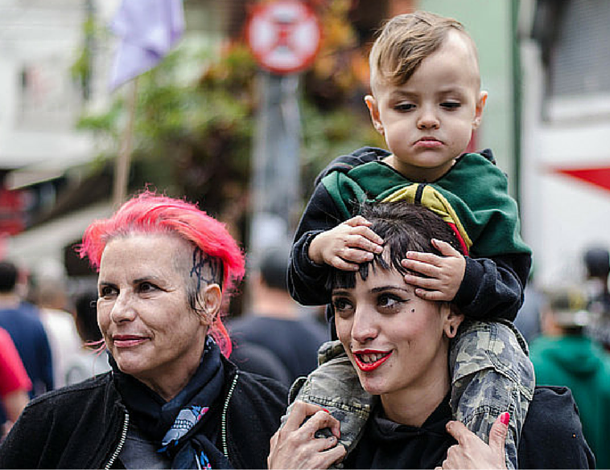
With up to 2,500 participants on-site and 3,000 virtual/hybrid participants, it will be the largest AWID Forum ever. We envision multiple spaces for meaningful connection, learning, exchange, strategic conversations, healing and celebration. It is the first time we gather in this space since the pandemic, and we can’t wait.
Alors que les fondamentalismes, les fascismes et autres systèmes d’oppression se métamorphosent et trouvent de nouvelles tactiques et stratégies pour consolider leur pouvoir et influence, les mouvements féministes persévèrent et célèbrent leurs victoires nationales, régionales et internationales.
第十四屆論壇的主題是“女權主義現實實踐:我們的行動力量”。
我們將女權主義現實實踐理解為不同方式和形式的存在,向我們展示了儘管有主導的權力系統但仍舊存在各種可能性去反抗和抵抗它們。我們將這些女權主義現實實踐理解為希望和力量的開墾與體現,並且是多維的、動態的和植根於特定背景和歷史時刻的。
María Digna Montero fue una garífuna (afrodescendiente e indígena) defensora de la tierra e integrante de la Organización Fraternal Negra Hondureña (OFRANEH), una organización de base que trabaja para proteger a las comunidades garífunas, sus derechos ancestrales, su cultura, sus recursos y su territorio.
María también enseñaba en la escuela local, e integraba el grupo de trabajo de Educación Bilingüe Intercultural de OFRANEH.
El 12 de octubre (Día de la Resistencia Indígena) de 2019, sujetos desconocidos le dispararon a María varias veces en el patio de su casa.
Fue una de las seis defensoras garífunas asesinadas entre septiembre y octubre de 2019 y, según OFRANEH, no hubo ninguna investigación de estos crímenes por parte de las autoridades. En un comunicado oficial, la organización también subrayó la conexión entre la violencia contra líderes garífunas y el incremento de las industrias extractivas que explotan los recursos naturales en sus comunidades, y definieron esta violencia como «parte de una estrategia de intimidación y de expulsión sistemática por parte del Estado de Honduras.»
«El recrudecimiento de la tensión y de los riesgos crecientes para la seguridad y derechos humanos de las lideresas en las comunidades y territorios ancestrales es producto del despojo, desplazamiento y criminalización hacia las comunidades, y de los mega proyectos extractivos que impulsa el Estado junto con las corporaciones nacionales e internacionales.» - Pronunciamiento de OFRANEH, 13 de octubre de 2019
Si tu grupo u organización recibe financiamiento, es posible que desees discutir con tus donantes desde ahora si pueden apoyar tu viaje y participación en el Foro. Muchas instituciones planifican sus presupuestos para el próximo año a principios de 2023, por lo que es mejor no retrasar esta conversación para el próximo año.
Are you a UN policy maker and want to know the main anti-rights groups and discourses to look out for? Or a feminist looking for quick counter-arguments? This 8-page primer provides key information at a glance.
我們一直努力確保論壇是由合作夥伴、運動和我們的優先群體共同來開發。
對於即將舉行的論壇,我們旨在加深和增強共同創造與合作的精神和實踐。我們還認識到有必要在多樣的聲音和體驗之間取得平衡,讓參與者和工作人員有調整呼吸、休息和享受一些空閒時間的空間。
該論壇將在以下方面有所不同:
Feminist and women’s rights organizations don’t just rely on institutional funding, we resource ourselves. Our organizing is powered by passion, political commitment, solidarity and collective care.
These resources are self- generated and autonomous, and often invisible in our budgets, but they are the backbone of our organizing.
Nilcéa Freire était une activiste, politicienne et universitaire brésilienne. Ardente défenseuse des droits des femmes et des minorités sous-représentées dans le pays, sa vie et son travail ont été marqués par une longue histoire de luttes et de victoires.
"Nous devons, tout en résistant, continuer à chercher à progresser, et ce que nous pouvons accomplir actuellement, je pense que nous le devons à la fantastique organisation des jeunes femmes blanches, et surtout des femmes noires, dans toutes les capitales d’États et les grandes villes brésiliennes.” - Nilcéa Freire
En 1999, elle est devenue la première femme à occuper le poste de doyenne de l'université d'État de Rio de Janeiro. Elle y a dirigé la mise en œuvre de la première politique d'action positive pour les étudiant·e·s des écoles publiques, demandant au sein d’une école publique que des places soient spécifiquement réservées aux étudiant·e·s noir·e·s à faible revenu. Ce système a été adopté dans des dizaines d'autres universités publiques.
Quelques années plus tard, Nilcéa dirigea le Secrétariat spécial des politiques pour les femmes sous le gouvernement de l'ancien président Luiz Inácio Lula da Silva. C’est à ce titre qu’elle conduisit la première Conférence nationale des femmes. Plus de 12 000 femmes de tout le pays y participèrent et le résultat de ce travail collectif fut incorporé dans le Plan national des politiques pour les femmes.
Son engagement envers les femmes, les Afro-Brésilien·ne·s et les populations autochtones se reflète aussi fortement dans son travail de défense de leurs droits, qu’elle a mené dans le cadre des initiatives du bureau de la Fondation Ford du Brésil, dont elle était la directrice régionale.
L’activiste féministe Manoela Miklos a dit de Nilcéa qu'elle était "une femme sans égal·e".
Nilcéa s’est éteinte à Rio de Janeiro à l'âge de 66 ans, le 29 décembre 2019, des suites d’un cancer.
"Je n’ai pas de mots face à l’annonce de la mort de notre chère Nilcéa Freire. Il m’est trop triste de savoir qu’elle est partie si tôt. Elle s’est toujours rangée du côté de celleux qui ne tolèrent pas les injustices de ce monde. Elle était la ministre des femmes, sans cesse engagée dans la cause féministe. Elle nous manquera beaucoup!” - Jandira Feghali, Federal Deputy
Nous sommes en communication avec les rassemblements régionaux et thématiques ainsi que les rencontres entre bailleurs de fonds prévus pour 2023-2024, afin d'assurer le bon déroulement des conversations et des connexions. Si vous organisez un événement et souhaitez le mettre en relation avec le Forum de l'AWID, n'hésitez pas à prendre contact avec nous !
El primer informe del Observatorio sobre la Universalidad de los Derechos funciona como un compendio de información sobre tendencias anti-derechos en espacios internacionales. Este informe permite conocer mejor a los principales actores anti-derechos religiosos, sus discursos y tácticas dentro de la ONU.
As the world struggles with multiple intersecting crises, local communities and collectives of various kinds are resisting as also creating constructive alternatives.
📅 Wednesday, November 12, 2025
📍 Seminario Mar Nossa Sra Da Assunção, Pará, Brazil
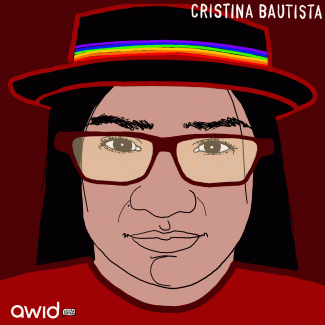
“If we stay quiet they kill us and if we talk [they kill us] too. So, let’s talk.” - Cristina Bautista, 2019
A tireless defender of the rights of Nasa people, Cristina spoke strongly and loudly against the violence directed at her community. In a speech before the United Nations, she called for the protection of Indigenous women’s lives and their involvement in different spheres of life. In 2017, Cristina was a UN Human Rights Office Indigenous fellow and she was awarded a grant from the UN Voluntary Fund for Indigenous Peoples in 2019.
“I would like to bring to light the current situation of the Indigenous people in Colombia, the killing of Indigenous leaders, the repression of social protest. Instead of helping, the peace deal has increased war and the exploitation of sacred territories in Colombia… In the current situation, in almost all Indigenous nations as women we have been working to find a better future for our families. I don’t want more women from the countryside to continue living under these circumstances. We need opportunities for Indigenous women to participate in politics, in the economy, in society and in culture. Today gives me true strength, to see all these women here and that I am not alone.” - Cristina Bautista, 2019
On 29 October 2019, Cristina was murdered along with four unarmed Indigenous guards in an attack which was allegedly carried out by armed members of “Dagoberto Ramos”, a FARC dissident group.
According to Global Witness, “the murder of community and social leaders has risen dramatically in Colombia in recent years.”
“The Nasa community has repeatedly raised the alarm with the authorities about threats to their safety. Despite efforts by successive Colombian Governments, indigenous peoples continue to face great risks, especially religious or community leaders like Cristina Bautista.” - UN press briefing, 1 November 2019
Watch a speech by Cristina Bautista in August 2019 in which she denounced previous murders of Indigenous guards (Spanish only)
An online community for and by young feminists working on women’s human rights, gender equality and social justice around the world.
The platform is the go-to place for information and resources on safeguarding the universality of rights in international and regional human rights spaces.
Provides funding for young feminist-led initiatives. It aims to strengthen the capacity of young feminist organizations to leverage resources for their work and to increase donors’ and allies’ commitments to resourcing young feminist activism.
A go-to site to learn about the urgent responses undertaken to protect women human rights defenders and to find tools and resources to support the work and wellness of WHRDs.
A regional initiative created to prevent, respond, document and make public all cases of violence against women human rights defenders in the Mesoamerican region.
The WHRD IC is a resource and advocacy network for the protection and support of women human rights defenders worldwide.
A Coalition of feminist, women´s rights, women´s development, grassroots and social justice organisations working to challenge and reframe teh global development agenda.
The role of the Women’s Major Group is to assure effective public participation of women’s non-governmental groups in the UN policy processes on Sustainable Development, Post2015 and Environmental matters.
An alliance of women’s organizations and networks to advocate for the advancement of gender equality, women’s empowerment and human rights in the Financing for Development (FfD) related UN processes.