Karen Empeño & Sherlyn Cadapan
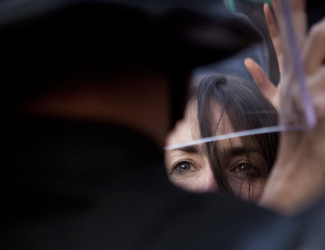
WHRDs are self-identified women and lesbian, bisexual, transgender, queer and intersex (LBTQI) people and others who defend rights and are subject to gender-specific risks and threats due to their human rights work and/or as a direct consequence of their gender identity or sexual orientation.
WHRDs are subject to systematic violence and discrimination due to their identities and unyielding struggles for rights, equality and justice.
The WHRD Program collaborates with international and regional partners as well as the AWID membership to raise awareness about these risks and threats, advocate for feminist and holistic measures of protection and safety, and actively promote a culture of self-care and collective well being in our movements.
WHRDs are exposed to the same types of risks that all other defenders who defend human rights, communities, and the environment face. However, they are also exposed to gender-based violence and gender-specific risks because they challenge existing gender norms within their communities and societies.
We work collaboratively with international and regional networks and our membership
We aim to contribute to a safer world for WHRDs, their families and communities. We believe that action for rights and justice should not put WHRDs at risk; it should be appreciated and celebrated.
Promoting collaboration and coordination among human rights and women’s rights organizations at the international level to strengthen responses concerning safety and wellbeing of WHRDs.
Supporting regional networks of WHRDs and their organizations, such as the Mesoamerican Initiative for WHRDs and the WHRD Middle East and North Africa Coalition, in promoting and strengthening collective action for protection - emphasizing the establishment of solidarity and protection networks, the promotion of self-care, and advocacy and mobilization for the safety of WHRDs;
Increasing the visibility and recognition of WHRDs and their struggles, as well as the risks that they encounter by documenting the attacks that they face, and researching, producing, and disseminating information on their struggles, strategies, and challenges:
Mobilizing urgent responses of international solidarity for WHRDs at risk through our international and regional networks, and our active membership.
Ekaete Judith Umoh es una defensora internacional de los derechos de las personas con discapacidad y experta en desarrollo inclusivo, con un agudo análisis de las cuestiones relativas al género, la discapacidad y el desarrollo inclusivo. Su sueño es aumentar la visibilidad de las mujeres y niñas con discapacidad dentro del movimiento feminista internacional y en todos las iniciativas para el desarrollo en el mundo.
Ekaete disfruta con el activismo y la política, y llegó a convertirse en la primera mujer elegida presidenta de la Asociación Nacional Conjunta de Personas con Discapacidad -JONAPWD(www.jonapwd.org ), en Nigeria, donde lideró a organizaciones por los derechos de las personas con discapacidad en las luchas por convertir en ley el Proyecto de Ley de Prohibición de la Discriminación contra las Personas con Discapacidad en Nigeria, tras más de 17 años de trabajo constante de incidencia. Posteriormente, se incorporó a CBM Global como Directora de País pionera y dirigió su equipo durante unos tres años, contribuyendo a acabar con el círculo de pobreza y discapacidad en Nigeria. Aparte del activismo en defensa de las personas con discapacidad, Ekaete ha trabajado como consultora para varias agencias de desarrollo, proporcionando asistencia técnica sobre la inclusión de la discapacidad en el diseño de programas y proyectos.
Explore these projects put together by AWID teams to promote feminist advocacy and perspectives.

La encuesta está disponible en árabe, español, francés, inglés, portugués y ruso.
Alejandra es una apasionada de los derechos de las mujeres y la justicia de género. Sueña con crear un mundo centrado en el cuidado de las personas y de la naturaleza. Como experta feminista en derechos humanos, ha trabajado en las intersecciones de la justicia de género, climática, social y económica en varias organizaciones internacionales. Sus áreas de experticia incluyen la construcción de conocimiento y de la creación conjunta, la investigación, la facilitación y la incidencia. Tiene un título de maestría de la Universidad de Essex, y es autora y colaboradora de muchas publicaciones, que incluyen el artículo «Enraged: Women and Nature». La campaña Feminist Activism Without Fear se basa en entrevistas e investigaciones realizadas por Alejandra.
Nacida en Argentina, durante las últimas dos décadas ha vivido y trabajado en varios países de Europa y América Latina. Alejandra ama la fotografía, el mar, cocinar con su hija y disfrutar de la comida de todo el mundo. Como madre, su objetivo es cambiar los modelos y patrones establecidos. Alejandra obtiene energía e inspiración de las increíbles mujeres de su vida, que están distribuidas en muchos rincones del mundo.
Hakima Abbas, AWID
"Estamos utilizando las herramientas que tenemos para compartir nuestra resistencia, nuestras estrategias y continuar edificando nuestro poder para actuar y crear nuevos mundos valientes y justos"
L’enquête WITM mondiale est un des piliers essentiels de la troisième édition de notre recherche orientée sur l’action, intitulée Où est l’argent pour l’organisation des mouvements féministes? (abrégé en Où est l’argent ou WITM, pour l’acronyme en anglais). Les résultats de l’enquête seront développés et approfondis à l’occasion de conversations profondes avec des activistes et des financeurs, et les références seront croisées avec d’autres analyses et études existantes sur la situation du financement des mouvements féministes et de l’égalité des genres à travers le monde.
Le rapport complet de la recherche Où est l’argent pour l’organisation des mouvements féministes sera publié en 2026.
 Pour en apprendre davantage sur la manière dont l’AWID met en lumière l’argent utilisé pour et contre les mouvements féministes, consultez notre dossier WITM et nos précédents rapports à ce sujet ici.
Le travail de l’AWID est rendu possible par la générosité d’un large éventail de donateurs, y compris les agences bilatérales et multilatérales, les fondations privées et les fonds pour les femmes.
Tonya Haynes, CAISO
Angelique V. Nixon, CAISO

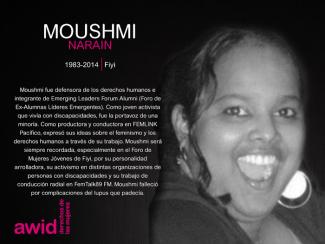
.
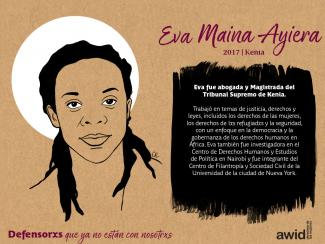
El objetivo fundamental de la encuesta ¿Dónde está el dinero? es arrojar luz sobre la situación financiera de la diversidad de movimientos feministas, por los derechos de las mujeres, la justicia social, las personas LBTQI+ y demás movimientos aliados de todo el mundo y, sobre la base de dicha información, reforzar las razones fundadas para movilizar más y mejores fondos y transferir el poder a los movimientos feministas.
AWID currently has hundreds of prominent, innovative organizations working on issues related to women’s rights and development as members. Criteria for membership are the same as for individuals, although membership fees and membership benefits are different, and are geared to address the needs of our member organizations.