Philippe Leroyer | Flickr (CC BY-NC-ND 2.0)

Women Human Rights Defenders

WHRDs are self-identified women and lesbian, bisexual, transgender, queer and intersex (LBTQI) people and others who defend rights and are subject to gender-specific risks and threats due to their human rights work and/or as a direct consequence of their gender identity or sexual orientation.

WHRDs are subject to systematic violence and discrimination due to their identities and unyielding struggles for rights, equality and justice.

The WHRD Program collaborates with international and regional partners as well as the AWID membership to raise awareness about these risks and threats, advocate for feminist and holistic measures of protection and safety, and actively promote a culture of self-care and collective well being in our movements.


Risks and threats targeting WHRDs  

WHRDs are exposed to the same types of risks that all other defenders who defend human rights, communities, and the environment face. However, they are also exposed to gender-based violence and gender-specific risks because they challenge existing gender norms within their communities and societies.

By defending rights, WHRDs are at risk of:

  • Physical assault and death
  • Intimidation and harassment, including in online spaces
  • Judicial harassment and criminalization
  • Burnout

A collaborative, holistic approach to safety

We work collaboratively with international and regional networks and our membership

  • to raise awareness about human rights abuses and violations against WHRDs and the systemic violence and discrimination they experience
  • to strengthen protection mechanisms and ensure more effective and timely responses to WHRDs at risk

We work to promote a holistic approach to protection which includes:

  • emphasizing the importance of self-care and collective well being, and recognizing that what care and wellbeing mean may differ across cultures
  • documenting the violations targeting WHRDs using a feminist intersectional perspective;
  • promoting the social recognition and celebration of the work and resilience of WHRDs ; and
  • building civic spaces that are conducive to dismantling structural inequalities without restrictions or obstacles

Our Actions

We aim to contribute to a safer world for WHRDs, their families and communities. We believe that action for rights and justice should not put WHRDs at risk; it should be appreciated and celebrated.

  • Promoting collaboration and coordination among human rights and women’s rights organizations at the international level to  strengthen  responses concerning safety and wellbeing of WHRDs.

  • Supporting regional networks of WHRDs and their organizations, such as the Mesoamerican Initiative for WHRDs and the WHRD Middle East and North Africa  Coalition, in promoting and strengthening collective action for protection - emphasizing the establishment of solidarity and protection networks, the promotion of self-care, and advocacy and mobilization for the safety of WHRDs;

  • Increasing the visibility and recognition of  WHRDs and their struggles, as well as the risks that they encounter by documenting the attacks that they face, and researching, producing, and disseminating information on their struggles, strategies, and challenges:

  • Mobilizing urgent responses of international solidarity for WHRDs at risk through our international and regional networks, and our active membership.

Related Content

На каких языках проводится опрос?

На данный момент опрос в KOBO доступен на арабском, английском, французском, португальском, русском и испанском языках. В начале опроса у вас будет возможность выбрать нужный вам язык.

8. Finalize and format

Your comprehensive research product is now all organized and edited. You now want to ensure your findings are visually accessible and appealing to facilitate the dissemination.

In this section

Package your long report for public dissemination

Consider developing smaller products along with your long report.

As mentioned in the “Synthesize your research findings,” AWID often pulls smaller products from the lengthy research report. This allows for wider and easier distribution specialized for key audiences.

Always keep your targeted population in mind: who will read your report?

Examples of smaller products distilled from a larger report:

  • Infographics
  • Online gallery
  • An animation presenting your arguments

1. Think as your audience thinks

People are bombarded with information constantly. Your product will have to be visually compelling to maintain the interest of your audience. Again, having an idea of what you hope to accomplish and who you hope to reach, will allow the designer to create targeted products.

A lengthy written PDF report may seem the only way to present your research, but it could appear overwhelming to most people – especially online.

If you want to share your product with an online community, think about creating memes and infographics to use on social media, blogs and web platforms.

When deciding whether to create smaller products, consider dividing your results into several smaller products that you could share with targeted populations or at different times of the year to reactivate the interest on your product.

2. Work with a professional designer

If you have limited time and a little bit of budget, we recommend hiring a design firm.

It can be tempting for economic reasons to use in-house staff to package your report. However, a professional graphic designer can make a huge difference on how your final product looks and thus on how much impact it will have!

The designer (in-house or hired) must be able to:

  • Show you samples of their previous work that is similar to what you seek.

  • Provide you clear advice on how to present your research based on the content you provide and the audience you are targeting.

  • Suggest additional or different pieces to package your product.

What the designer will need from you:

  • A general idea on what you would like the lengthy report to highlight through visuals and graphics (what are the most important pieces of information, the key findings, for example) and some ideas on the types of smaller products you want to create (brochure, an infographic, a series of viral memes, for example). If possible, show the designer examples of similar documents developed by other organizations.
  • Your budget and time frame.
  • Your organization’s visual guidelines if you have any (logo, official colours, fonts, etc...).
  • A few photos copyright free or access to your photo bank if you have one.
  • Key visuals that need to be included – graphs, tables and other visual graphics drawn from your research.

The designer is a graphic expert. S/he is not necessarily familiar with women’s issues and does not know the results of your research, especially if you hire an external firm.

Communicate what elements of this report is important to you and who is your target. The designer will propose a way to highlight these elements and make the whole piece appealing to your users.

3. Make sure it's consistent

While creating a set of smaller information products, do not forget to link them all together:

  • A shorter version of the report that focuses only on your final results and recommendations should present a link to the final, full report
  • A visually compelling infographic that sends a message on the state of funding for your particular research can link to your website and the related section of the full report. It should be associated with a call to share on social media.
  • A short animation video that uses the data, findings and recommendations from your report should link back to your organization website and social media
  • A series of viral memes that can be distributed online should link back to your report, infographic, shorter report, etc.

It is also important to keep the research staff involved, so they can ensure any offshoot products stay true to the actual findings of the research.

Back to top


Control the quality of the translations

After the design and packaging of the final research report is complete, if any of the wording of content was changed, be sure to re-send to translators.

If you create smaller products, once designed and packaged, you will also need to get the copy translated for those pieces. The translations should be clear enough so the designer can apply to the design, even if she/he does not speak the language.

Once translated, make sure to have your design proofread by a native speaker before sharing it!

Back to top


Previous step

7. Synthesize your research findings

Next step

9. Advocate and tell the world


Estimated time:

• 2-3 months

People needed:

• 1 or more research person(s)
• 1 or more editor
• Design staff or hiring design firm
• Translator(s), if necessary

Resources needed:

• List of online spaces for dissemination


Previous step

7. Synthesize your research findings

Next step

9. Advocate and tell the world


Ready to Go? Worksheet

Download the toolkit in PDF

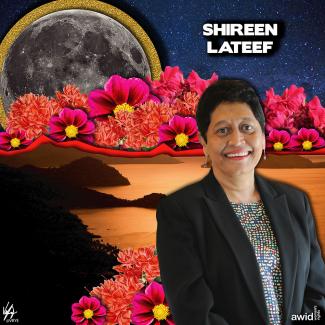
Shireen Lateef

Shireen was an inspiration to many feminists in Fiji and a powerful ally to the women’s movement. She advocated tirelessly for gender equality locally and regionally.

She began her career as a junior gender specialist at the Asian Development Bank and brought about drastic changes to the institution’s gender policies.

Her research, “Rule by the Danda: Domestic violence amongst Indo Fijians” was one of the earliest pieces of research on domestic violence, marriage and women in Fiji. This seminal work has been a catalyst for feminist work in this area.

Shireen’s legacy lives on as many remember her influence, commitment and support to the women’s movement in Fiji and the Pacific.


Shireen Lateef, Fiji

Snippet FEA Union Otras Photo 5 (FR)

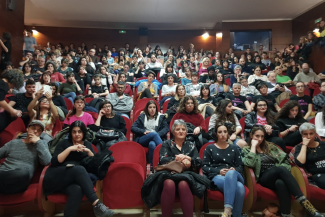
Photo de personnes assises sur des chaises rouges dans une salle de conférence
Body

14th AWID international Forum is cancelled (forum page)

Le Forum international de l’AWID est annulé

Étant donnée la situation mondiale, notre Conseil d’administration a pris la décision difficile d’annuler le Forum, qui devait avoir lieu en 2021 à Taipei. 

Lire le communiqué

Devo fazer alguma preparação para responder ao inquérito?

Tendo em conta que o inquérito WITM foca-se nas realidades do financiamento de organizações feministas, a maioria das perguntas aborda o tópico do financiamento do seu grupo entre 2021-2023. Será preciso ter essas informações facilmente acessíveis para preencher o inquérito (por exemplo, os seus orçamentos anuais e as principais fontes de financiamento).

Nuestra visión: La justicia económica en un mundo feminista

En nuestra lucha por la justicia de género, económica, social y ambiental, en la paz, lxs feministas sabemos que no existe una sola receta para el éxito sino una gama de posibilidades que pueden y hacen que sucedan los cambios.


El menú de opciones es tan diverso como lo son nuestros movimientos y las comunidades en las que vivimos y luchamos.

Antes de atrevernos a presentar algunas de las formas en que lxs feministas nos imaginamos un mundo diferente, aquí están los principios que sostienen nuestras propuestas:

1. Desarrollo autodeterminado desde lo local hasta lo global

Creemos que no existe un modelo único aplicable a todxs y que todxs tienen derecho a reivindicar la construcción de ese otro mundo posible, como lo expresa el lema del Fondo Mundial..

Esto incluye el derecho a participar en la gobernabilidad democrática y de influir sobre el propio futuro, en el ámbito político, social y cultural.

La autodeterminación económica permite que los pueblos controlen sus recursos naturales y los utilicen de manera colectiva o para los fines que ellos mismos decidan. Además, la autonomía económica de las mujeres es fundamental para mitigar la naturaleza a menudo cíclica de la pobreza y la falta de educación, seguridad y protección.

2. Los derechos, la igualdad sustantiva y la justicia ocupan un lugar central en la economía

El principio de la igualdad sustantiva o de facto forma parte de la Convención sobre la Eliminación de Todas las Formas de Discriminación contra las Mujeres (CEDAW) y de otros instrumentos internacionales de derechos humanos. Es fundamental para el desarrollo y para lograr una economía justa ya que afirma que todos los seres humanos nacen libres e iguales.

La no discriminación forma parte intrínsecamente del principio de igualdad que garantiza que a nadie se le nieguen sus derechos por factores como la raza, el género, el idioma, la religión, la orientación sexual, la identidad de género, las opiniones políticas o de otra clase, el origen nacional o social, la propiedad o el nacimiento.

La dignidad intrínseca de todas las personas sin distinción alguna debe ser afirmada y respetada. Si bien los Estados tienen la responsabilidad de garantizar el uso de los máximos recursos de que disponen para la realización de los derechos humanos, la reivindicación de los derechos y la dignidad configura sobre todo un espacio clave para las luchas de la sociedad civil y la movilización popular.

3. Distribución justa para todxs, sin monopolización (el principio de la anticodicia)

Este principio, que se ejerce mediante esfuerzos organizados para transformar instituciones injustas, guía la recuperación del equilibrio entre «participación» (entrada) y «distribución» (salida) cuando se ha violado cualquiera de esos dos principios.

Implica ponerle un límite a toda acumulación monopólica de capital y otros abusos de la propiedad. Este concepto se apoya en un modelo económico que gira en torno a la ecuanimidad y la justicia.

4. La solidaridad entre feministas y entre movimientos es fundamental

Para que se produzcan cambios, necesitamos redes feministas fuertes y diversas. Necesitamos movimientos que construyan solidaridad desde lo personal hacia lo político, desde lo local a lo global, y viceversa.

La construcción de poder colectivo a través de los movimientos sociales ayuda a convertir la lucha por los derechos humanos, la igualdad y la justicia en una fuerza política para el cambio que no puede ser ignorada.

 «Únicamente los movimientos pueden crear cambios sostenidos a niveles que las políticas y las leyes solas no pueden alcanzar»


Para leer más sobre este tema, consulta Batliwala, S: 2012 «Cambiando el mundo: Conceptos y prácticas de los movimientos de mujeres», 2da edición. AWID.


Ver también

Las 5 grandes amenazas

¿Cómo se originó este proyecto?
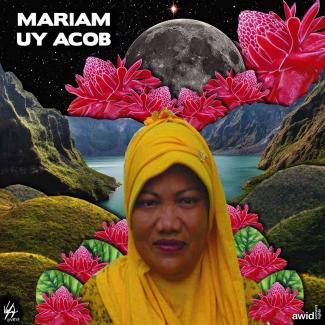
Mariam Uy Acob

Mariam era asistente jurídica en la Alianza Kawagib Moro por los Derechos Humanos.

Fue una acérrima crítica de la militarización de las comunidades moro, y denunció sistemáticamente los bombardeos aéreos y la concentración de campamentos militares. Tuvo que buscar refugio luego de exponer y denunciar las injusticias cometidas contra las comunidades musulmanas en Filipinas.

Se cree que fue asesinada por agentes militares sospechosos debido a su trabajo como defensora de derechos humanos. Los atacantes que mataron a Mariam la esperaron, se pusieron a la par del vehículo en el que se desplazaba y le dispararon siete veces.


Mariam Uy Acob, Philippines

Snippet FEA Principles of work Transparency (EN)

A pink umbrella

TRANSPARENCY

Contributors of toolkit (WITM landing page)

We would like to thank the contributors and advisors of this toolkit:

  • Angelika Arutyunova
  • Cindy Clark
  • Kamardip Singh
  • Martin Redfern
  • Pei Yao Chen
  • Srilatha Batliwala
  • Veronica Vidal

    Download the Toolkit in PDF

هل مشاركتي سريّة؟

أكيد. سيتم محي اجوبتك بعد عملية معالجة المعطيات وتحليلها وسيتم استعمالها لأهداف بحثية فقط. لن تتم أبداً مشاركة المعطيات خارج AWID وسيتم معالجتها فقط عن طريق طاقم AWID والمستشارات/ين اللواتي/ اللذين يعملن/وا في مشروع "أين المال" معنا. خصوصيتكم/ن وسرّيتكم/ن هي في أعلى سلم أولوياتنا. سياسة الخصوصية متواجدة هنا.

Contester le modèle de croissance économique

Le contexte

Contestant la prémisse que l'économie d'un pays doit toujours «grandir ou mourir», les propositions de décroissance démystifient le rôle central d’une croissance mesurée par l'augmentation du produit intérieur brut (PIB).

Définition

Le modèle de la décroissance propose une transition vers des niveaux de production et de consommation plus faibles et durables. En substance, il s’agit de restreindre l’espace économique pour laisser plus de latitude à la coopération humaine et aux écosystèmes.

La proposition prévoit ce qui suit :

  • Réduire la production superflue, consommatrice de grandes quantités de ressources et d'énergie, qui génère des émissions destructrices, en particulier dans les pays du Nord (par exemple l’industrie automobile et l’industrie militaire).
  • Réorienter les investissements vers le secteur des services de soins, des infrastructures sociales et de la restauration de l'environnement.

Perspective féministe

Les perspectives féministes sur la théorie et la pratique de la décroissance soutiennent qu'il est également nécessaire de redéfinir et de reconnaître la valeur du travail rémunéré et non rémunéré, sur le marché comme dans le secteur des soins aux personnes. Ceci contribuerait à surmonter les stéréotypes de genre traditionnels, les écarts de salaires en vigueur et les inégalités de revenus qui dévalorisent le travail réalisé dans le domaine des soins.


Pour en savoir plus sur cette proposition :

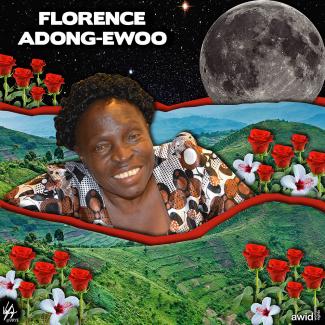
Florence Adong-Ewoo

Florence était une militante des droits des personnes handicapées qui travaillait avec plusieurs organisations de femmes handicapées en Ouganda.

Elle a également occupé le poste de présidente de l’Association des femmes handicapées du district de Lira, ainsi que du caucus des conseillères du district de Lira. Formée en tant que conseillère pour personnes handicapées et parents d'enfants handicapés, elle a soutenu de nombreux projets appelant à une plus grande représentation des personnes handicapées.

Elle est morte dans un accident de moto.


Florence Adong-Ewoo, Uganda

Snippet FEA Get Involved Story 4 (ES)

¡INVOLÚCRATE!

Sigue a Unión Red Solidaria en Facebook y Twitter

Apoya el trabajo de Solidarity Network Union donando aquí

Sigue a OTRAS en Twitter, Instagram y Facebook

Apoya el trabajo de OTRAS donando aquí