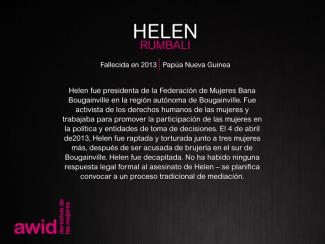
Helen Rumbali
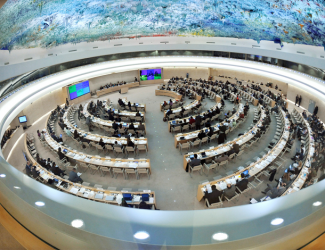
The Human Rights Council (HRC) is the key intergovernmental body within the United Nations system responsible for the promotion and protection of all human rights around the globe. It holds three regular sessions a year: in March, June and September. The Office of the UN High Commissioner for Human Rights (OHCHR) is the secretariat for the HRC.
Debating and passing resolutions on global human rights issues and human rights situations in particular countries
Examining complaints from victims of human rights violations or activist organizations on behalf of victims of human rights violations
Appointing independent experts (known as “Special Procedures”) to review human rights violations in specific countries and examine and further global human rights issues
Engaging in discussions with experts and governments on human rights issues
Assessing the human rights records of all UN Member States every four and a half years through the Universal Periodic Review
AWID works with feminist, progressive and human rights partners to share key knowledge, convene civil society dialogues and events, and influence negotiations and outcomes of the session.
Нет, не является. Он основан на 20-летней истории AWID по мобилизации более объемного и качественного финансирования для социальных изменений под руководством феминисток(-ов) и является третьим этапом исследования «Где деньги для феминистских организаций?». Наша цель – проводить опрос «Где деньги?» каждые 3 года.
Interviews produce in-depth information that you cannot easily obtain from surveys. While surveys focuses mainly on quantifiable data and closed questions, interviews allow for expert opinions from activists and donors, and open-ended questions which can provide context to survey data results.
In this section
- General tips
1. Before conducting your interviews
2. During the interviews- Specialized interviews
1. Donor interviews
2. Women’s rights organizations and activists interviews- Preliminary findings
Send the interviewees a concept note with your objectives for the interview and for your overall research, as well as a list of questions.
This allows them to prepare answers for more complicated questions and look up information that they may not have immediately on hand.
Do not base your questions on assumptions about your interviewees’ knowledge.
Instead, first clarify what they know – this will reveal information as well.
- DON’T: “Given the current funding trends in Switzerland, do you know of any opportunities for collaboration? This question assumes that the interviewee knows current funding trends and that their understanding of funding trends matches yours.
- DO: First ask “What is your understanding of current funding trends in Switzerland?”, followed by “Do you know of any opportunities for collaboration?” This will reveal what their understanding is, giving you even more information than the first question.
Interviews with donors will allow you to build deeper relationships with them, which will be useful when you conduct post-research advocacy. They will also provide you with deeper insight into funders’ decision-making processes.
Suggested topics of focus for donor interviews:
Interviews with women’s rights organizations and activists will provide you with insight into their on-the-ground realities. Again, these interviews will allow you to build deeper relationships that can be incorporated into your advocacy, particularly to encourage collaboration between donors and activists.
Suggested topics of focus for women’s rights organizations and activist interviews:
Through the course of your WITM research, we recommend analyzing your preliminary findings. Presenting your preliminary findings opens up opportunities to conduct more interviews and get feedback on your research process and initial results. This feedback can be incorporated into your final research.
AWID conducts “WITM convenings” to share preliminary results of survey data and interviews. These gatherings allow participants (activists, women’s rights organizations, and donors) to debate and discuss the results, clarifying the context, creating more ownership amongst members of the movement, and providing more input for final research.
For example, the Resource Mobilization Hub for Indigenous Women’s Rights at the World Summit on Indigenous Philanthropy was used as a space to debut preliminary results.
4. Collect and analyze your data

• 1.5 - 3 months
• 1 or more research person(s)
• List of donors and women’s rights organizations and activists to interview
• Prepared interview questions
• Concept Note (You can use the research framing you created in the “Frame your research” section)
• AWID Sample Interview Questions: Donors
• AWID Sample Interview Questions: Activists & Women’s Rights Organizations
4. Collect and analyze your data
Feminist Realities are embedded in the multiple ways that show us that there is a different way of living, thinking and doing - from the daily expressions of how we live and relate to each other, to alternative systems of governance and justice. Feminist Realities resist dominant power systems such as patriarchy, capitalism, and white supremacy.
These are powerful propositions that orient us toward a vision of what is possible, and show how feminist organizing is blazing a path toward justice in movements and communities around the world.
Download your full Magazine (PDF)
Claro que sim! Encorajamo-lo a compartilhar a ligação do nosso inquérito com as suas redes. Quanto mais perspetivas diversas recolhermos, melhor será a nossa compreensão do cenário financeiro para a organização feminista.
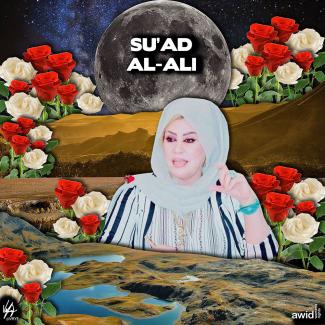
Su’ad fue una firme defensora de los derechos de las mujeres y lxs niñxs y estuvo al frente de Al-Weed Al-Alaiami, una organización de derechos humanos iraquí.
Participó en las manifestaciones que tuvieron lugar en julio de 2018 en Basra y en varias otras ciudades iraquíes, en protesta contra el desempleo y en demanda de trabajo y servicios públicos adecuados para la ciudadanía, y exigiendo también la eliminación de la corrupción generalizada.
Su’ad fue asesinada el 25 de septiembre de 2018, en el barrio de Al-Abbasiyah, en el centro de Basra. En un video del hecho, se veía a una persona que se le acercaba mientras ella se subía a su automóvil, le disparaba un tiro en la parte posterior de la cabeza y apuntaba el siguiente disparo a Hussain Hassan, su chofer, quien resultó herido en un hombro. Al-Ali tenía 46 años y era madre de cuatro hijxs.
AWID agradece enormemente a todxs ustedes que han compartido con nosotrxs estos últimos cuatro días de aprendizaje, celebraciones, ideaciones, sueños y la construcción conjunta de nuestros futuros feministas en el Foro AWID 2016.
Nos sentimos muy inspiradxs, maravilladxs y llenxs de energía con todo el trabajo colectivo que hemos hecho para crear nuestros diversos futuros feministas.
Solo un año después de su fundación, las integrantes de Nadia Echazú comenzaron a trabajar en la alta costura y organizaron un desfile de moda en el histórico Hotel Bauen.
Mostraron cinco modelos y algunas trabajadoras de la cooperativa textil desfilaron con sus propios diseños.
Esto fue revolucionario no sólo porque estaban diseñando alternativas a la moda convencional, sino también porque estaban creando ropa accesible e inclusiva para cuerpos trans y travesti.
¡No hay economías feministas sin ropa que nos haga sentir increíbles y cómodxs!
Tengo la convicción de que las mujeres empoderadas dotan de empoderamiento a otras mujeres, y es por ello que la he pasado tan bien como afiliada de AWID. Todo lo que sé y lo que entiendo de feminismo e interseccionalidad se ha ampliado gracias a los contactos que tuve como parte del Equipo de la Calle de la Comunidad AWID. Espero que más mujeres se sumen y compartan temas e ideas que ayuden a otras mujeres.- Loyiso Lindani, Sudáfrica.
"Después
Después del amor la primera vez,
nuestros cuerpos y mentes desnudas:
un salón de espejos.
Totalmente desarmadxs, íntegramente frágiles,
nos echamos en los brazos del otrx,
respiramos con cuidado,
por miedo de romper
estas figuras de cristal". - Fahmida Riaz
Su trabajo se enfrentó a duras críticas de los frentes conservadores, que la acusaron de utilizar expresiones eróticas y "pornográficas" en su lenguaje poético.
Eventualmente, Fahmida fue incluida en una lista negra y acusada de sedición en virtud del artículo 124A del Código Penal de Pakistán, durante la dictadura de Zia Ul Haq. Fahmida fue obligada a exiliarse en 1981 y pasó casi siete años en la India antes de regresar a Pakistán.
En el prefacio de "Badan Dareeda" ("El Cuerpo Desgarrado"), una colección de poesía publicada en 1974, escribió:
La brillantez de Fahmida fue la de desafiar cualquier lógica singular o categoría de género, nación, religión o cultura. Ella se negó a ser colocada en el rol de la "mujer poeta", rompió con las definiciones tradicionales de la poesía y los conceptos y temas femeninos (que van desde la conciencia política, el cuerpo, la cultura, el deseo, la religión, al hogar) y derribó las inhibiciones impuestas a su género.
"Tienes que entender que la cultura no puede tener esencia. Las culturas se mueven, fluyen unas en otras, formando nuevas culturas. La cultura nace de esa manera. No hay choque de culturas".
Fahmida es autora de más de 15 libros de poesía y ficción, incluido su poema "Taaziyati Qaraardaaden" ("Resoluciones de condolencia" - en inglés), que podría servir como un tributo apropiado a su vida y legado, y una colección de poemas (Apna Jurm To Saabit He "Mi crimen está probado") publicado en 1988, durante su tiempo en exilio.
Fahmida Riaz nació en Meerut (India) el 28 de julio de 1946 y falleció el 21 de noviembre de 2018 en Lahore (Pakistán).
Aujourd'hui, de nombreux systèmes de savoirs communautaires sont en danger.
Les changements qui surviennent à une vitesse effrénée sur le plan économique, politique et culturel détruisent les environnements, les pratiques et les moyens de subsistance. Diverses formes de connaissances sombrent dans l’oubli, sont marchandées et colonisées dans le cadre de la mondialisation massive, de la promesse de gains à court terme, ou encore contre des solutions de fortune.
Le Buen Vivir (le bien-vivre), un concept adapté à partir des connaissances des peuples autochtones andins, est décrit comme la réalisation collective d'une vie d'accomplissement fondée sur des relations harmonieuses et équilibrées entre les êtres humains et tous les êtres vivants, dans la réciprocité et la complémentarité. Cela implique de reconnaître que les êtres humains sont une partie intégrante de la nature, que nous dépendons de la nature et que nous sommes interdépendant-e-s entre nous.
La vision inhérente à la notion de Buen Vivir intègre la production et la reproduction comme processus indissociables de l'économie, de la production de richesse et des conditions de vie.
D’une perspective féministe, le Buen Vivir valorise les relations et les ressources mobilisées dans les cycles de production et de reproduction, favorisant l’équilibre (non seulement celui des marchés) afin de garantir la continuité et les changements, tant qu'ils sont compatibles avec la justice économique et la pérennité de la vie.
Certaines conceptions binaires liées au genre et à la complémentarité entre les hommes et les femmes ont été critiquées par les féministes puisqu’elles laissent peu de place à une discussion plus approfondie sur le patriarcat hétérocentrique et les relations de genre ‘non conformes’.
Cela dit, l'une des principales contributions de l’application du principe Buen Vivir aux cadres politiques, économiques et sociaux, consiste à ce que l'égalité ne représente plus le paradigme des droits individuels, ayant plutôt pour objet la transformation de l’ensemble de la société.

La lutte pour un monde rempli de lieux de travail exempts de toute forme de discrimination, de stigmatisation et d'exclusion est une lutte noble. Un monde où le travail sexuel est décriminalisé et reconnu comme travail en fait partie intégrante.
Un monde où tous·tes les travailleur·euses ont des conditions de travail sûres, des salaires décents et peuvent jouir des mêmes droits tels que l'accès à la santé, le droit à la retraite, aux congés maladie, aux vacances, à la sécurité de l'emploi et plus encore, quels que soient leur genre, leur race, leur origine ethnique, leur âge ou leurs capacités. Les droits du travail sont des questions féministes, et les syndicats féministes jouent un rôle clé dans la promotion des droits juridiques, du travail et économiques de tous·tes les travailleur·euses, en particulier les travailleur·euses migrant·e·s, les travailleur·euses domestiques, les travailleur·euses informel·les et les travailleur·euses du sexe. Ce sont ces personnes qui ont récemment été touchées de manière disproportionnée par la pandémie, sa crise des soins, les confinements, les couvre-feux ainsi que la surveillance et la répression policière accrue. Nous vous présentons ici les histoires de militantes féministes et syndicalistes qui se battent pour de meilleures conditions de travail et un monde meilleur pour tous·tes.
"We believe that this is the time for us to continue to organize from a place of solidarity, hope and radical imaginations."
- Beijing+30 & CSW: Feminist meaning-making at a time of polycrisis