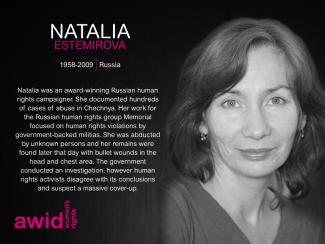
Natalia Estemirova
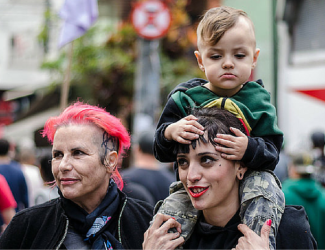
Over the past few years, a troubling new trend at the international human rights level is being observed, where discourses on ‘protecting the family’ are being employed to defend violations committed against family members, to bolster and justify impunity, and to restrict equal rights within and to family life.
The campaign to "Protect the Family" is driven by ultra-conservative efforts to impose "traditional" and patriarchal interpretations of the family, and to move rights out of the hands of family members and into the institution of ‘the family’.
Since 2014, a group of states have been operating as a bloc in human rights spaces under the name “Group of Friends of the Family”, and resolutions on “Protection of the Family” have been successfully passed every year since 2014.
This agenda has spread beyond the Human Rights Council. We have seen regressive language on “the family” being introduced at the Commission on the Status of Women, and attempts made to introduce it in negotiations on the Sustainable Development Goals.
AWID works with partners and allies to jointly resist “Protection of the Family” and other regressive agendas, and to uphold the universality of human rights.
In response to the increased influence of regressive actors in human rights spaces, AWID joined allies to form the Observatory on the Universality of Rights (OURs). OURs is a collaborative project that monitors, analyzes, and shares information on anti-rights initiatives like “Protection of the Family”.
Rights at Risk, the first OURs report, charts a map of the actors making up the global anti-rights lobby, identifies their key discourses and strategies, and the effect they are having on our human rights.
The report outlines “Protection of the Family” as an agenda that has fostered collaboration across a broad range of regressive actors at the UN. It describes it as: “a strategic framework that houses “multiple patriarchal and anti-rights positions, where the framework, in turn, aims to justify and institutionalize these positions.”
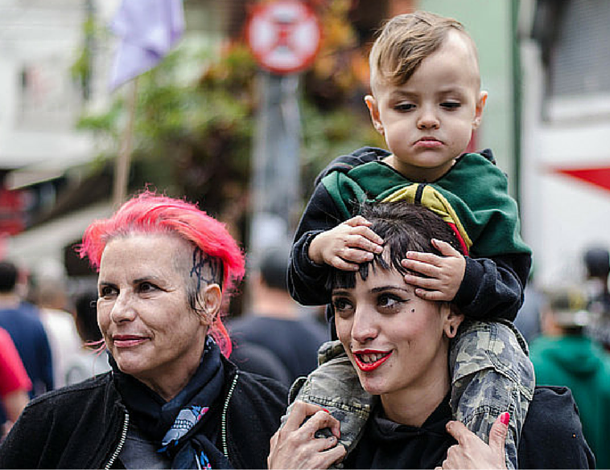
AWID began in 1982 and has grown and transformed since then into a truly global organization.
Read From WID to GAD to Women's Rights: The First 20 Years of AWID
Yes, the survey can be accessed using a smartphone.
Trabajamos para fortalecer las voces y el impacto de lxs activistas, organizaciones y movimientos por los derechos de las mujeres.
Las áreas prioritarias de AWID se relacionan con temas estrechamente vinculados con tendencias globales dominantes. Estos temas reflejan los crecientes desafíos que afectan negativamente a los derechos de las mujeres en todo el mundo.
Sí, invitamos a compartir más impresiones acerca de alguna cuestión que sea de importancia para ti respondiendo a las preguntas abiertas al término de la encuesta.
What if we perceived land and Nature not as private property to exploit, but as a whole to live in, learn from, and harmoniously coexist with? What if we repaired our relationships with the land and embraced more sustainable alternatives that nurture both the planet and its communities?
Nous Sommes la Solution (We Are the Solution, NSS) is one of many women-led movements striving to do this. This is their story.

An online community for and by young feminists working on women’s human rights, gender equality and social justice around the world.
The platform is the go-to place for information and resources on safeguarding the universality of rights in international and regional human rights spaces.
Provides funding for young feminist-led initiatives. It aims to strengthen the capacity of young feminist organizations to leverage resources for their work and to increase donors’ and allies’ commitments to resourcing young feminist activism.
A go-to site to learn about the urgent responses undertaken to protect women human rights defenders and to find tools and resources to support the work and wellness of WHRDs.
A regional initiative created to prevent, respond, document and make public all cases of violence against women human rights defenders in the Mesoamerican region.
The WHRD IC is a resource and advocacy network for the protection and support of women human rights defenders worldwide.
A Coalition of feminist, women´s rights, women´s development, grassroots and social justice organisations working to challenge and reframe teh global development agenda.
The role of the Women’s Major Group is to assure effective public participation of women’s non-governmental groups in the UN policy processes on Sustainable Development, Post2015 and Environmental matters.
An alliance of women’s organizations and networks to advocate for the advancement of gender equality, women’s empowerment and human rights in the Financing for Development (FfD) related UN processes.
Tous nos rapports annuels sont accessibles sur notre site web.
Les données seront traitées à des fins statistiques, pour mettre en lumière l’état du financement de l’organisation des mouvements féministes dans le monde entier, et ne seront présentées que sous forme agrégée. L’AWID ne publiera pas d’informations relatives à une organisation donnée ni ne divulguera d’informations qui permettraient d’identifier une organisation par le biais de son emplacement ou de caractéristiques qui lui sont propres, sans son accord explicite.

English article created from Spanish site
We invite you to explore the Priority Areas and Stay Informed sections of our website, or use the search function to find information about the specific topics you are researching.
We particularly recommend that you explore our toolkit “Where is the Money for Women’s Rights” (WITM Toolkit). This is a Do-it-Yourself Research methodology to support individuals and organizations who want to conduct their own research on funding trends for a particular region, issue or population by adapting AWID’s research methodology.