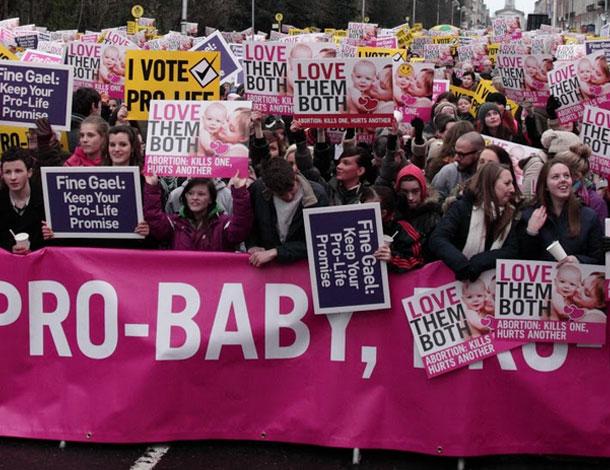
Over the past few years, a troubling new trend at the international human rights level is being observed, where discourses on ‘protecting the family’ are being employed to defend violations committed against family members, to bolster and justify impunity, and to restrict equal rights within and to family life.
The campaign to "Protect the Family" is driven by ultra-conservative efforts to impose "traditional" and patriarchal interpretations of the family, and to move rights out of the hands of family members and into the institution of ‘the family’.
“Protection of the Family” efforts stem from:
rising traditionalism,
rising cultural, social and religious conservatism and
sentiment hostile to women’s human rights, sexual rights, child rights and the rights of persons with non-normative gender identities and sexual orientations.
Since 2014, a group of states have been operating as a bloc in human rights spaces under the name “Group of Friends of the Family”, and resolutions on “Protection of the Family” have been successfully passed every year since 2014.
This agenda has spread beyond the Human Rights Council. We have seen regressive language on “the family” being introduced at the Commission on the Status of Women, and attempts made to introduce it in negotiations on the Sustainable Development Goals.
Our Approach
AWID works with partners and allies to jointly resist “Protection of the Family” and other regressive agendas, and to uphold the universality of human rights.
In response to the increased influence of regressive actors in human rights spaces, AWID joined allies to form the Observatory on the Universality of Rights (OURs). OURs is a collaborative project that monitors, analyzes, and shares information on anti-rights initiatives like “Protection of the Family”.
Rights at Risk, the first OURs report, charts a map of the actors making up the global anti-rights lobby, identifies their key discourses and strategies, and the effect they are having on our human rights.
The report outlines “Protection of the Family” as an agenda that has fostered collaboration across a broad range of regressive actors at the UN. It describes it as: “a strategic framework that houses “multiple patriarchal and anti-rights positions, where the framework, in turn, aims to justify and institutionalize these positions.”
En este reporte presentamos aspectos destacados de cómo AWID contribuyó a la cocreación y la resistencia feminista: rescate feminista, contrarrestar a lxs anti-derechos, financiamiento, conversaciones entre movimientos y la revista de las Realidades Feministas
Laura était une activiste et une avocate de premier plan qui a mené une campagne courageuse en faveur de la dépénalisation du travail du sexe en Irlande.
On se souvient d'elle comme « une combattante de la liberté pour les travailleurs et les travailleuses du sexe, une féministe, une mère pour certainEs et une amie nécessaire pour beaucoup ».
Laura militait pour que les personnes de l'industrie du sexe soient reconnu-e-s comme des travailleurs et travailleuses sujets de droits. Elle a activement milité en faveur de la dépénalisation, notamment en engageant une procédure judiciaire devant la haute cour de Belfast qui concernent des dispositions criminalisant l’achat de services sexuels. Laura a déclaré que son intention était de porter l'affaire devant la Cour européenne des droits de l'homme.
Quelle est l’origine de ce projet?
Nous croyons que l'économie, le marché, le système financier et les prémisses sur lesquelles ils reposent sont des domaines critiques pour la lutte féministe.
Ainsi, notre vision pour une économie juste dépasse la promotion des droits et de l'autonomisation des femmes sur le marché. Elle propose d'évaluer le rôle des oppressions liées au genre lors de l'élaboration de mesures économiques, afin de les modifier pour favoriser l'égalité de genre et la justice économique.
Processus
Nous ne partons pas de zéro et nous ne sommes pas seules à tenter de mettre en avant des propositions féministes pour une économie juste. Beaucoup des propositions formulées dans ce document existaient déjà en théorie et aussi dans la pratique, au sein de diverses communautés qui défient et résistent face aux systèmes économiques fondés sur la croissance et le marché.
Il est également très important de noter qu'il y a une prise de conscience croissante du fait que les micros solutions n’apportent pas toujours de réponses aux problèmes macros, même si elles représentent des espaces importants pour la construction de la résistance et des mouvements. Certaines alternatives spécifiques peuvent ne pas être en mesure de remédier aux injustices du système capitaliste actuel à l'échelle mondiale.
Objectifs
Cela dit, les alternatives féministes pour une économie juste sont essentielles pour ouvrir des brèches dans le système et pouvoir en tirer des leçons, en faveur d’un changement systémique transformateur. Nous n’avons pas la prétention de proposer un compte-rendu complet et exhaustif sur la manière de créer un modèle économique qui soit juste d’un point de vue féministe, ou même des modèles.
À partir d’un dialogue inter-mouvements avec des syndicats, des mouvements ruraux et paysans et des mouvements environnementaux, nous pouvons néanmoins formuler une série de propositions pour cheminer vers cette vision.
Que voulons-nous changer?
Le modèle néolibéral qui domine l'économie mondiale a démontré à maintes reprises son incapacité à traiter les causes profondes de la pauvreté, des inégalités et de l'exclusion. En réalité, le néolibéralisme a même contribué à provoquer et à exacerber ces injustices.
Caractérisées par la mondialisation, la libéralisation, la privatisation, la financiarisation et l'aide conditionnelle, les politiques générales de développement de ces trois dernières décennies ont fait des ravages dans la vie et les moyens de subsistance de tous et toutes. Ces politiques ont également contribué sans faillir à creuser le fossé des inégalités, aux injustices de genre et à une destruction de l'environnement que le monde ne peut plus se permettre de supporter.
Il y a encore des personnes qui affirment qu’en donnant carte blanche aux sociétés et aux entreprises pour favoriser la croissance économique, le vent finira par atteindre les voiles de tous les navires.
Cependant, la notion du développement dominante au cours des dernières décennies, qui repose en grande partie sur le principe d’une croissance économique illimitée, traverse actuellement une crise idéologique.
Le mythe de la croissance économique en tant que panacée capable de résoudre tous nos problèmes prend l’eau.
Os movimentos feministas, de direitos das mulheres, de justiça de género, de LBTQI+ e de aliados em todo do mundo encontram-se num momento crítico, e enfrentam uma forte retaliação contra direitos e liberdades conquistados anteriormente. Os últimos anos trouxeram o crescimento rápido do autoritarismo, a violenta repressão da sociedade civil e a criminalização dos defensores dos direitos humanos das mulheres e de pessoas de género diverso, o aumento da guerra e do conflito em várias partes do nosso mundo, a perpetuação contínua de injustiças económicas e crises de saúde, da ecologia e do clima interligadas.
Ritu is a feminist technologist who brings her experience in the non-profit sector, driven by a passion for utilizing innovative approaches to finding feminist technological solutions. Holding a Master's in Technology in Computer Applications from the Indian Institute of Technology, her role at AWID encompasses a diverse range of responsibilities. From overseeing digital security and server management to database administration, capacity building, technology evaluation, software implementation and cloud solutions, Ritu ensures that AWID's IT infrastructure is resilient and effective. Prior to joining AWID, she played a pivotal role in advancing technological initiatives in the Health Promotion and Environment sectors, fueled by her dedication to leveraging technology for social good.
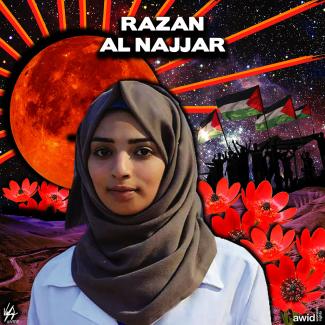
Razan was a 21-year-old volunteer medic in Palestine.
She was shot as she ran toward a fortified border fence, in an effort to reach a casualty in the east of the south Gaza city of Khan Younis.
In her very last Facebook post, Razan said: “I am returning and not retreating,” adding: “Hit me with your bullets. I am not afraid.”
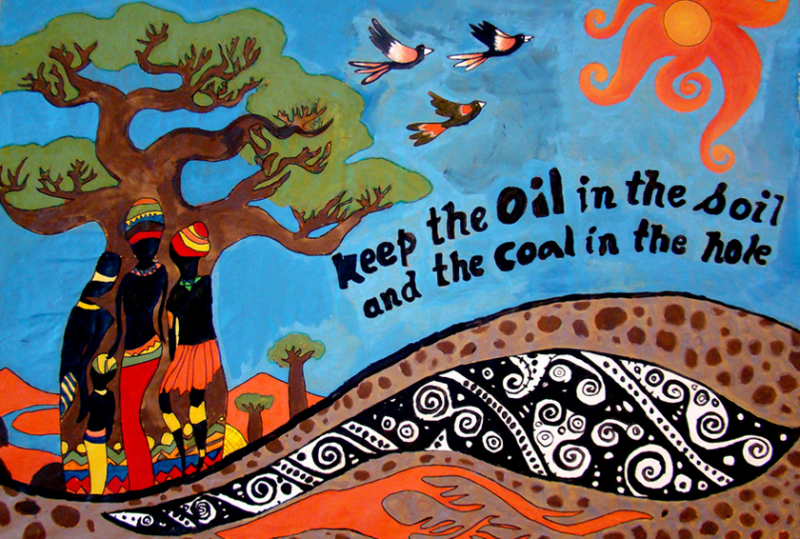
Reclaiming the Commons
Definition
There are varied conceptualizations about the commons notes activist and scholar Soma Kishore Parthasarathy.
Conventionally, they are understood as natural resources intended for use by those who depend on their use. However, the concept of the commons has expanded to include the resources of knowledge, heritage, culture, virtual spaces, and even climate. It pre-dates the individual property regime and provided the basis for organization of society. Definitions given by government entities limit its scope to land and material resources.
The concept of the commons rests on the cultural practice of sharing livelihood spaces and resources as nature’s gift, for the common good, and for the sustainability of the common.
Context
Under increasing threat, nations and market forces continue to colonize, exploit and occupy humanity’s commons.
In some favourable contexts, the ‘commons’ have the potential to enable women, especially economically oppressed women, to have autonomy in how they are able to negotiate their multiple needs and aspirations.
Feminist perspective
Patriarchy is reinforced when women and other oppressed genders are denied access and control of the commons.
Therefore, a feminist economy seeks to restore the legitimate rights of communities to these common resources. This autonomy is enabling them to sustain themselves; while evolving more egalitarian systems of governance and use of such resources. A feminist economy acknowledges women’s roles and provides equal opportunities for decision-making, i.e. women as equal claimants to these resources.
Feminism And The Politics Of The Commons by Silvia Federici looks at the politics of the commons from a feminist standpoint shaped by the struggle against sexual discrimination and reproductive work, to clarify the conditions under which the principle of the common/s can become the foundation of an anti-capitalist program.
Priscilla posee prácticamente dos décadas de experiencia de trabajo en el sector sin fines de lucro con organizaciones por la justicia social abocadas a los derechos de las mujeres y las juventudes, la conservación, la consolidación de la paz y el desarrollo. Sus intereses se centran en establecer procesos y sistemas progresistas que ayuden a una organización a operar de acuerdo a sus valores y principios y a prosperar, así como en encontrar formas de ayudar a las organizaciones y los donantes a identificar y garantizar los recursos que necesitan para una buena labor. Priscilla se unió a AWID en 2018, como Gerente de Movilización de Recursos y, en julio de 2023, asumió el cargo de Directora de Operaciones y Alianzas para el Financiamiento.
Posee una Maestría en Política Internacional de la Escuela de Estudios Orientales y Africanos (SOAS), una pila cada vez más alta de libros para los que todavía intenta encontrar tiempo para leer e integra la Junta de Hodan Somali Community, una entidad benéfica radicada en Londres.
Position
Directora de Operaciones y Alianzas para el Financiamiento
Sue fue artista, activista y maestra y nació en 1936 en Maryland, Estados Unidos.
Creó arte para mujeres y sobre mujeres. Como lesbiana feminista, y durante un tiempo también separatista, se dedicó a la creación de espacios sólo para mujeres. En 1976 compró tierras que todavía son conservadas por mujeres que van temporariamente a hacer arte. Sue mantuvo una apasionada posición en la protección de las mujeres y las niñas.
Con su innovador enfoque futurista, clásico y antropológico, llenaba cada habitación en la que entraba con su intelecto, su excentricidad auténtica, su ingenio implacable y su humor. Sus ideas acerca de la conciencia y la creatividad siguen inspirando a mucha gente.
Key opposition strategies and tactics
Despite their rigidity in matters of doctrine and worldview, anti-rights actors have demonstrated an openness to building new kinds of strategic alliances, to new organizing techniques, and to new forms of rhetoric. As a result, their power in international spaces has increased.
There has been a notable evolution in the strategies of ultra conservative actors operating at this level. They do not only attempt to tinker at the edges of agreements and block certain language, but to transform the framework conceptually and develop alternative standards and norms, and avenues for influence.
Strategy 1: Training of UN delegates
Ultra conservative actors work to create and sustain their relationships with State delegates through regular training opportunities - such as the yearly Global Family Policy Forum - and targeted training materials.
These regular trainings and resources systematically brief delegates on talking points and negotiating techniques to further collaboration towards anti-rights objectives in the human rights system. Delegates also receive curated compilations of ‘consensus language’ and references to pseudo-scientific or statistical information to bolster their arguments.
The consolidated transmission of these messages explains in part why State delegates who take ultra-conservative positions in international human rights debates frequently do so in contradiction with their own domestic legislation and policies.
Strategy 2: Holding international convenings
Anti-rights actors’ regional and international web of meetings help create closer links between ultra conservative Civil Society Organizations (CSOs), States and State blocs, and powerful intergovernmental bodies. The yearly international World Congress of Families is one key example.
These convenings reinforce personal connections and strategic alliances, a key element for building and sustaining movements. They facilitate transnational, trans-religious and dynamic relationship-building around shared issues and interests, which leads to a more proactive approach and more holistic sets of asks at the international policy level on the part of anti-rights actors.
Strategy 3: Placing reservations on human rights agreements
States and State blocs have historically sought to undermine international consensus or national accountability under international human rights norms through reservations to human rights agreements, threatening the universal applicability of human rights.
The Convention on the Elimination of Discrimination Against Women (CEDAW) has received by far the most reservations, most of which are based on alleged conflict with religious law. It is well-established international human rights law that evocations of tradition, culture or religion cannot justify violations of human rights, and many reservations to CEDAW are invalid as they are “incompatible with the object and purpose” of CEDAW. Nevertheless, reference to these reservations is continually used by States to dodge their human rights responsibilities.
‘Reservations’ to UN documents and agreements that are not formal treaties - such as Human Rights Council and General Assembly resolutions - are also on the rise.
Strategy 4: Creating a parallel human rights framework
In an alarming development, regressive actors at the UN have begun to co-opt existing rights standards and campaign to develop agreed language that is deeply anti-rights.
The aim is to create and then propagate language in international human rights spaces that validates patriarchal, hierarchical, discriminatory, and culturally relativist norms.
One step towards this end is the drafting of declarative texts, such as the World Family Declaration and the San Jose Articles, that pose as soft human rights law. Sign-ons are gathered from multiple civil society, state, and institutional actors; and they are then used a basis for advocacy and lobbying.
Strategy 5: Developing alternative ‘scientific’ sources
As part of a strategic shift towards the use of non-religious discourses, anti-rights actors have significantly invested in their own ‘social science’ think tanks. Given oxygen by the growing conservative media, materials from these think tanks are then widely disseminated by conservative civil society groups. The same materials are used as the basis for advocacy at the international human rights level.
While the goals and motivation of conservative actors derive from their extreme interpretations of religion, culture, and tradition, such regressive arguments are often reinforced through studies that claim intellectual authority. A counter-discourse is thus produced through a heady mix of traditionalist doctrine and social science.
Strategy 6: Mobilizing Youth
This is one of the most effective strategies employed by the religious right and represents a major investment in the future of anti-rights organizing.
Youth recruitment and leadership development, starting at the local level with churches and campuses, are a priority for many conservative actors engaged at the international policy level.
This strategy has allowed for infiltration of youth-specific spaces at the United Nations, including at the Commission on the Status of Women, and creates a strong counterpoint to progressive youth networks and organizations.
Key anti-rights strategies
Strategy 7: Defunding and delegitimizing human rights mechanisms
When it comes to authoritative expert mechanisms like the UN Special Procedures and Treaty Monitoring Bodies and operative bodies like the UN agencies, regressive groups realize their potential for influence is much lower than with political mechanisms[1].
In response, anti-rights groups spread the idea that UN agencies are ‘overstepping their mandate,’ that the CEDAW Committee and other Treaty Bodies have no authority to interpret their treaties, or that Special Procedures are partisan experts working outside of their mandate. Anti-rights groups have also successfully lobbied for the defunding of agencies such as the United Nations Population Fund (UNFPA).
This invalidation of UN mechanisms gives fuel to state impunity. Governments, when under international scrutiny, can defend their action on the basis that the reviewing mechanism is itself faulty or overreaching.
Strategy 8: Organizing online
Conservative non-state actors increasingly invest in social media and other online platforms to promote their activities, campaign, and widely share information from international human rights spaces.
The Spanish organization CitizenGo, for example, markets itself as the conservative version of Change.org, spearheading petitions and letter-writing campaigns. One recent petition, opposing the establishment of a UN international day on safe abortion, gathered over 172,000 signatures.
Overarching Trends:
Learning from the organizing strategies of feminists and other progressives.
Replicating and adapting successful national-level tactics for the international sphere.
Moving from an emphasis on ‘symbolic protest’ to becoming subversive system ‘insiders.’
By understanding the strategies employed by anti-rights actors, we can be more effective in countering them.
[1] The fora that are state-led, like the General Assembly, the Human Rights Council, and UN conferences like the Commission on the Status of Women and the Commission on Population and Development
Grupos, organizações e movimentos cujo foco específico ou principal seja os direitos das mulheres, de jovens, a justiça de género, os direitos das pessoas LBTQI+ e de aliados em todas as regiões e em todos os níveis, quer sejam novos ou já estabelecidos.
Snippet FEA Meet the Solidarity Network (EN)
SOLIDARITY NETWORK
Meet the Solidarity Network, a health and service union mostly led by women. Emerging as a response to increasing precarity, severe underpayment and hostile work environments faced by workers in Georgia, Solidarity Network fights for dignified compensation and work places.
Its goal? To create a national worker’s democratic movement. To do so, it has been branching out, organizing and teaming up with other local and regional unions and slowly creating a network of unions and empowering women workers to become union leaders.
Its political approach is a holistic one. For Solidarity Network, labor rights issues are directly connected to broader national political and economic agendas and reforms. That’s why they are pushing for tax justice, women and LGBTQIA+ rights, and fighting against the dismantling of the Georgian welfare state.
The Solidarity Network is also part of Transnational Social Strike (TSS), a political platform and infrastructure inspired by migrant, women and essential worker organizing that works to build connections between labor movements across borders and nurture global solidarity.
Marta est chercheur·se et activiste queer, transféministe et non binaire, originaire de l'ex-Yougoslavie, actuellement basé·e à Barcelone. Iel facilite des mouvements transnationaux, tisse des alternatives systémiques et est économiste féministe. Iel a cofondé et coordonné avec d’autres la Tapisserie mondiale des alternatives, un processus mondial qui cherche à identifier, documenter et relier les alternatives aux niveaux local, régional et mondial. À l’échelle locale, Marta est engagé·e au sein d’organisations antiracistes, transféministes, queer et migrantes. Iel détient également un doctorat en sciences et technologies environnementales de l'Université autonome de Barcelone, consacré aux perspectives féministes décoloniales d'une pluralité d'alternatives systémiques et à la création de systèmes alternatifs féministes basés sur les soins et la pérennité de la vie. Pendant son temps libre, iel aime boxer, jouer de la guitare et de la batterie dans un groupe de samba, faire de la photographie, de la randonnée, cuisiner pour ses proches et gâter ses deux chats.
Position
Responsable de la Construction d’Économies Féministes
Ottilie était une militante féministe, éducatrice et politicienne namibienne.
Elle était l'une des fondatrices de l'Organisation populaire du Sud-Ouest africain (SWAPO), du Yu Chi Chan Club (groupe révolutionnaire armé) et du Front de libération nationale du Sud-Ouest africain (SWANLIF). Ottilie a également été une des fondatrices de la Namibian Women’s Association et du Girl Child Project. Tout au long de sa vie, Ottilie a plaidé en faveur du droit de discuter, de penser, de contester et de réclamer. Elle a mobilisé des femmes, organisé des assemblées d’étudiants et d’enseignants et critiqué d'autres camarades pour leur élitisme et leur corruption.
Ottilie a œuvré sans relâche pour démanteler le patriarcat et faire émerger une démocratie participative, féministe, libératrice et transformatrice.
Ottilie disait souvent : « Je me reposerai quand je serai morte. »