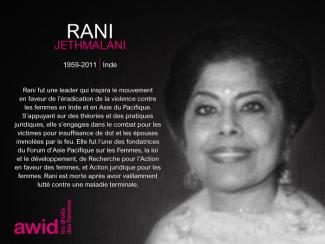
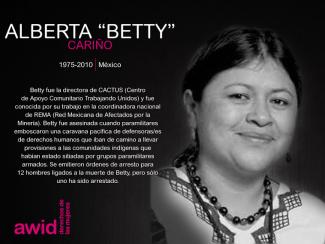
Women human rights defenders (WHRDs) worldwide defend their lands, livelihoods and communities from extractive industries and corporate power. They stand against powerful economic and political interests driving land theft, displacement of communities, loss of livelihoods, and environmental degradation.
Why resist extractive industries?
Extractivism is an economic and political model of development that commodifies nature and prioritizes profit over human rights and the environment. Rooted in colonial history, it reinforces social and economic inequalities locally and globally. Often, Black, rural and Indigenous women are the most affected by extractivism, and are largely excluded from decision-making. Defying these patriarchal and neo-colonial forces, women rise in defense of rights, lands, people and nature.
Critical risks and gender-specific violence
WHRDs confronting extractive industries experience a range of risks, threats and violations, including criminalization, stigmatization, violence and intimidation. Their stories reveal a strong aspect of gendered and sexualized violence. Perpetrators include state and local authorities, corporations, police, military, paramilitary and private security forces, and at times their own communities.
Acting together
AWID and the Women Human Rights Defenders International Coalition (WHRD-IC) are pleased to announce “Women Human Rights Defenders Confronting Extractivism and Corporate Power”; a cross-regional research project documenting the lived experiences of WHRDs from Asia, Africa and Latin America.
We encourage activists, members of social movements, organized civil society, donors and policy makers to read and use these products for advocacy, education and inspiration.
AWID acknowledges with gratitude the invaluable input of every Woman Human Rights Defender who participated in this project. This project was made possible thanks to your willingness to generously and openly share your experiences and learnings. Your courage, creativity and resilience is an inspiration for us all. Thank you!
Related Content
Snippet FEA Objectives NSS Advocacy (EN)
INCIDENCIA POLITICA
Influir en tomas de decisiones políticas y promover un acceso más equitativo a la tierra para las mujeres que trabajan en la agricultura
Match up your favourite messages below with these images for Facebook. These messages may also be used on Twitter via private Direct Messages, which don’t have character limits.
Facebook messages for your personal profile
The wait is over! We can all register for the 2016 AWID Forum. So excited to reconnect with fellow activists and re-imagine our feminist futures. See you there, in Brazil!http://forum.awid.org/forum16/
Loving the thought of re-imagining feminist futures with 2,000 people from lots of amazing women's rights and social justice movements at the AWID Forum. Register and meet me in Brazil!http://forum.awid.org/forum16/
Facebook messages for your organization’s page
Registration is now open for the 2016 AWID Forum in Costa do Sauípe, Brazil! This is not just any event - it’s a key space for women’s rights and social justice activists to come together and re-imagine our feminist futures. You won’t want to miss it!http://forum.awid.org/forum16/
Join us at the 2016 AWID Forum in Brazil! Activists and movements from all over the world will come together to celebrate, strategize, inspire and renew ourselves and our collective struggles. Register now!http://forum.awid.org/forum16/
The 2016 AWID Forum will be a historic global gathering of women’s rights and social justice activists and movements. Join us there to break the silos, strengthen solidarity and leverage our collective power. Register now!http://forum.awid.org/forum16/
The 2016 AWID Forum will be a historic global gathering of women’s rights and social justice activists and movements. Join us to celebrate, strategize, inspire and renew ourselves and leverage our collective power. Registration is now open!http://forum.awid.org/forum16/
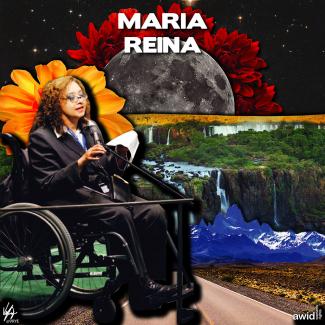
María era reconocida internacionalmente por su extraordinario liderazgo dentro de la comunidad de personas con discapacidad.
Representó al Consorcio Internacional sobre Discapacidad y Desarrollo (IDDC por su sigla en inglés) durante la negociación de la Convención sobre los Derechos de las Personas con Discapacidad (2001-2006). Su trabajo estaba dedicado a la implementación del objetivo de la Convención: el goce pleno de los derechos humanos universales por, para y con las personas con discapacidades, en pos de un mundo inclusivo, accesible y sostenible.
En sus propias palabras, su liderazgo consistía en «servir a la comunidad de personas con discapacidad, comenzando por aquellas pequeñas tareas que otrxs pueden no querer realizar».
Falleció el 27 de octubre de 2017 en su ciudad natal de Rosario, Argentina.
Pourquoi et comment renouveler votre adhésion de l'AWID
Rencontrez d'autres membres
Nos membres individuel-le-s et institutionnels viennent de 163 pays situés dans TOUTES les régions du monde. Les dernier-ère-s membres à avoir rejoint notre association viennent de l’Inde, du Royaume-Uni, du Sri Lanka et du Kirghizistan. Nos membres contribuent un éventail riche et diversifié de perspectives, d’expériences, de connaissances, d’énergie et d’inspiration !
Connaissez-vous nos profils hebdomadaires de membres ?
En tant que membre de l’AWID, vous pourrez, entre autres avantages, voir votre propre histoire figurer dans la newsletter que nous envoyons à 35,000 abonné-e-s et que nous diffusons par le biais des médias sociaux auprès de 60,000 personnes.
Récemment en vedette :
Rencontrez Angila Ashitua, une jeune femme du comté de Vihiga, situé dans l’ouest du Kenya.
en entrant en contact avec d’autres membres par le biais de notre forum des membres et de notre annuaire en ligne.
en en apprenant davantage sur le travail de l’AWID et sur les questions relatives aux droits des femmes et à la justice sociale grâce à nos publications et ressources, et notamment grâce à notre dernière vidéo en date “Changing Systems, Changing Lives“.(uniquement disponible en anglais).
en prenant part à nos sessions de formation en ligne. Vous pouvez consulter ici les points principaux de notre webinaire sur la Puissance des entreprises et la justice de genre. (uniquement disponible en anglais)
Et bien plus encore !
Vous pouvez renouveler votre adhésion pour une période d’1, 2 ou 3 ans. Nous offrons la possibilité d’une adhésion individuelle ou institutionnelle gratuite à ceux et celles dont les revenus ou budgets sont restreints.
Si vous rencontrez des difficultés lors de votre identification en ligne et avez besoin d’aide, n’hésitez pas à me contacter à l’adresse suivante : membership@awid.org
Les témoignages de nos membre
«Nous trouvons que l’AWID est un réseau particulièrement stimulant et nous nous impliquons dans beaucoup de ses plateformes. » – Engabu Za Tooro (membre institutionnel de l’AWID)
« Je me réjouis d’entamer une collaboration fructueuse avec l’équipe. J’en suis très heureuse. Merci de m’avoir acceptée parmi vos membres. » – R. Chakraborty (membre individuelle de l’AWID)
« Je tiens à remercier infiniment l’AWID ! Vous accomplissez un travail gigantesque. Vos efforts sont grandement appréciés. » – E. Khan (membre individuelle de l’AWID)
I have responded to the survey but changed my mind and want our response to be withdrawn, what do I do?
If, for any reason, you want your response to be withdrawn and deleted, you have the right to do so. Please contact us via the form here, indicating “WITM Survey” as the title of your message, and we will withdraw and delete your response.
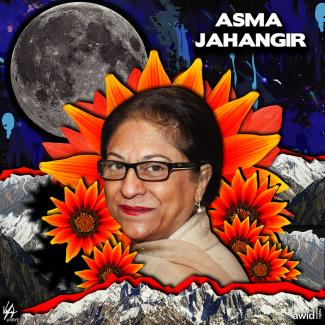
Asma était une militante pakistanaise des droits humains, une critique courageuse de l'ingérence de l'armée dans la politique et une défenseure acharnée de la primauté du droit.
Elle a été la présidente fondatrice de la Commission des droits de l'homme du Pakistan, un groupe indépendant ainsi qu’administratrice de l'International Crisis Group. Elle a remporté des prix internationaux et a été rapporteuse des Nations Unies sur les droits de l'homme et les exécutions extrajudiciaires.
« Grâce à sa vie, Asma a réécrit l'histoire que beaucoup d'entre nous ont racontée en tant que femmes. Asma a changé le monde. Elle l'a changé au Pakistan et elle l'a changé dans notre imaginaire. »
8. Finalize and format
Your comprehensive research product is now all organized and edited. You now want to ensure your findings are visually accessible and appealing to facilitate the dissemination.
Consider developing smaller products along with your long report.
As mentioned in the “Synthesize your research findings,” AWID often pulls smaller products from the lengthy research report. This allows for wider and easier distribution specialized for key audiences.
Always keep your targeted population in mind: who will read your report?
Examples of smaller products distilled from a larger report:
Infographics
Online gallery
An animation presenting your arguments
1. Think as your audience thinks
People are bombarded with information constantly. Your product will have to be visually compelling to maintain the interest of your audience. Again, having an idea of what you hope to accomplish and who you hope to reach, will allow the designer to create targeted products.
A lengthy written PDF report may seem the only way to present your research, but it could appear overwhelming to most people – especially online.
If you want to share your product with an online community, think about creating memes and infographics to use on social media, blogs and web platforms.
When deciding whether to create smaller products, consider dividing your results into several smaller products that you could share with targeted populations or at different times of the year to reactivate the interest on your product.
2. Work with a professional designer
If you have limited time and a little bit of budget, we recommend hiring a design firm.
It can be tempting for economic reasons to use in-house staff to package your report. However, a professional graphic designer can make a huge difference on how your final product looks and thus on how much impact it will have!
The designer (in-house or hired) must be able to:
Show you samples of their previous work that is similar to what you seek.
Provide you clear advice on how to present your research based on the content you provide and the audience you are targeting.
Suggest additional or different pieces to package your product.
What the designer will need from you:
A general idea on what you would like the lengthy report to highlight through visuals and graphics (what are the most important pieces of information, the key findings, for example) and some ideas on the types of smaller products you want to create (brochure, an infographic, a series of viral memes, for example). If possible, show the designer examples of similar documents developed by other organizations.
Your budget and time frame.
Your organization’s visual guidelines if you have any (logo, official colours, fonts, etc...).
A few photos copyright free or access to your photo bank if you have one.
Key visuals that need to be included – graphs, tables and other visual graphics drawn from your research.
The designer is a graphic expert. S/he is not necessarily familiar with women’s issues and does not know the results of your research, especially if you hire an external firm.
Communicate what elements of this report is important to you and who is your target. The designer will propose a way to highlight these elements and make the whole piece appealing to your users.
3. Make sure it's consistent
While creating a set of smaller information products, do not forget to link them all together:
A shorter version of the report that focuses only on your final results and recommendations should present a link to the final, full report
A visually compelling infographic that sends a message on the state of funding for your particular research can link to your website and the related section of the full report. It should be associated with a call to share on social media.
A short animation video that uses the data, findings and recommendations from your report should link back to your organization website and social media
A series of viral memes that can be distributed online should link back to your report, infographic, shorter report, etc.
It is also important to keep the research staff involved, so they can ensure any offshoot products stay true to the actual findings of the research.
After the design and packaging of the final research report is complete, if any of the wording of content was changed, be sure to re-send to translators.
If you create smaller products, once designed and packaged, you will also need to get the copy translated for those pieces. The translations should be clear enough so the designer can apply to the design, even if she/he does not speak the language.
Once translated, make sure to have your design proofread by a native speaker before sharing it!
¡Sí, por favor! Te alentamos a compartir el enlace a la encuesta con tus redes. Cuanto más diversas sean las opiniones que recolectemos, más completa será nuestra comprensión del panorama financiero para las organizaciones feministas.
Snippet Intro The Feminist Realities Magazine (ES)
La revista de las Realidades Feministas
Las Realidades Feministas proclaman y personifican la esperanza y el poder.
Las encontramos en todo lo que nos muestra que existen otras formas de vivir, de pensar y de hacer, desde las expresiones cotidianas que se evidencian en cómo nos relacionamos con otrxs hasta los sistemas alternativos de gobernanza y de justicia. Las realidades feministas son formas de resistencia a sistemas de poder como el patriarcado, el capitalismo y la supremacía blanca.
Son propuestas poderosas que nos orientan hacia la idea de lo que es posible y nos muestran cómo los procesos de organización feminista están abriendo caminos hacia la justicia en movimientos y comunidades de todo el mundo.
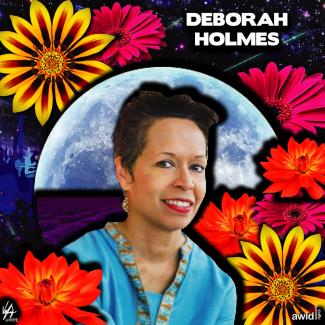
At the time of her death, following a short but aggressive battle with cancer, Deborah was the Chief Communication and Engagement Officer at the Women’s Funding Network (WFN).
Deborah also worked for the Global Fund for Women from 2008 to 2017. Deborah was extremely loved and respected by board, staff, and partners of Global Fund for Women.
Kavita Ramdas, former CEO of the Global Fund for Women aptly noted that Deborah was “a small package exploding with warmth, generosity, intelligence, style, and a passionate commitment to fusing beauty with justice. She understood the power of story. The power of women’s voice. The power of lived experience. The power of rising from the ashes and telling others it was possible. And, still we rise.”
Musimbi Kanyoro, the present CEO of the Global Fund for Women, added, “We have lost a sister and her life illuminates values that unite and inspire us all. As we all come together to mourn Deborah’s passing, let us remember and celebrate her remarkable, bold, and passionate life.”