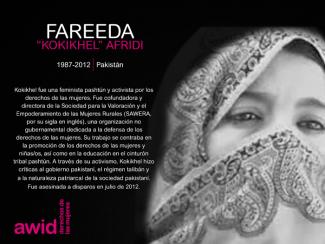
Farida Afridi
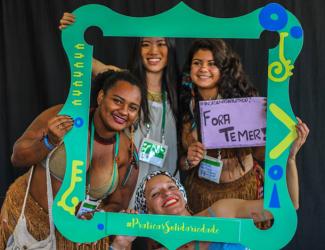
Young feminist activists play a critical role in women’s rights organizations and movements worldwide by bringing up new issues that feminists face today. Their strength, creativity and adaptability are vital to the sustainability of feminist organizing.
At the same time, they face specific impediments to their activism such as limited access to funding and support, lack of capacity-building opportunities, and a significant increase of attacks on young women human rights defenders. This creates a lack of visibility that makes more difficult their inclusion and effective participation within women’s rights movements.
AWID’s young feminist activism program was created to make sure the voices of young women are heard and reflected in feminist discourse. We want to ensure that young feminists have better access to funding, capacity-building opportunities and international processes. In addition to supporting young feminists directly, we are also working with women’s rights activists of all ages on practical models and strategies for effective multigenerational organizing.
We want young feminist activists to play a role in decision-making affecting their rights by:
Fostering community and sharing information through the Young Feminist Wire. Recognizing the importance of online media for the work of young feminists, our team launched the Young Feminist Wire in May 2010 to share information, build capacity through online webinars and e-discussions, and encourage community building.
Researching and building knowledge on young feminist activism, to increase the visibility and impact of young feminist activism within and across women’s rights movements and other key actors such as donors.
Promoting more effective multigenerational organizing, exploring better ways to work together.
Supporting young feminists to engage in global development processes such as those within the United Nations
Collaboration across all of AWID’s priority areas, including the Forum, to ensure young feminists’ key contributions, perspectives, needs and activism are reflected in debates, policies and programs affecting them.
Да. Ваши ответы будут удалены по окончании обработки и анализа данных и будут использованы исключительно в исследовательских целях. Данные НИКОГДА не будут переданы за пределы AWID и будут обрабатываться только сотрудниками AWID и консультантками(-тами), работающими с нами над проектом «Где деньги?». Для нас ваша конфиденциальность и безопасность– приоритет. С нашей политикой конфиденциальности можно подробно ознакомиться здесь.
We work towards a world based on social, environmental, and economic justice; and interdependence, solidarity, and respect. We work towards dismantling systems of oppressive power and against all its manifestations, including patriarchy, fundamentalisms, militarisms, fascisms and corporate power that threaten our lives and our world. We want a just world where resources and power are shared in ways that enable everyone to thrive.
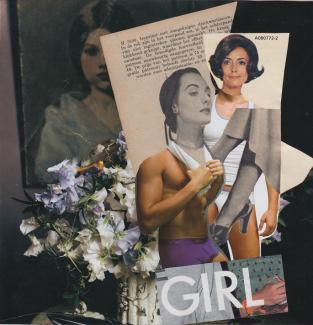
Bunga ou fleur en francais est un symbole qui est souvent associé aux femmes en Indonésie. Ce qui signifie qu'une fleur peut également être associée aux femmes transgenres. Parce que les femmes transgenres sont des femmes. Aussi belles, aussi fortes, l’une comme l’autre a vécu sans attendre d'être "cueillie", mais en grandissant, en s'épanouissant et en mourant à sa guise. Cette œuvre est un hommage à mes ami·e·s transgenres à l'occasion de la Journée Internationale de la Visibilité des Personnes Transgenres.
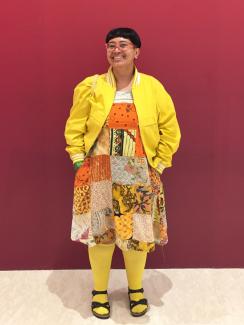
"He dado testimonio de la discriminación que vi en las calles, he sufrido burlas y abusos verbales ahí. También he hecho numerosas amistades y he conocido a mucha gente. Puede que haya peligros ahí fuera, pero soy una sobreviviente y aquí es donde estaré por ahora." - Sainimili Naivalu
Exigió a las autoridades políticas y a otras partes interesadas que proporcionaran políticas y servicios favorables a la movilidad de las personas con discapacidad, como la construcción de rampas en pueblos y ciudades para aumentar su accesibilidad. Sin embargo, las barreras físicas no fueron las únicas que Sainimili se esforzó por cambiar. Por experiencia propia, sabía que era necesario que se produjeran cambios más complejos en las esferas sociales y económicas. Muchos de los retos a los que se enfrentan las personas con discapacidad tienen su origen en actitudes que llevan a la discriminación y al estigma.
Como sobreviviente y luchadora, Sainimili contribuyó a la creación conjunta de realidades feministas que fomentasen la inclusión y cambiasen las actitudes hacia las personas con discapacidad. Como afiliada a la Asociación de Lesiones de la Espina Dorsal de Fiji (SIA, por sus siglas en inglés) y a través del proyecto del Foro para Personas con Discapacidades del Pacífico “Pacífico Habilita”, Sainimili asistió a la formación de la Organización Internacional del Trabajo "Inicie su Negocio" en Suva, lo que le permitió transformar sus ideas en su propio negocio. Fue emprendedora en el puesto 7 del mercado de Suva, donde ofrecía servicios de manicura, y también se encargaba del puesto del mercado de las mujeres de SIA, donde vendía artesanías, sulus y otros objetos. El plan de Sainimili era expandir su negocio y convertirse en una importante empleadora de personas con discapacidad.
Además de su activismo, también fue medallista y campeona juvenil de tenis de mesa.
Sainimili era única, con una personalidad vivaz. Siempre podías saber si Sainimili estaba en una habitación porque su risa y sus historias eran los primero que notabas. - Michelle Reddy
Sainimili falleció en 2019.
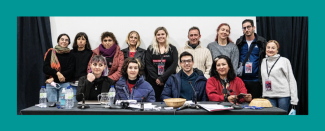
O nosso objetivo é alcançar um total de 2000 respostas, quase o dobro do último questionário WITM em 2011.
Este Foro de AWID celebrará y difundirá las realidades feministas que nos rodean en diferentes etapas de desarrollo.
While fundamentalisms, fascisms and other systems of oppression shapeshift and find new tactics and strategies to consolidate power and influence, feminist movements continue to persevere and celebrate gains nationally and The rising power of anti-rights actors is not happening in a vacuum. Understanding the rise of ultra-nationalism, unchecked corporate power, growing repression, and diminishing civic space is key to contextualize the anti-rights threats we face today.
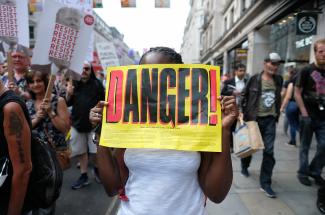
Today, considerably more than half of the world’s population is governed by far-right leaders. Against this backdrop, human rights defenders and feminists are working hard to “hold the line” and protect multilateralism and the international human rights system. They also face the risk that their engagement may bring with it violent reprisals. At the same time, these institutions are increasingly subject to private sector interests. Large businesses, particularly transnational corporations, are occupying seats at the negotiating table and leadership positions in a number of multilateral institutions, including the UN. This nexus of ultra-nationalism, closing civic space, and corporate capture is having a tremendous impact on whether human rights for all can ever be achieved.
Connue comme la drag queen de couleur de New York, Sylvia était une infatigable et féroce défenseure des marginalisé·e·s et exclu·e·s au début des années 1970, alors que le mouvement pour les « droits des gays » prenait de l’ampleur aux États-Unis.
Dans un discours bien connu prononcé pour Chistopher Street Day en 1973, Sylvia s’est exclamée, parmi une foule de membres de la communauté LGBT :
« Vous me dites tous d’aller me cacher, la queue entre les jambes.
Je ne supporterai plus ces conneries.
On m’a battue.
On m’a cassé le nez.
On m’a jetée en prison.
J’ai perdu mon travail.
J’ai perdu mon appartement.
Tout ça pour la libération gay, et vous me traitez de la sorte?
C’est quoi votre putain de problème à tous?
Réfléchissez à ça! »
En 1969, à l’âge de 17 ans, Sylvia a participé aux célèbres émeutes de Stonewall en jetant, paraît-il, le deuxième cocktail molotov en signe de protestation contre la descente de la police dans le bar gay de Manhattan. Elle a continué à être une figure centrale des soulèvements qui ont suivi, organisant des rassemblements et ripostant aux brutalités policières.
En 1970, Sylvia a collaboré avec Marsha P. Johnson à la création de Street Transvestite Action Revolutionaries (S.T.A.R.), collectif et organisation politique qui mettait sur pied des projets de soutien mutuel pour les personnes trans vivant dans la rue, celles et ceux aux prises avec la toxicomanie ou en détention, et spécialement pour les personnes trans de couleur et celles et ceux vivant dans la pauvreté.
Refusant les étiquettes, Sylvia a incité les personnes du mouvement de libération gay à penser différemment, et ce, tout au long de sa vie. Elle a déclaré :
« J’ai quitté ma maison en 1961, à l’âge de 10 ans. Je me suis démenée sur la 42e rue. Le début des années 1960 n’était pas génial pour les drag queens, les garçons efféminés ou les garçons qui se maquillaient comme on le faisait. À l’époque, on se faisait battre par la police, par tout le monde. Je n’ai pas vraiment fait mon coming out en tant que drag queen avant la fin des années 1960. C’était vraiment la débandade lorsque des drag queens se faisaient arrêter. Je me rappelle la première fois où je me suis fait arrêter, je n’étais même pas habillée entièrement en drag. Je marchais dans la rue et les flics m’ont tout simplement attrapée. Les gens maintenant prétendent que je suis une lesbienne, parce que je suis avec Julia, ce à quoi je leur je réponds : « Non, je suis juste moi. Je ne suis pas une lesbienne. » J’en ai marre d’être étiquetée. Je ne suis même pas en faveur de l’étiquette de transgenre. J’en ai marre de vivre avec des étiquettes. Je veux juste être qui je suis. Je suis Sylvia Rivera »
Par son activisme et son courage, Sylvia Rivera a présenté un miroir où se reflétait tout ce qui n’allait pas dans la société, mais aussi la possibilité d’une transformation. Sylvia est née en 1951 et décédée en 2002.

Nous tenons à remercier les personnes qui ont contribué à ce projet et qui ont fourni de précieux conseils :
Mientras los fundamentalismos, los fascismos y otros sistemas de opresión cambian de forma y encuentran nuevas tácticas y estrategias para consolidar su poder e influencia, los movimientos feministas siguen perseverando y celebrando logros a nivel nacional y en espacios regionales e internacionales.
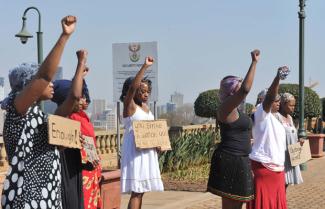
Por ejemplo, en 2019, se dio un paso significativo en el Consejo de Derechos Humanos, cuando la ONU reconoció por primera vez el derecho a la integridad y autonomía corporal. Varias resoluciones del Consejo sobre la discriminación contra mujeres y niñas también reconocen que la reacción está vinculada con grupos de presión regresivos, con perspectivas ideológicas o con el uso inapropiado de la cultura o la religión para oponerse a los derechos igualitarios de mujeres y niñas. También hemos visto progresos feministas en el trabajo de Procedimientos Especiales de la ONU (funcionarixs independientes), tales como enfatizar la obligación de los Estados de oponerse a las narrativas de ideología de género, denunciar el uso inapropiado por parte de los actores antiderechos de referencias a la «cultura», y enfatizar que las creencias religiosas no pueden ser utilizadas como justificación de la violencia o la discriminación.
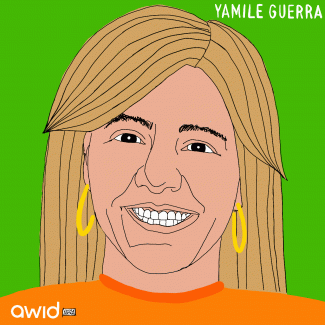
Yamile Guerra was a well-known lawyer, community leader and political activist in the Santander region of Colombia.
She was actively working to resolve disputes between local communities and developers, advocating against illegal land appropriation. Yamile had occupied various political posts, including as the Secretary General for the Santander government in Bogota and also aspired for the Mayor’s Office of Bucaramanga. In the last few years of her life, Yamile became increasingly active in environmental causes, particularly in the defense of the biodiverse wetlands of Santurbán against development, a region which supplies nearly 2 million people with freshwater.
According to her family and friends, Yamile received daily threats against her life and had asked the authorities for protection.
“She was very very aware of this issue [land litigation] and she said many times that she felt insecure.” - Alixon Navarro Munoz, journalist and friend of Guerra family
On July 20, 2019 Yamile was shot to death by two men in Floridablanca, Santander. She had just finished discussing a land dispute with them. A suspect was later arrested for her murder and admitted to being paid to carry out her assassination. According to reports, Yamile was the third member of her family to have been killed in relation to land disputes. Her father, Hernando Guerra was murdered several years previously.
Yamile’s assassination is part of a wave of violence and systematic killing of hundreds of social activists and human rights defenders in Colombia. According to the Institute for Development and Peace Studies (INDEPAZ), at the time of Yamile’s death, over 700 community leaders and human rights activists had been killed since the country signed a peace agreement in August 2016. Most were murdered for confronting illegal drug trafficking and mining operations, with indigenous people, Afro-Colombians and women human rights defenders being most at risk.
Less than a week after Yamile’s death, thousands of Colombians marched all over towns and cities, holding up black and white photos of activists who had been killed, with signs that read: "Without leaders there can be no peace" and "No more bloodshed”.
Yamile Guerra was only 42 years old at the time of her assassination.
Listen to this story here: